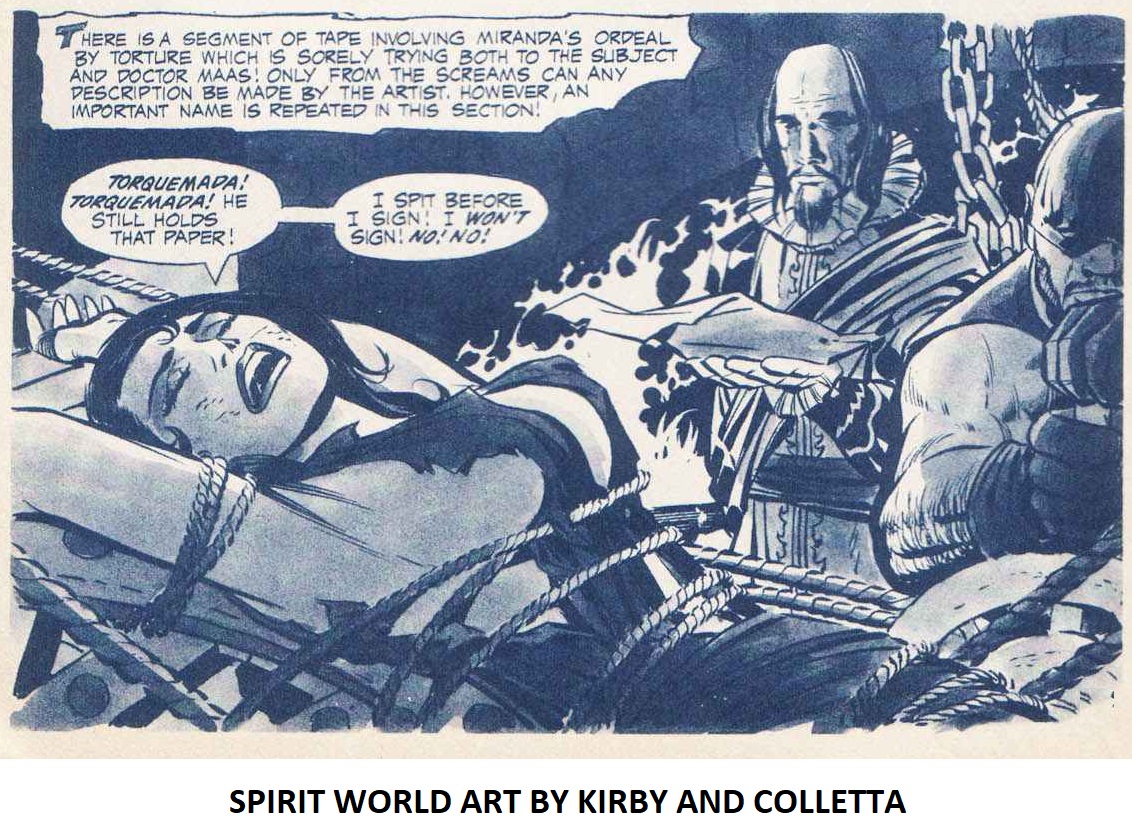
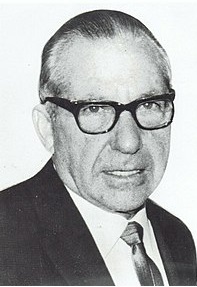
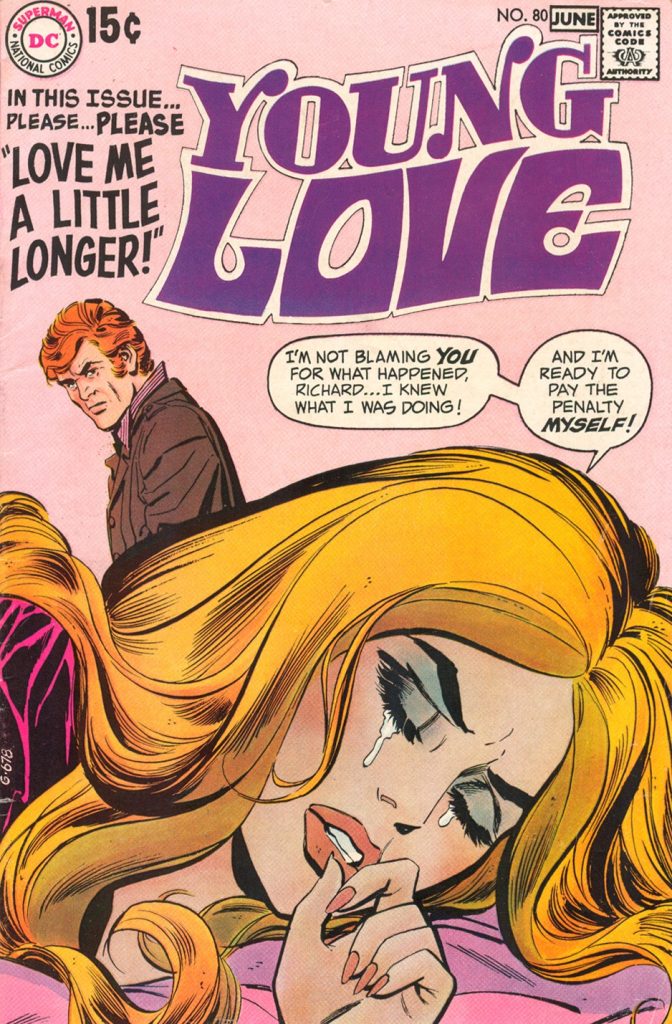
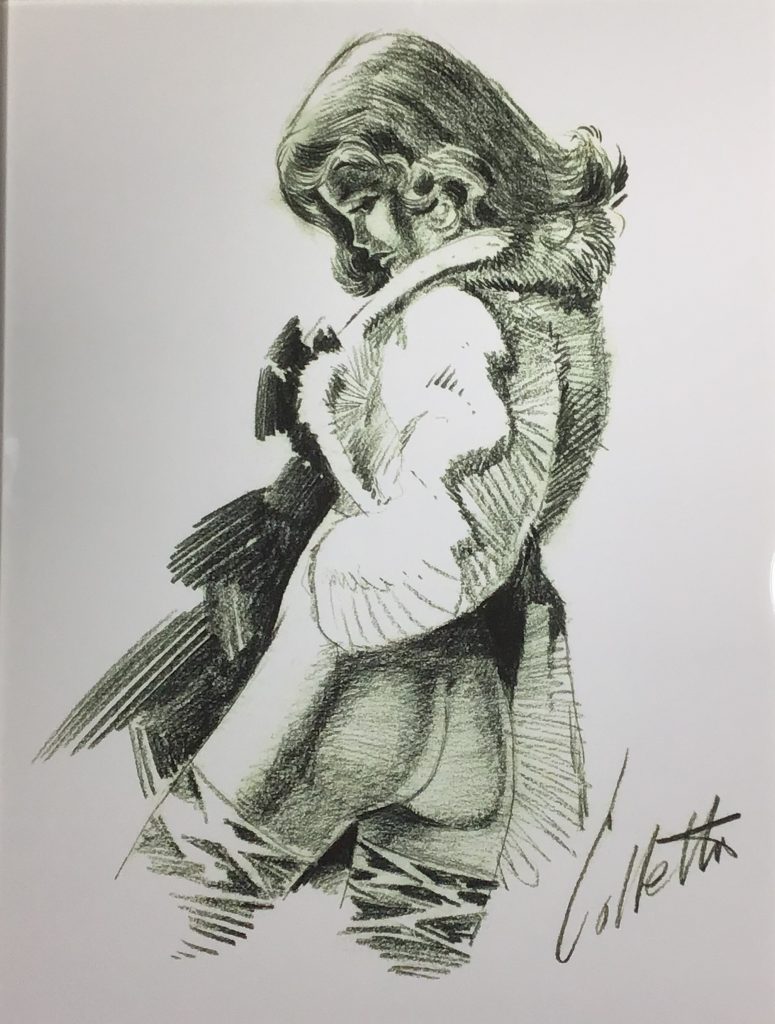
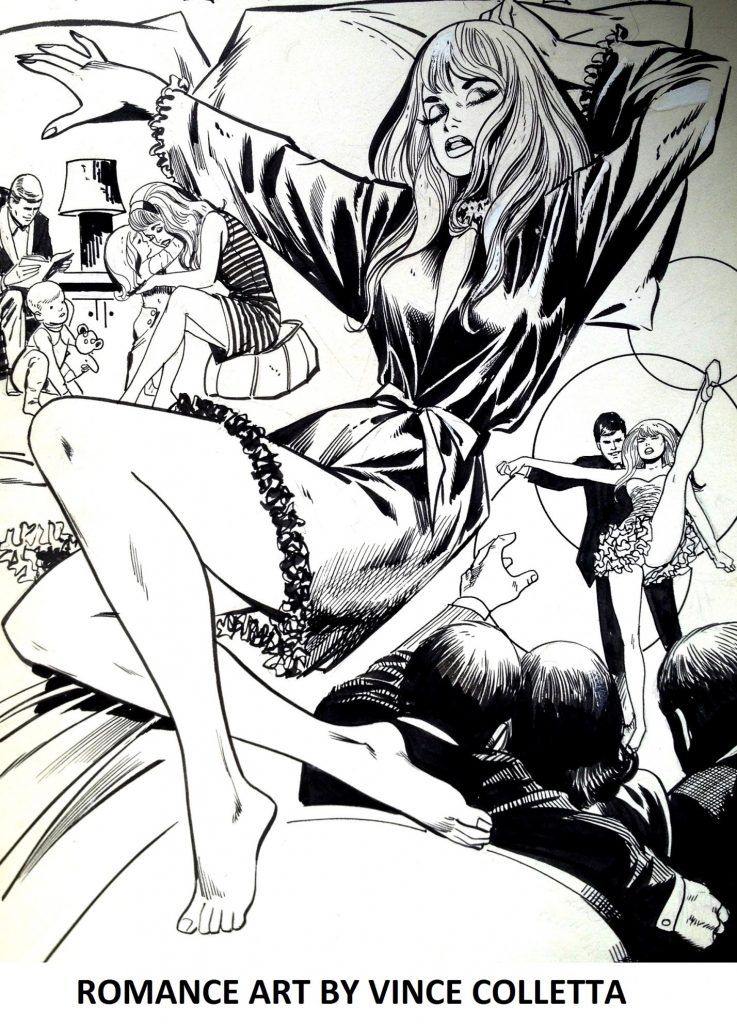
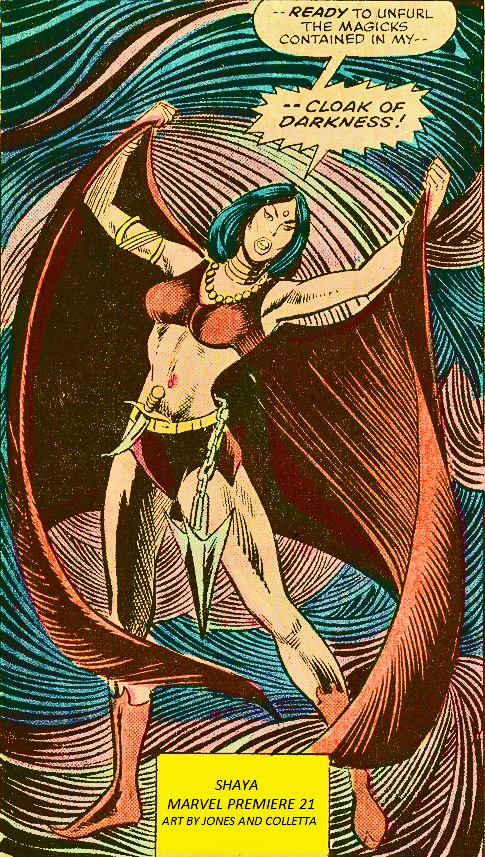
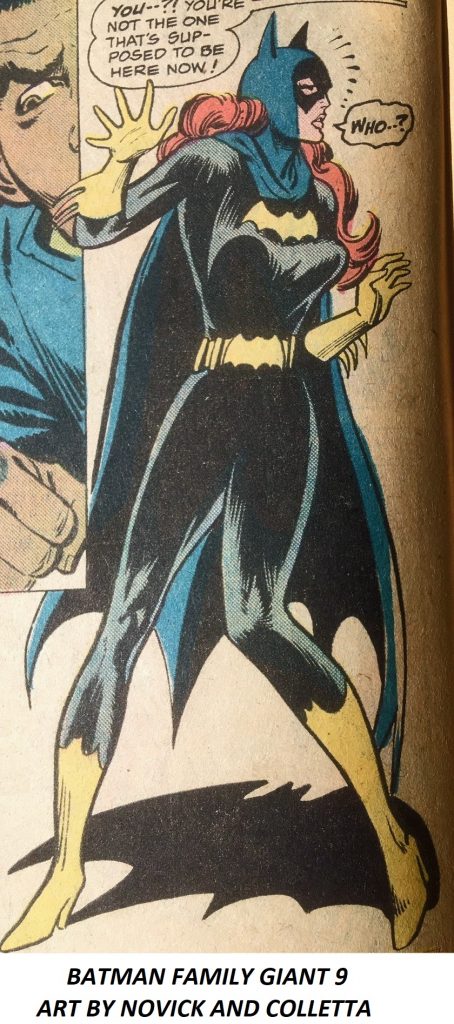
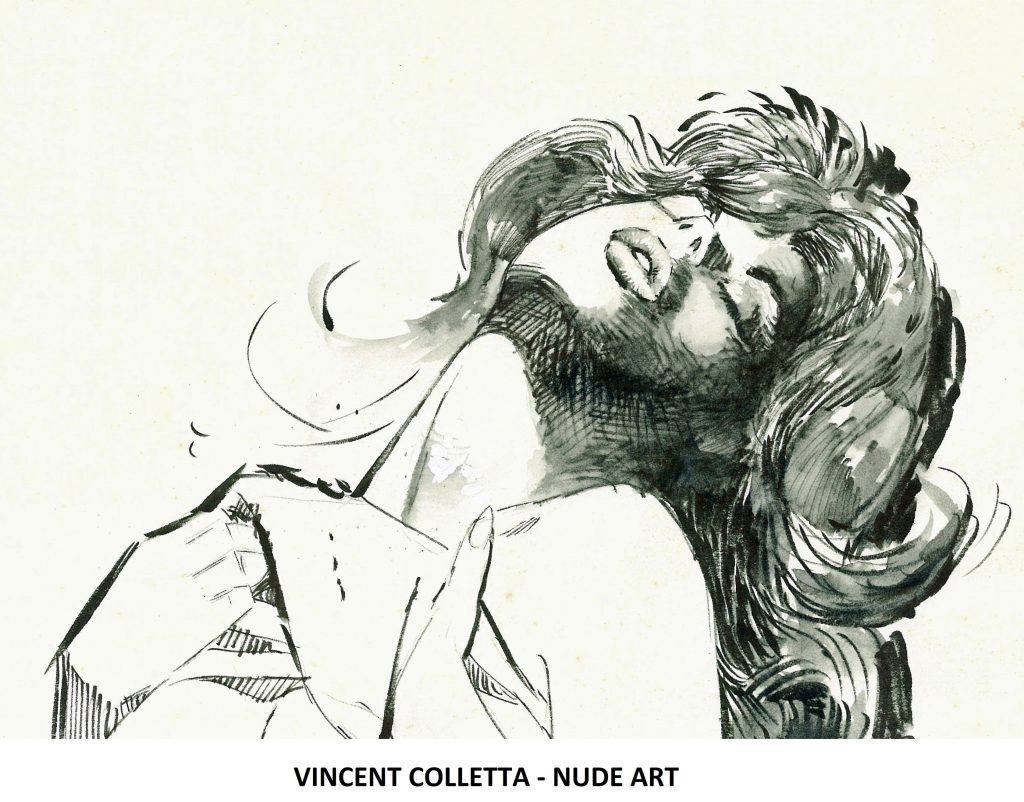
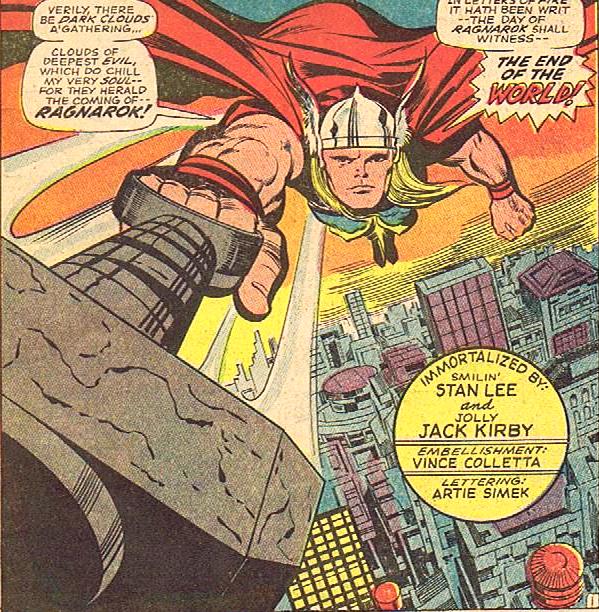
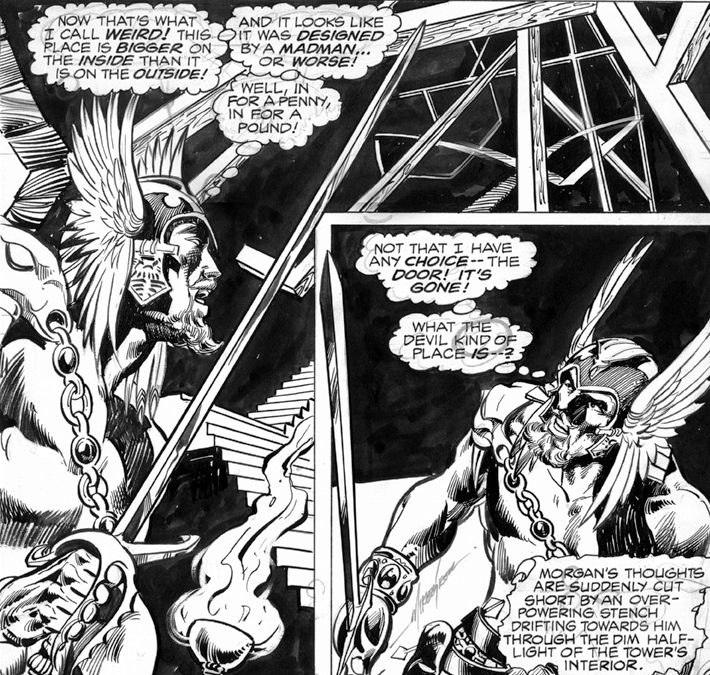
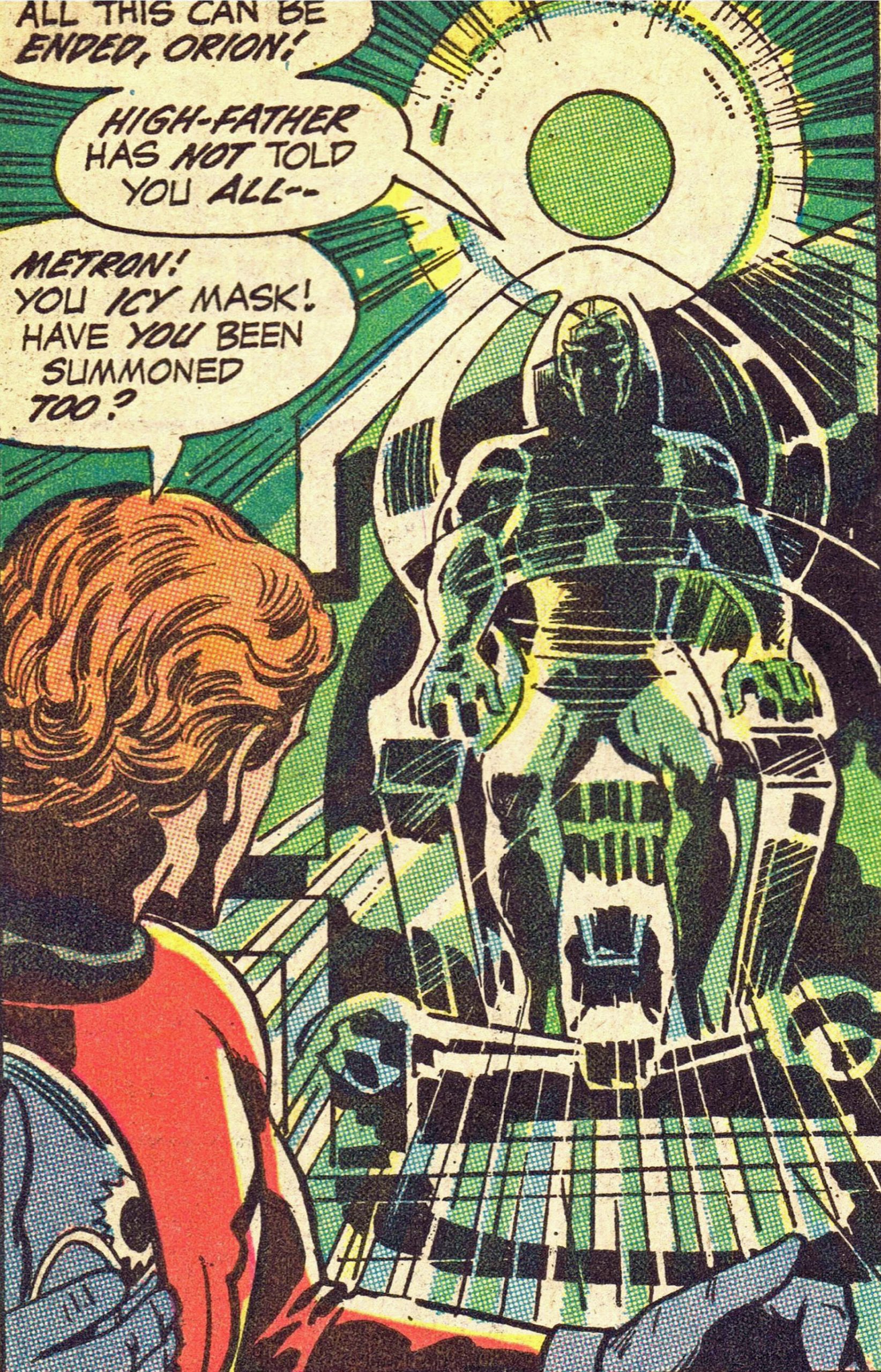
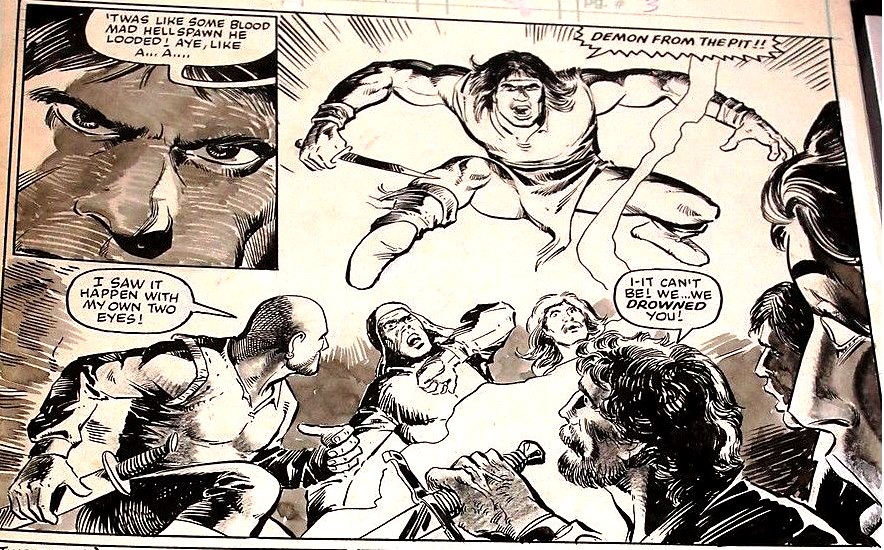
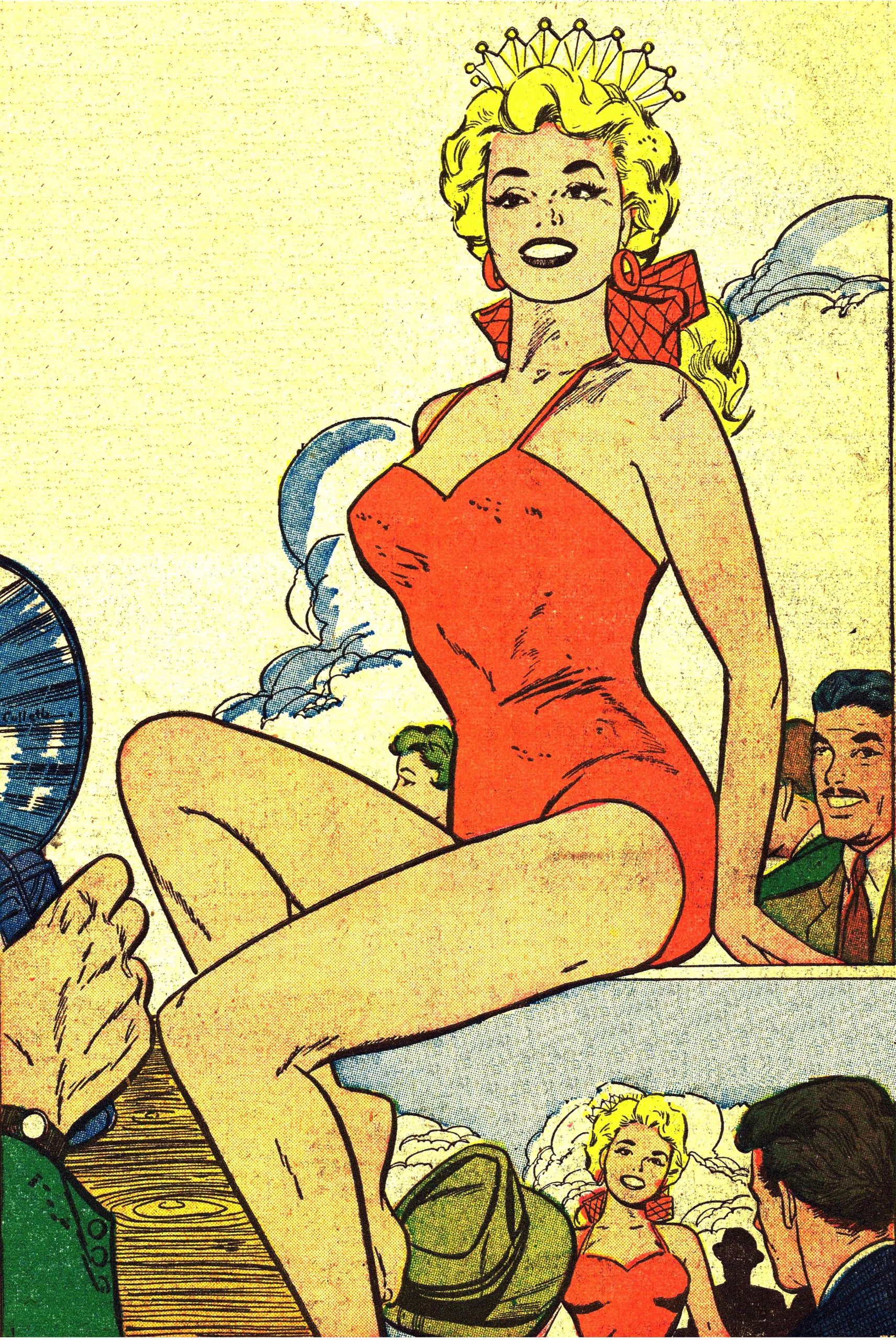
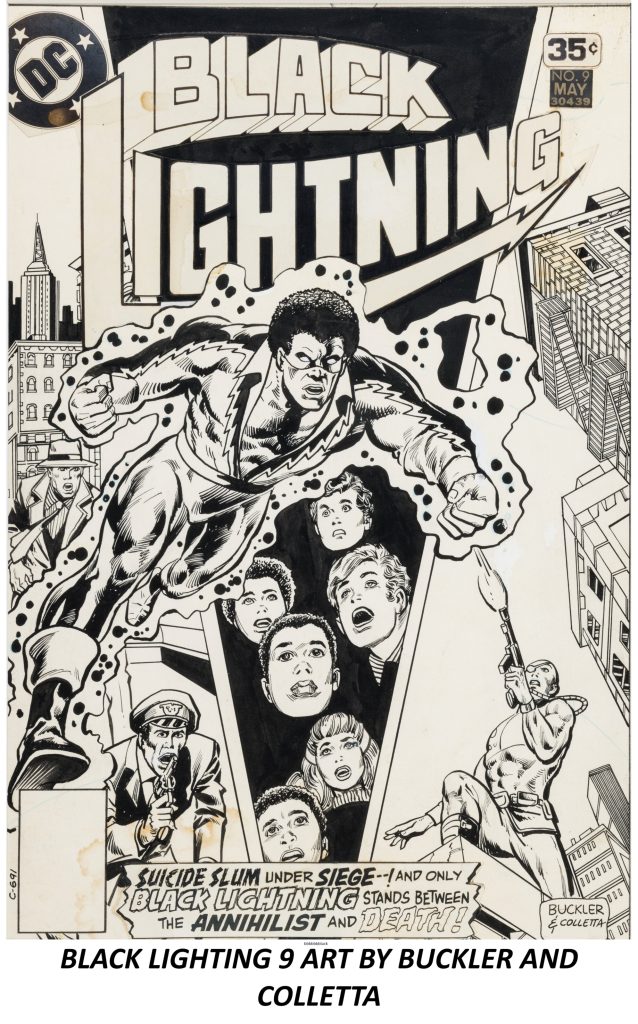
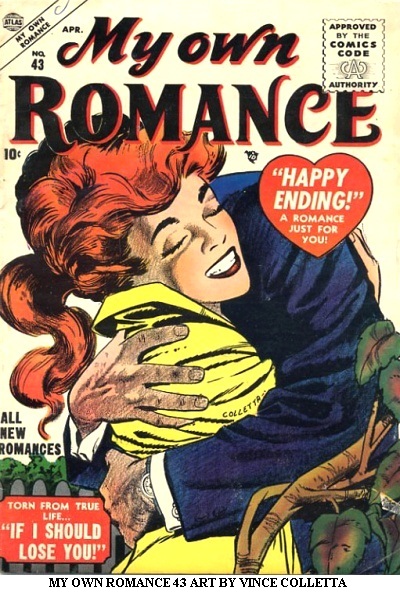
Vince Colletta (October 15, 1923 – June 3, 1991) was an American comic book artist and art director. His Romance art in the 50s and 60s brought a new realism into comic book art. Colletta is best known as one of Jack Kirby's frequent inkers during the Silver Age of comic books. This included some significant early issues of Marvel Comics' Fantastic Four, and a long, celebrated run on the character Thor in Journey into Mystery and The Mighty Thor. His inks on the Tales of Asgard series were hailed as an artistic breakthrough. Vince also contributed art to DC Comics' Wonder Woman, Batman and Warlord.
Golden and Silver Age artist by reputation. Manhattan commercial photographer in practice. The story that comic-book history never told.
Vince Colletta drew the most beautiful women in comics during the 50s and 60s Romance era, He inked Thor. He inked The New Gods. He inked Wonder Woman. His name appears in the credits of some of the most significant comics of the Silver and Bronze Ages. But in the same years he was hunched over his desk with pencils, pens and brushes, he was also setting up lights in a Manhattan studio, loading a camera, and shooting the kinds of pictures that appeared in an entirely different corner of mid-century American publishing.
Most people who know Vince Colletta know him through his published comic work and the debates that have surrounded it for decades. Very few know about the studio. Yet for a significant stretch of his career, the Colletta name meant something quite specific in New York commercial photography — pulp magazine illustration, celebrity headshots, and a client list that would eventually include some of the most recognizable faces of the American stage and screen.
The Charlton Connection: Pulp, Confession, and Monarch Publications
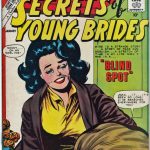
During the 1950s and into the 1960s, Colletta was among the primary artists handling Charlton Comics’ romance titles. Charlton was an unusual operation — a bottom-of-the-market publisher that somehow maintained a steady output across romance, horror, Western, and war genres, running its presses out of Derby, Connecticut. What many fans don’t know is that Charlton’s parent company also owned Monarch Publications, which produced a separate and considerably more lucrative line of true-confession and detective magazines.
Titles like Actual Confessions were staples of mid-century newsstands — publications built around first-person scandal stories told with breathless urgency and illustrated with dramatic, emotionally heightened black-and-white photographs staged to look spontaneous. Someone had to produce those photographs.
Colletta became Monarch’s go-to photographer for that work. His Manhattan studio was the production hub where those lurid, carefully composed scenes were staged — expressions of anguish, confrontation, and melodrama captured under controlled studio lighting and printed on cheap paper to be consumed on lunch breaks and in waiting rooms across the country. It was unglamorous work in the best possible sense: professional, prolific, and completely invisible to the readership.
The connection to his comic work is more than biographical coincidence. The same eye that understood how to communicate emotion and narrative through a single inked panel — compressed, gestural, immediate — served him well composing photographic tableaux for stories with titles like I Married a Stranger and My Secret Shame.
· · ·
Celebrity Headshots: A Studio in the Current of New York Talent
The confession magazine work was steady, but it wasn’t the only thing happening in the Colletta studio. His Manhattan location and his network of connections in the New York entertainment and recording worlds meant that working actors, dancers, and emerging performers had a reason to walk through his door.
Professional headshots were the currency of a working actor’s life. Agents required them. Casting directors expected them. The difference between a usable photograph and a career-defining one was entirely in the hands of whoever was behind the camera. Colletta shot them for a range of talent across the era — and the names on that list, examined from a distance of sixty years, read like a roll call of mid-century American performance.
“He photographed people on the way up — before the reviews, before the Tonys, before the television credits started stacking up.”
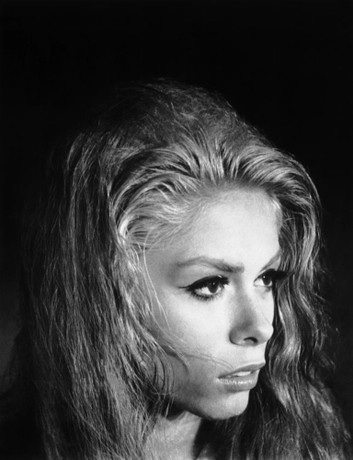
Lada Edmund Jr.
Lada Edmund, Jr. Television Performer
A regular on NBC’s Hullabaloo and a working presence in the New York entertainment scene. Colletta photographed Lada’s promotional headshots during her active performing years.
Vincent Gardenia Tony Award Nominee · Actor
A character actor of formidable range — Tony-nominated for stage, later known to film audiences from Bang the Drum Slowly and Moonstruck. Colletta shot his headshots during his New York stage years.
James Farentino Stage & Television Actor
A leading man whose career would span Broadway and decades of American television. Among the working actors who came through the Colletta studio for professional photographs.
Peter Falk Actor · Columbo
Before he became one of American television’s most iconic presences, Falk was a New York stage and character actor. He was among the established talent Colletta photographed for professional use.
Michael Bennett Choreographer · Director
Before A Chorus Line and Dreamgirls made him one of Broadway’s defining figures, Bennett danced alongside Lada Edmund Jr. on Hullabaloo. Colletta photographed him during those early New York dancing days.
Donna McKechnie Tony Award Winner · Broadway
The Tony Award-winning star — and Hullabaloo regular — who would originate Cassie in A Chorus Line. Colletta shot her headshots early in her New York career, years before Broadway defined her legacy.
What the Contact Sheet Reveals
Looked at together, the names above describe something more than a client list. They map a specific moment in New York performing life — the mid-1960s, when television variety shows like Hullabaloo were incubating the same dancers and singers who would shortly reshape American theater. Michael Bennett and Donna McKechnie were colleagues in that world before either became a legend in another. The Colletta studio was one of the places where that generation of talent had their photographs taken.
That context matters because it places Vince Colletta at a genuine intersection — not a peripheral one — of mid-century New York creative life. He was not simply a comic book professional who also owned a camera. He was operating a working commercial studio with real connections to the entertainment, publishing, and performance worlds of his era, and he sustained that operation in parallel with a comics career that was itself among the most productive in the industry’s history.
The Uncredited Work: Confession Magazine Performers
Beyond the known names, Colletta regularly cast aspiring performers for his Monarch Publications work — Off-Broadway actors, daytime soap opera players, and young talent working the margins of the New York scene who needed the money and didn’t mind the anonymity. The confession magazine photograph was a job, not a credit.
Many of those uncredited performers went on to steady character careers in television and film through the 1970s and 1980s. The photographs they made in the Colletta studio — staged melodramas for a market that no longer exists — are almost entirely unattributable now. The work is lost in the way that a great deal of mid-century commercial photography is lost: published, consumed, discarded, and forgotten before anyone thought to ask who had been behind the camera.
Why This Story Has Stayed Hidden
The answer is partly institutional. Comic-book history has always been written from the perspective of the published page — credits, publication dates, artistic controversies. The commercial work that sustained many of those same creators between assignments, or ran alongside their comics careers, rarely made it into the record because it was never meant to.
Pulp magazine photography was anonymous by design. Celebrity headshots were filed, reprinted, and distributed without attribution. A photographer who was also one of Marvel’s most prolific inkers had no particular reason to advertise the connection, and no publication had reason to report it.
What survives is fragmentary: the photographs themselves, where they can be identified; the memory of people who were present; and the physical evidence of a Manhattan studio that was doing real commercial work for real clients across two very different industries simultaneously.
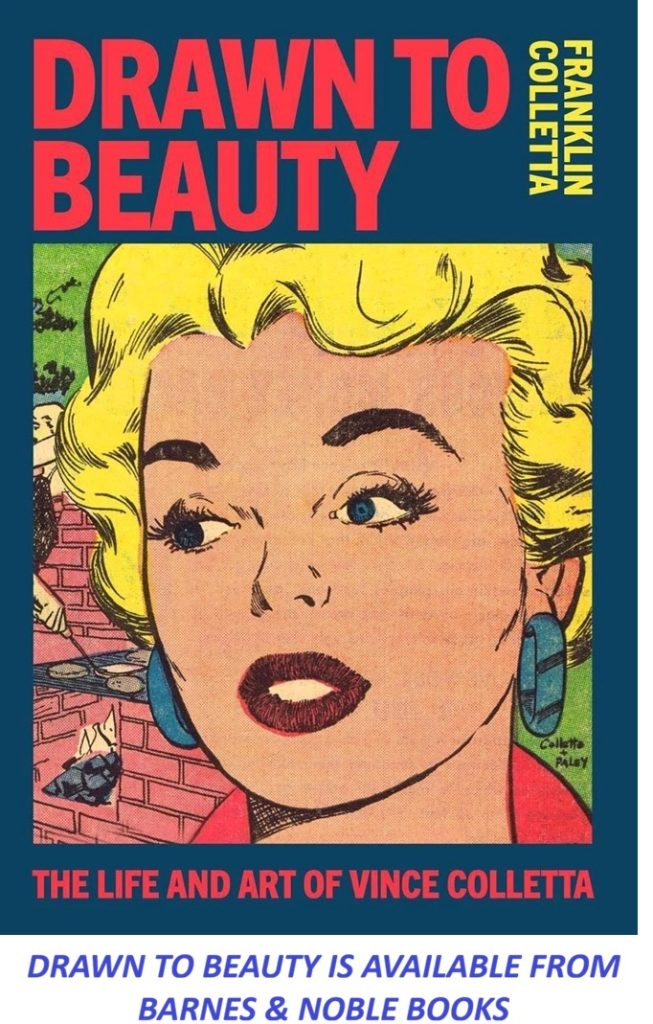
Vince Colletta’s son, who grew up in that household and later wrote his father’s biography DRAWN TO BEAUTY, has described the texture of those years — the studios in Manhattan and Jersey City, the artwork that came home from Marvel’s offices, the family members who helped erase pencil lines from original art pages that are now considered historically significant. That same firsthand context is what makes it possible to begin assembling a picture of the photography work: not from records or credits, but from the memory of what it actually looked like to be inside that life.
· · ·
A Career That Comic History Hasn’t Fully Told
The standard account of Vince Colletta focuses on his artwork, his speed, his productivity, and the debates that have followed his legacy through decades of fan scholarship. That account is incomplete — not because it is wrong, but because it looks only at what appeared in print under his name in the comics themselves.
The photography work fills in a dimension of the man that is genuinely different from what the comics reveal. It shows a professional who was comfortable operating across multiple commercial worlds simultaneously, who had built real connections in the New York entertainment industry, and who understood the visual grammar of emotional storytelling in more than one medium.
Whether those photographs were lurid staged confessions for a Monarch Publications pulp or a careful studio portrait of a young dancer who would one day win a Tony Award, the same eye was behind the camera. And that eye, it turns out, had a broader view than the comic pages alone could suggest.
Out of curiosity, when you were growing up, did you realize your father was a major figure in the comic-book industry, or did that only become apparent later when fans and historians started writing about his work?
Of course, we knew about my father’s profession. Our house was always full of comic books that he brought back from Marvel’s offices, and also in case you didn’t know, after a comic book page is inked, all of the remaining pencil lines that appear need to be erased, it was our job to do that erasing most of the time.
That’s a wonderful firsthand detail that many comic-book fans probably never think about. For those unfamiliar with the production process of that era, after the penciler finished a page and the inker completed the inks, the original art board still often contained visible pencil marks underneath. Before the page could be photographed for printing, those pencil lines had to be erased carefully. So, while readers saw only the finished inked artwork, somebody had to do the tedious cleanup work.
In your household, it sounds like that “somebody” was often the Colletta family. What makes that especially interesting is that many of the pages you were erasing were likely pages that are now considered historically significant Marvel originals. At the time, they were just another day’s work. Decades later, collectors pay enormous sums for original art from creators such as Jack Kirby, John Romita Sr., and your father, Vince Colletta.
I’ve heard similar stories from children of artists who grew up around the industry. To them, legendary creators weren’t legends—they were simply the people who stopped by the house, called on the phone, or showed up at the office. You also had a perspective that historians rarely get: you saw the actual workflow. Most fans know Vince Colletta through the published comics and the later debates about his inking. Very few people witnessed the day-to-day reality of deadlines, pages arriving from Marvel, stacks of artwork around the house, and family members helping with production tasks.
One thing I’d be curious about: did your father bring home artwork from the offices because he was working on pages at home, or did he maintain a separate studio in the house where he did most of his inking? Those details about how Marvel work was actually produced in the 1960s and 1970s are often much harder to find than the published credits.
My father had Studios in Manhattan and Jersey City for most of his career. Later on he started working from his office in the cabana.
That actually says a lot about where your father was in life by then. By the time he was working out of the cabana office in Saddle River, he had already built a long and successful career. The atmosphere sounds less like the bustling production studios of Manhattan and Jersey City and more like a family-centered home where work was integrated into daily life.
The image you’re describing is very different from what many comic fans imagine. They picture the Marvel Bullpen, artists rushing pages around New York City, and editors barking deadlines. But for many veteran artists, the later years often looked more like what you’re describing: a home office, family gatherings, neighbors stopping by, and work continuing at a comfortable pace from a drawing board near the pool.
One thing that stands out is that Saddle River itself became home to quite a few successful professionals, athletes, entertainers, and businesspeople over the years. It wasn’t unusual for residents to have substantial properties with amenities like tennis courts and pools, so your father’s setup sounds like he had reached a level of success that many freelance artists never achieve.
What I find especially valuable is that your memories provide context that doesn’t show up in comic histories. Historians can document publication dates and creator credits, but only family members can describe things like:
Erasing pencil lines from original art.
The atmosphere inside the studios.
How the work moved from Manhattan to a home office.
The role family played in the production process.
What daily life was actually like around a major comics creator.
Those details are often lost unless someone writes them down. Given your unique perspective as Vince Colletta’s son and biographer, you probably possess one of the most complete firsthand accounts of what comic-book production was really like during the Silver and Bronze Age periods. Many researchers would love to hear more about the practical side of the business—the studios, assistants, deadlines, and family involvement—because those stories rarely make it into the official histories.
That paints a vivid picture of how his career evolved. Early on, having studios in both Manhattan and Jersey City makes perfect sense given the volume of work he was handling. During the peak years of Marvel and later DC production, the deadlines were relentless. Many fans today don’t realize that comic production in that era was often run more like a small commercial art business than the romanticized image of a lone artist at a drawing board.
The cabana office by the pool sounds like a very different phase of life—more established, more independent, and probably more comfortable than commuting into Manhattan every day. It’s easy to imagine original art boards, Bristol paper, ink bottles, brushes, and reference material spread across a poolside office while the rest of the family carried on around the house. What strikes me about these stories is how they humanize a figure who is often discussed only in terms of his published work. Comic-book history tends to focus on credits, sales, and artistic controversies, but the reality is that there were families behind these careers. When historians debate Vince Colletta’s inking, they’re usually looking at finished pages decades later. They rarely consider the production pressures, the deadlines, the studio environment, or even the fact that family members were helping erase pages in the evenings.
As Vince’s son, you’ve got something far more valuable than most published sources: direct observation. You saw the workflow, the studios, the people who came through, and the daily routine. That’s the kind of information that often disappears unless someone records it.
I’m curious about one thing. Of all the artists and writers your father worked with, was there anyone who regularly visited the house or the studio whom fans today would immediately recognize? Someone like Jack Kirby, Stan Lee, John Romita Sr., or others from that era? Those personal anecdotes are often the most revealing pieces of comic-book history.
Many artists worked at The Vince Colletta Studio and others often stopped by, but once he started working from home, visitors were mostly our friends, folks from town and family members who would come to enjoy the pool and tennis court.
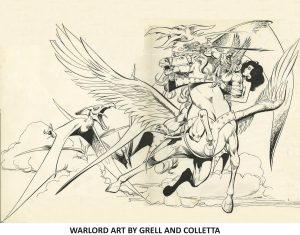
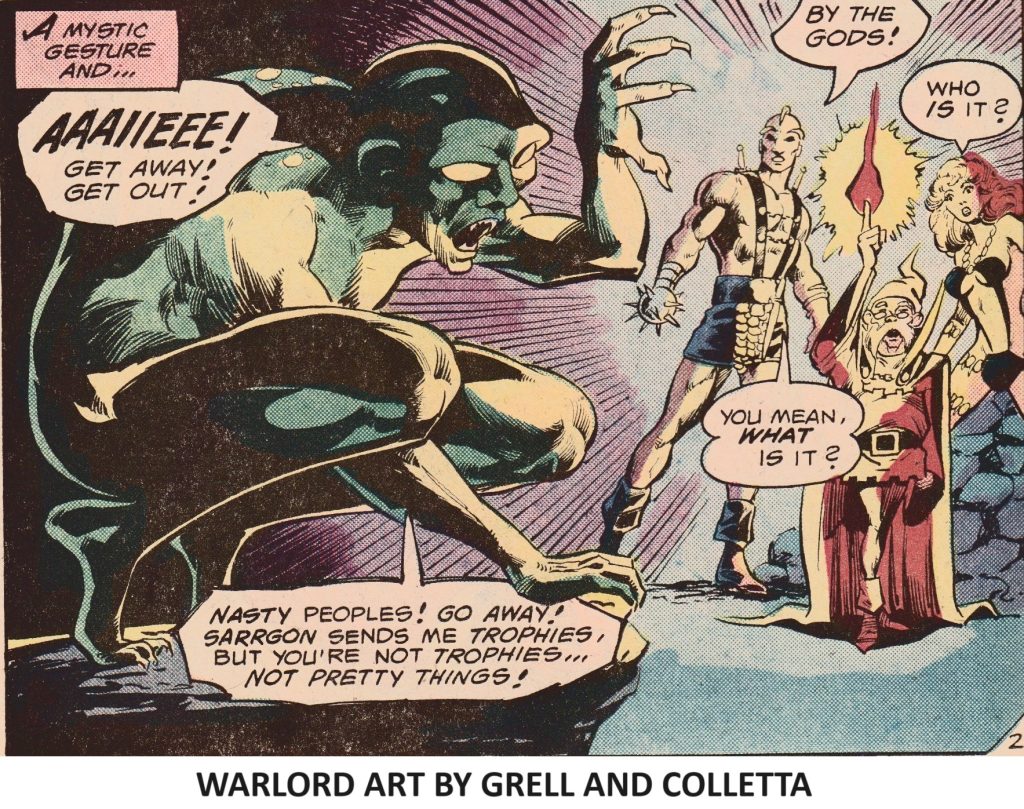
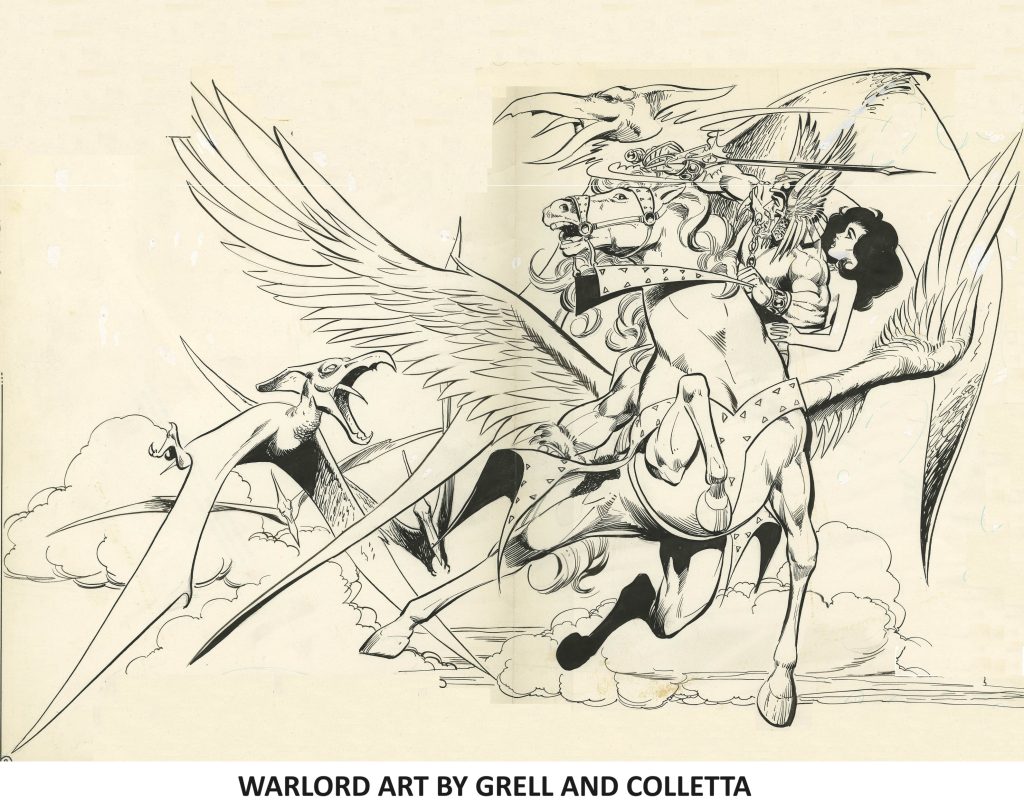
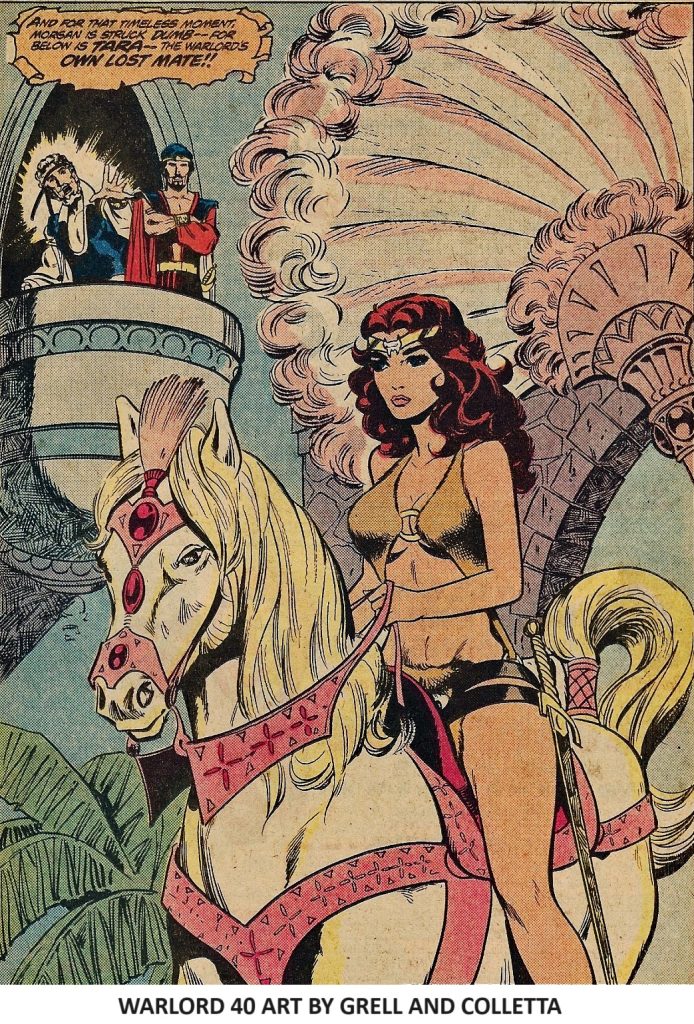
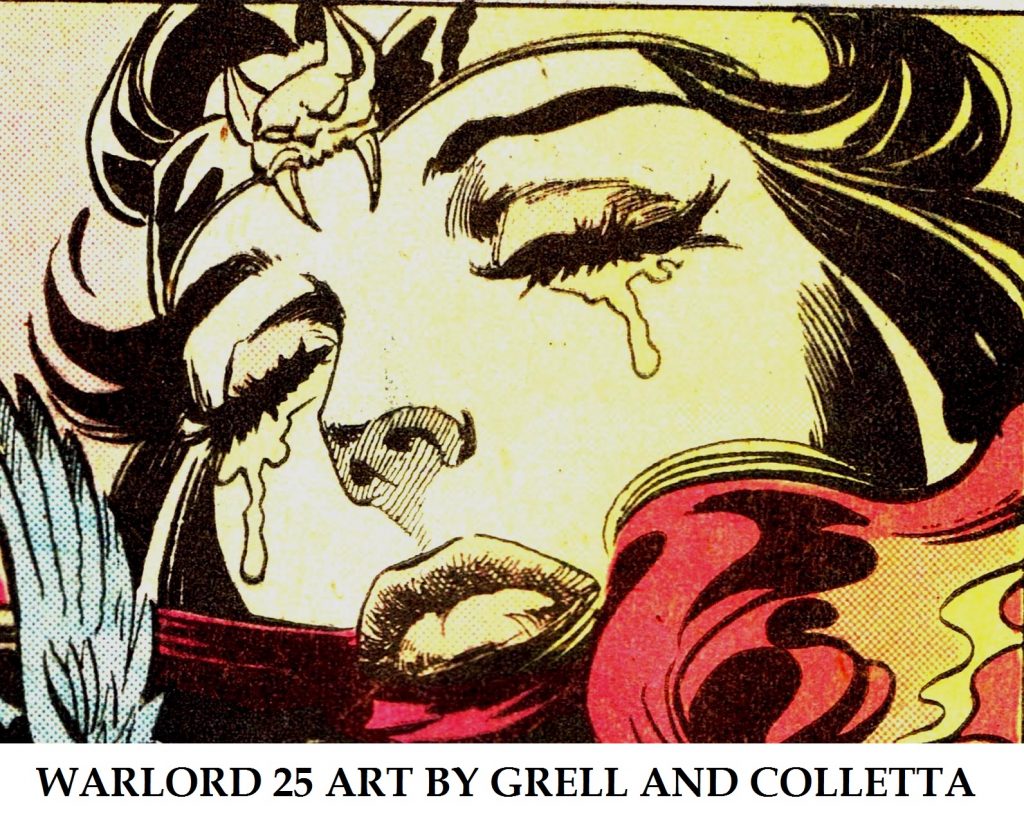
Mike Grell (Former DC Artist): When I was first assigned Vince Colletta as inker on the Warlord, I was excited to be working with an industry legend. I had seen his portfolio -a collection of the best of his best work – and it was impressive to say the least.
So, it was with much anticipation that I began my association with him. In time, however, I found that Vinnie’s speed (a great asset to publishers bucking a deadline) often came at the sacrifice of quality and in many cases the finished product bore little resemblance to the pencils.
Vince Colletta was, at that time, very well entrenched at DC. I was a relative newcomer. That’s a tough nut to crack. Deadlines were not and never were an issue – I was always on time (I wish I could say that held over the past 36 years). The two issue lead criteria in order to replace Colletta as inker on The Warlord was, I thought, pretty much an arbitrary number established by Joe Orlando, then editor on the book. I kind of figured he never expected me to make it.
Lead time for inks was one month. That doesn’t mean Vince took a month or even a week to ink the book. In point of fact, he told me that he had once inked an entire book over the weekend and hadn’t a clue what title he had been working on – but -again I stress that Vince Colletta was the go-to guy when the chips were down and a book absolutely had to be done in extremely short order.
Was it his best work? I doubt it. Certainly nothing I saw matched the quality of work in his portfolio.
Was it done to suitable professional quality? No doubt, or he wouldn’t have continued to get work.
Was it on time? You bet. That’s what Vince Colletta did better than anyone.
And that’s the bottom line.
With the clarity of hindsight, I still say that, despite our turbulent personal relationship, Vince Colletta was a great artist whose true talent was seldom seen by the public and his contribution to the industry during one of the greatest periods in the history of comics cannot be denied.
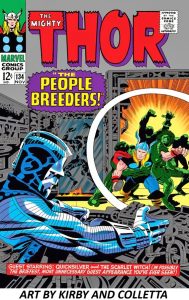
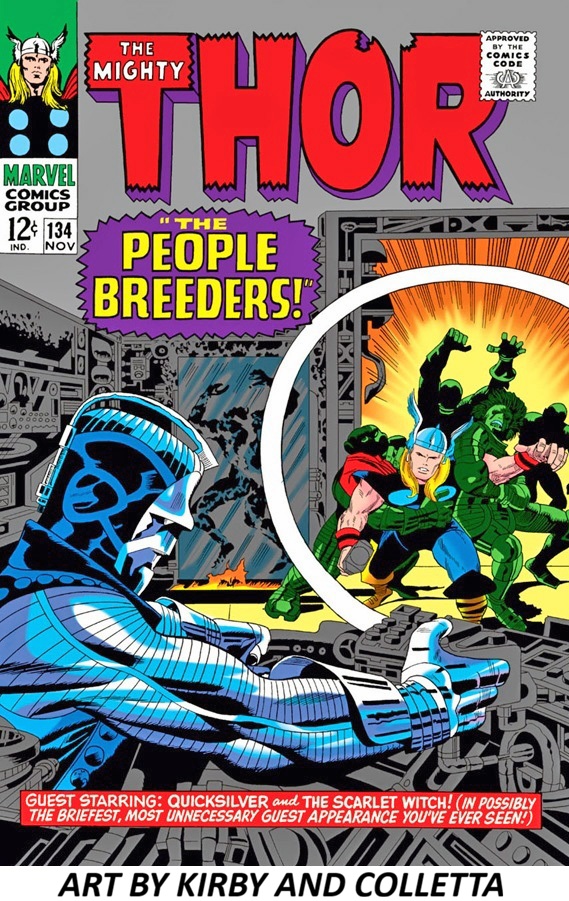
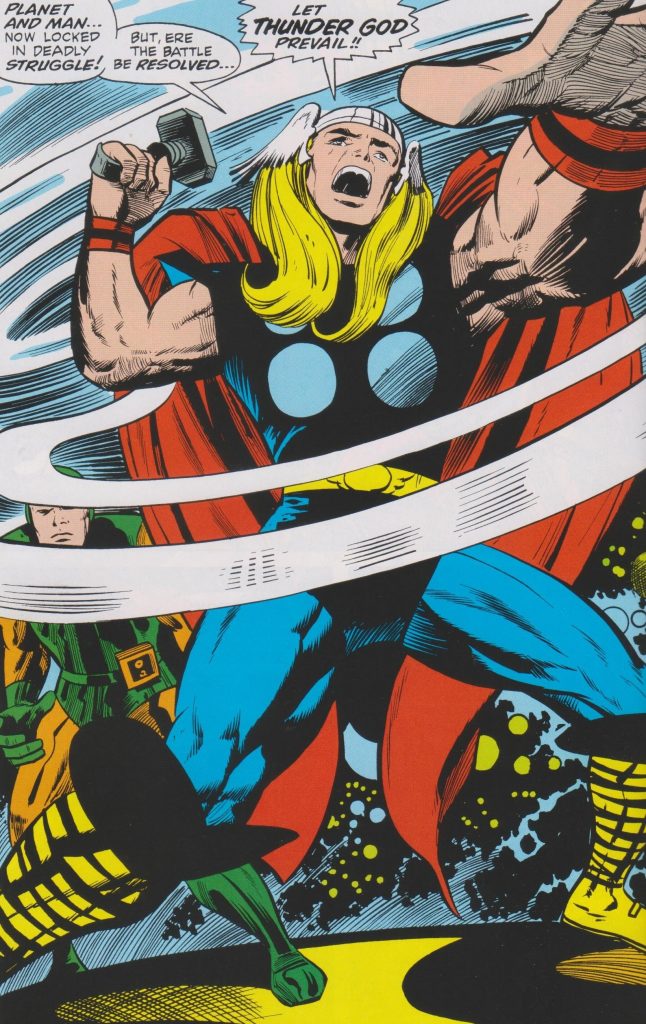
This is my take on the subject of this classic cover, Thor #134, pencils by Jack Kirby, inks by Vince Colletta, colors attributed to Marie Severin and, of course, a small witticism from Stan Lee in the lower blurb.
Recently posted elsewhere was the brilliant cover of Marvel’s THOR #134 which invited a second glance.
There’s a strong case for calling this cover a masterclass in classic superhero comic design. A lot of what I respond to comes from how many visual jobs it does at once without feeling crowded.
What makes it feel so powerful is also something which may well have been omitted, IMO – that giant white ring which is doing enormous compositional work—it separates foreground and background while directing our attention into the scene.
Jack’s powerful layout and elaborate mechanical design is extraordinary. I often wondered what would compel an inker to want to work over Kirby’s indefatigable pencils. – more than once, anyway. The metallic blue villain in the foreground anchors the left side. The circular framing device acts like a window into the action and THOR bursts outward from the glowing center. The blue villain against the warm orange burst is especially striking. For all of it’s intricacies, the composition is exceptionally controlled.
This is a cover built by people who understood that comic art had to grab a kid from six feet away on a spinner rack and still reward close inspection. That’s a difficult design problem, and this art team solves it beautifully.
The inking is doing heavy lifting in this cover. The linework has that dense, confident mid-1960s Marvel feel such as thick silhouette lines and bold contouring. Colletta combined both graphic and illustrative touches to create a slick, futuristic character and scene being invaded by a warrior from Norse times. The rendering on Thor is noticeably different from the heavy, graphic treatment elsewhere. Vince uses fine feathering and selective contour modeling on Thor’s arms rather than thick shadow masses, which gives him a sculptural, heroic presence. The villain gets graphic treatment; the hero gets classical treatment. The metallic foreground figure is built from hard blacks, sharp contour lines, and mechanical patterning — cold, rigid, inhuman. Thor, by contrast, is organic and softly rendered. The stylistic opposition reinforces the story psychologically. The delicate rendering creates hierarchy. Thor becomes the visual “human center” despite not being the largest element. Your eye lands on him because the treatment is more nuanced and alive. This is one of those underrated skills of classic comic inkers: knowing when not to overpower the pencils. The best inkers weren’t just tracing—they were making aesthetic decisions about materials. Metal gets one treatment. Flesh gets another. That tension—graphic abstraction vs. anatomical delicacy—is a big reason the cover feels richer than a lot of contemporary superhero art. This cover clearly works as design, storytelling, and mood. People have been staring at it for decades for a reason.
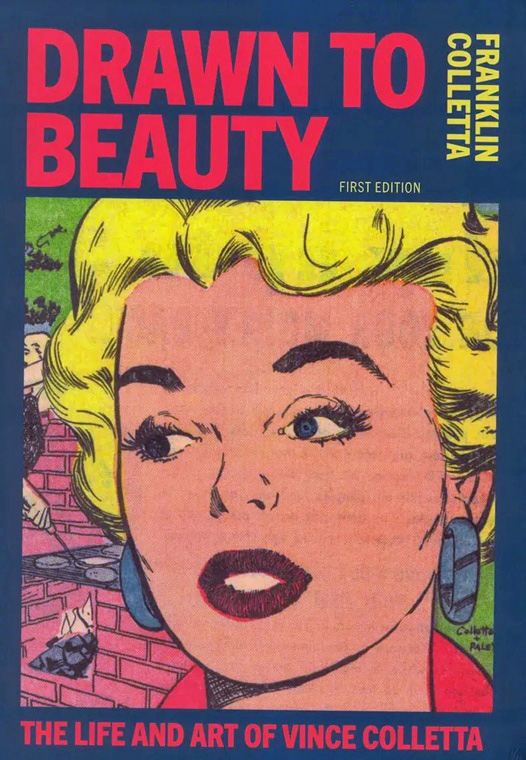
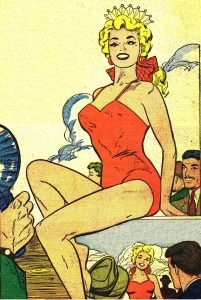
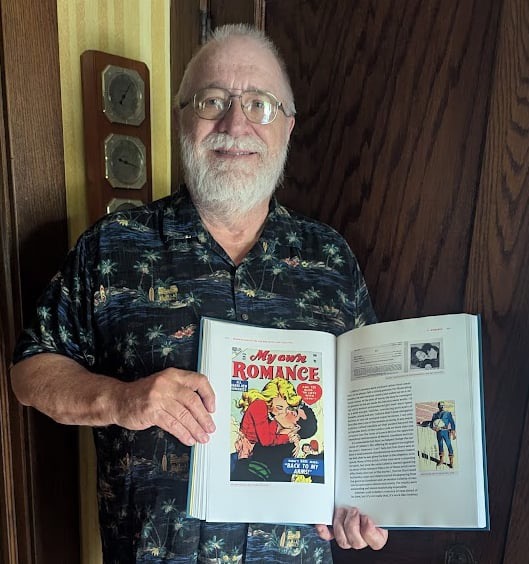
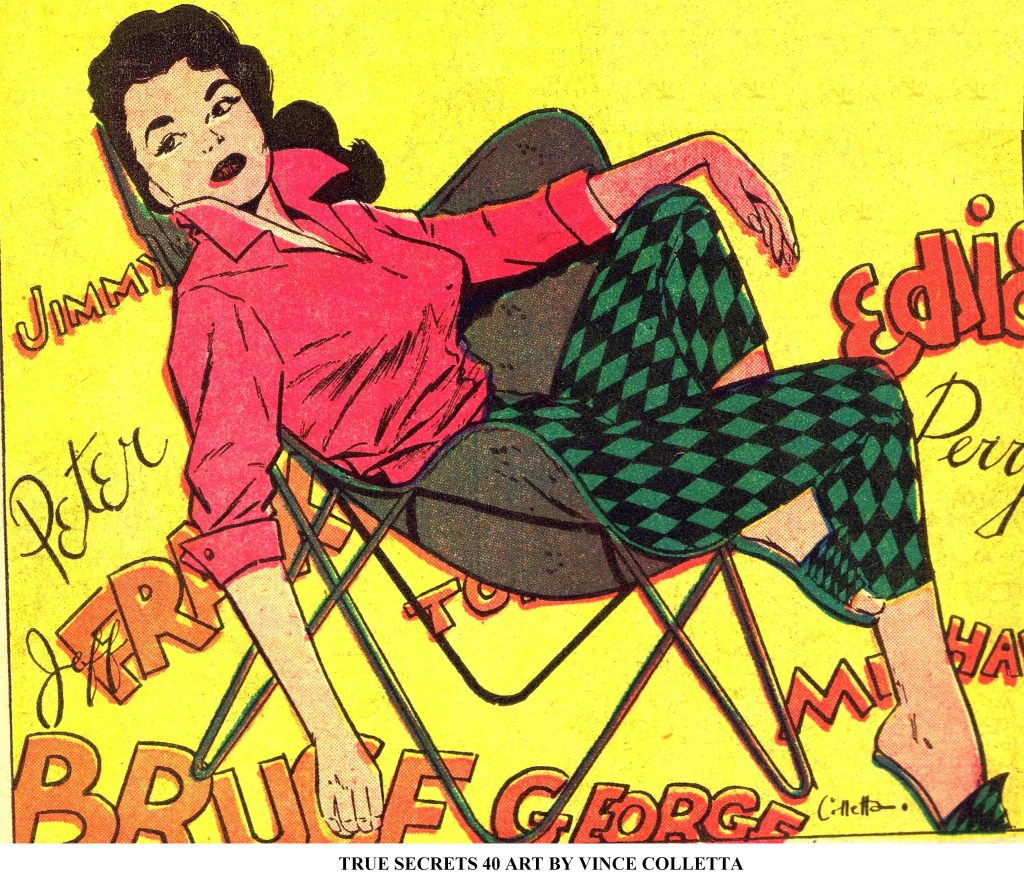
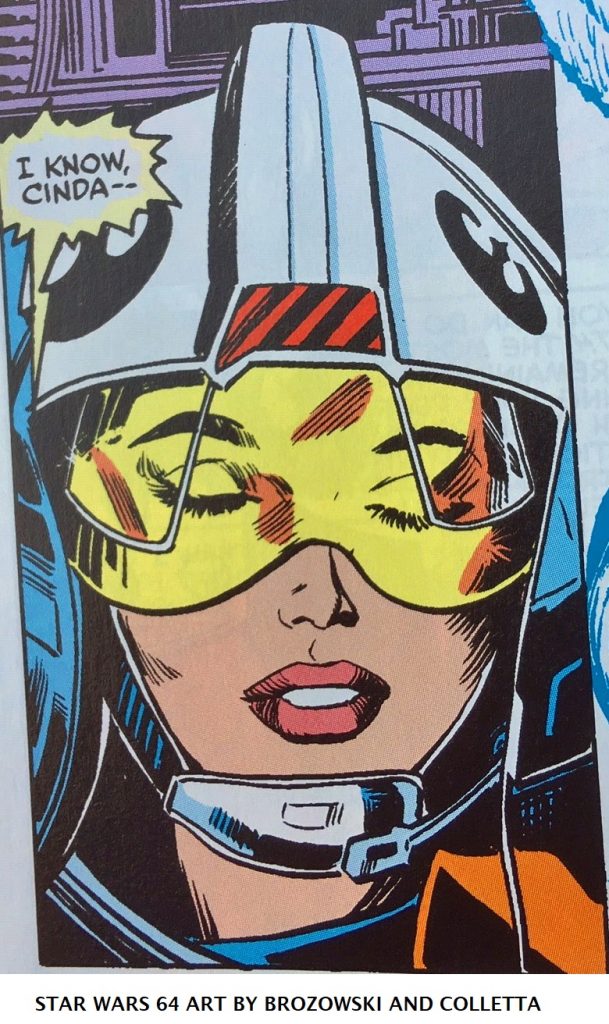
The immense body of art work illustrated by Vince Colletta presents me with a marvelous window into the creativity of the man. From the 50s, during which time he penciled and exquisitely inked primarily romance stories, to the birth and successful emergence of superheroes that continues today. Here are a few examples from the book “DRAWN TO BEAUTY, VINCE COLLETTA – LIFE AND ART” which, by the way, is a must read not only for those who love comic book art and publishing lore, but also to examine the incredible tale of a life that, in ways that will surprise you, has become even more fascinating since he died in 1991. Vinnie’s women usually had sumptuous lips and that famously substantial mascara. Reader’s comments over the years have been…. interesting.
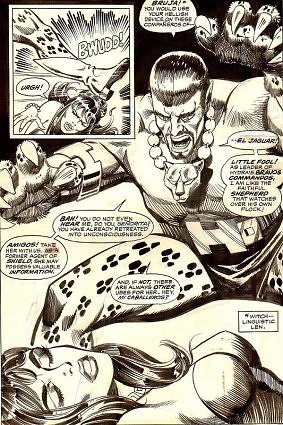
Andrew Wahl: Personally, I don’t put much of Vince Colletta’s inking in the “beauty” category. But I am trying to keep an open mind as I revisit my old comics for these reviews, and judge each book with a fresh set of eyes. That’s why I’ve been surprised to find Colletta’s work on Warlord better than I remember. This issue is a good example: I typically like Bruce Patterson’s inks, but didn’t find them to be an improvement over Colletta’s work on the title.
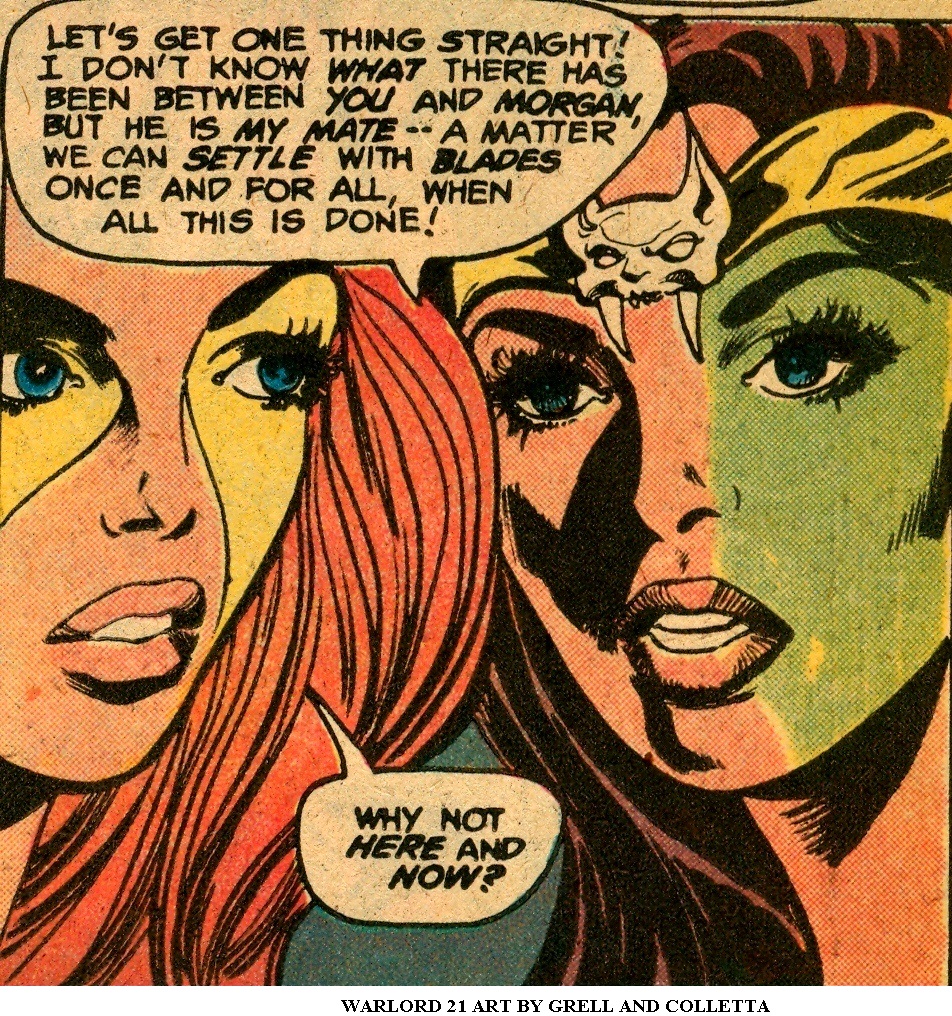
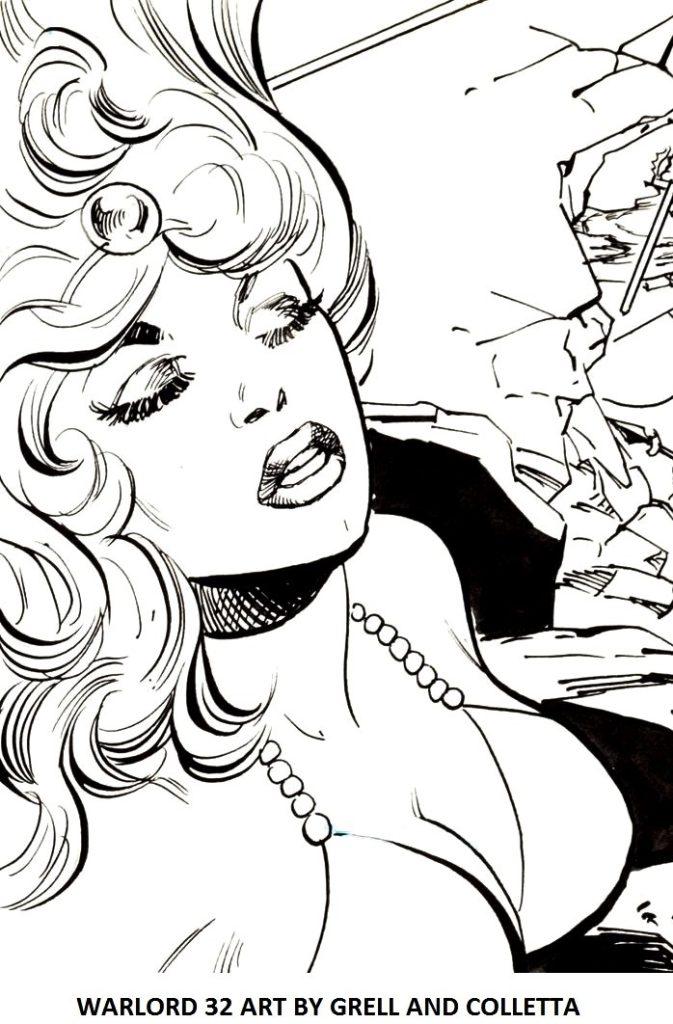
Ben Herman: For something that was inked by Vince Colletta (Warlord,) this actually looks pretty good. Maybe it was the fact that Shakira, a sexy lady clad in a fur bikini, was in pretty much every single panel of the story motivated Colletta to put in a little bit more effort that usual? Whenever there happened to be a beautiful woman in whatever he happened to be inking, suddenly Colletta always seemed inspired to do just a little bit more work than he usually would.
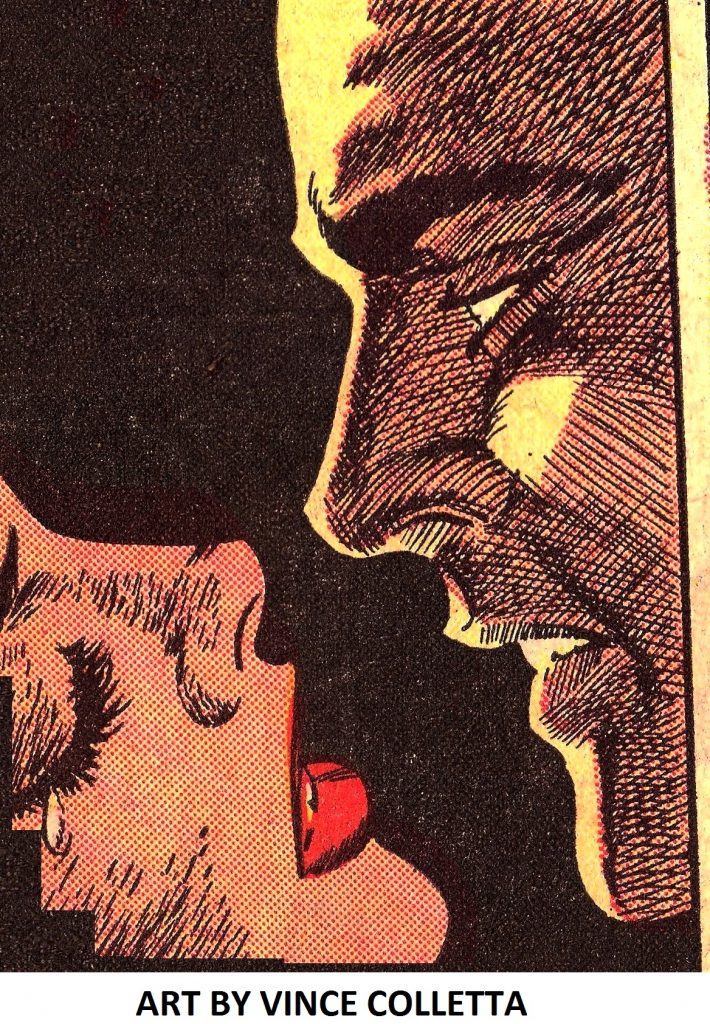
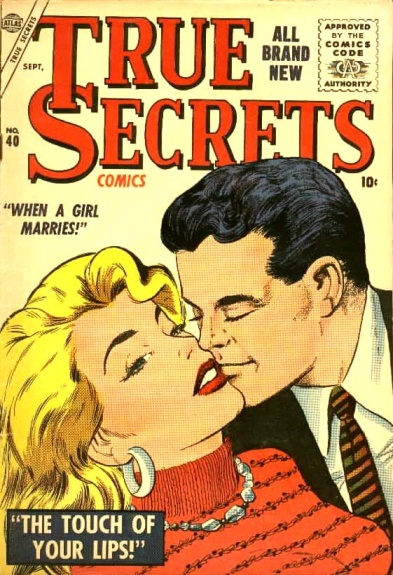
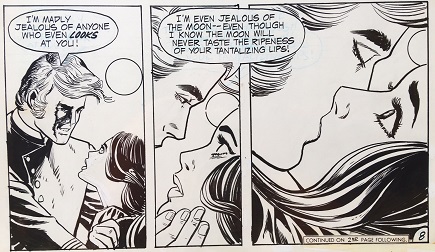
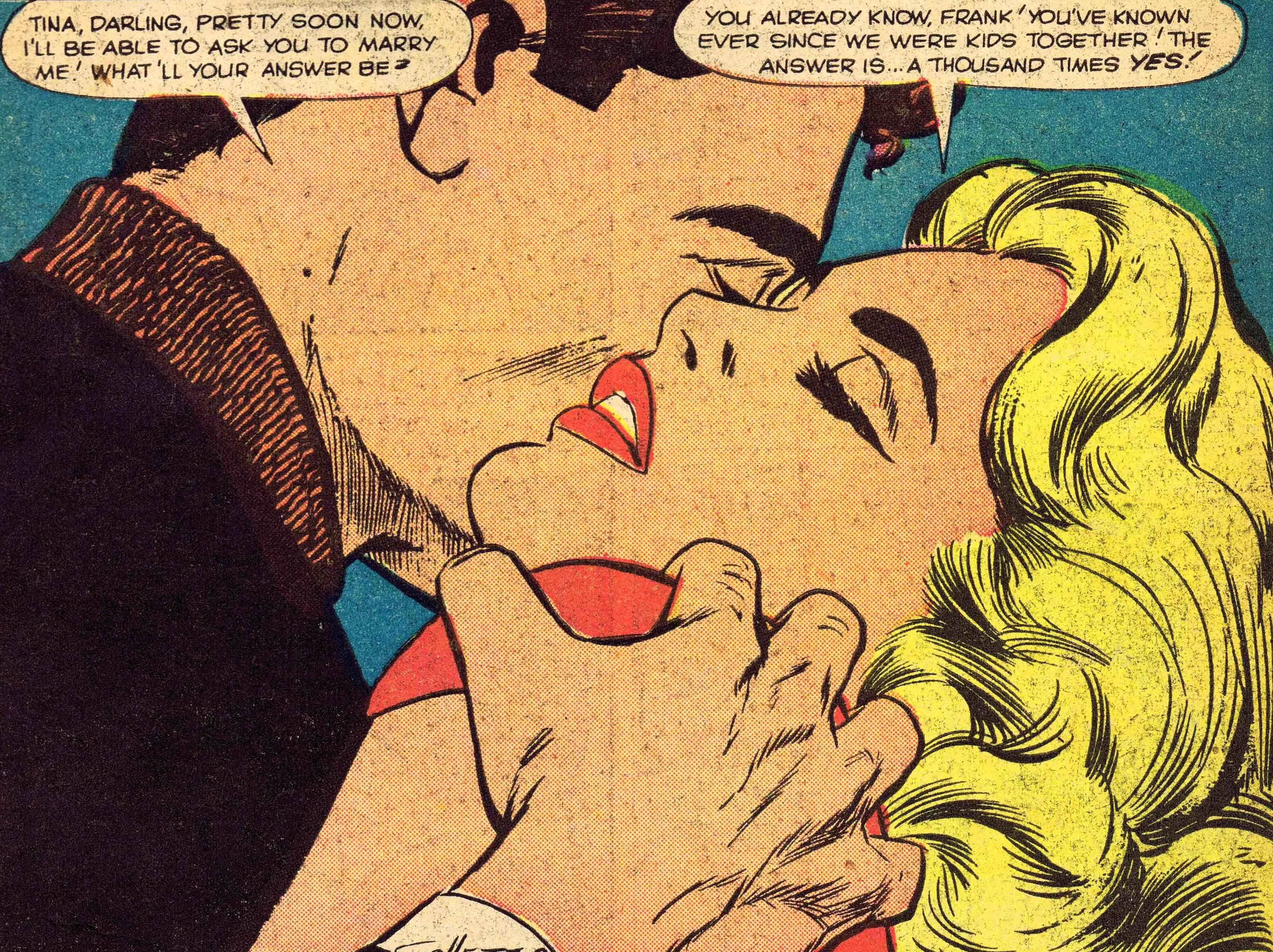
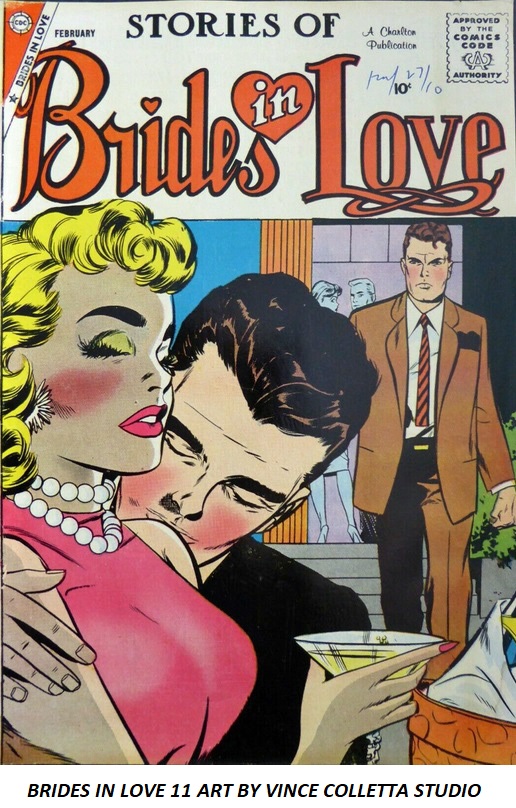
ROMANCE ART BY VINCE COLLETTA
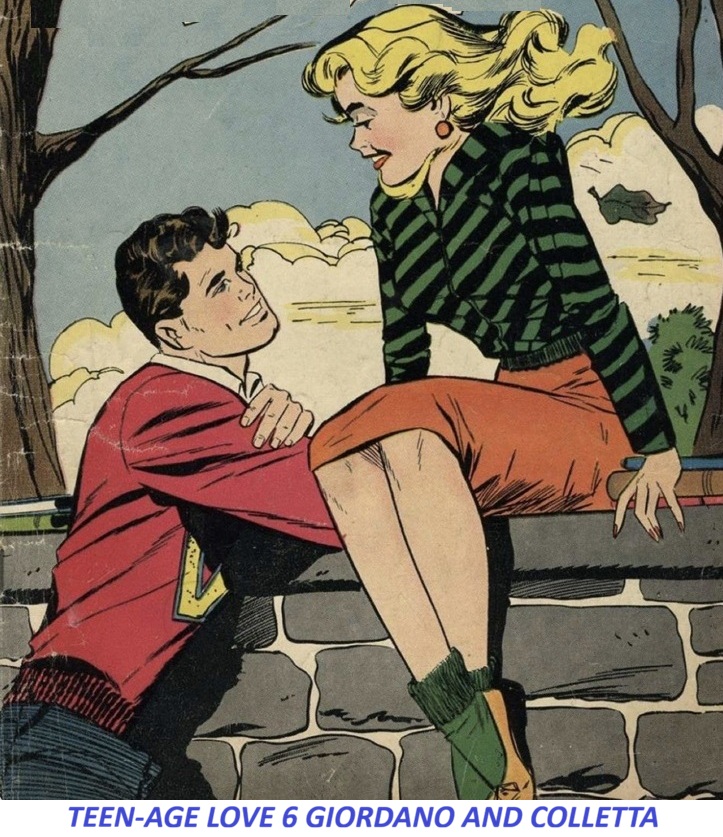
Graduating diamond shapes created by cross-hatching at different angles, embellished with shadows and light contrast a glow radiating from the man’s cheeks. It is he who dominates the panel. The woman, of course, is beautiful with subtle accent lines in her lips.
Mike Browning: Hmmm … while we’re on the topic of artists who don’t make the hot list each month … Win Mortimer’s Spidey Super Stories art is classic and Vince Colletta’s romance stuff was beautiful.
Ken Allan: without starting any sort of a flame war, can anyone send me any articles, personal experiences, etc. with regards to Vince Colletta? I seriously want to just learn a bit more about him and have had little success. Even if some of you could point me towards any interviews he may have done,….ANYTHING,…it would be deeply appreciated.
David Edge: Vince Colletta would have best served Kirby in the 1950s, when he seemed to take greater care in his artwork. As I’ve said before, his romance art from this time was truly stunning.
Mark Yanko: Vinnie is a bit like Don Heck in that respect. If you look at early romance art by Heck and compare it to his ’70s superhero work, the difference is startling.
Mike Pascal: Right on, Mark. Thanks to John Lustig’s wonderful LAST KISS strips, Vinnie’s lovely romance work is on display almost weekly and will be preserved for a whole new audience.
Colleen: Vinnie Colletta used to freak me out because all the women he inked had the same gloppy mascara.
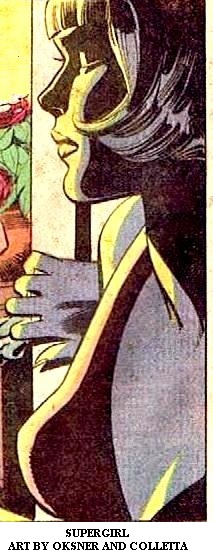
OKSNER AND COLLETTA
The central character in the panel is obviously the girl but she is rendered darkly with complex facial shading accompanying the simple shadowing of her neck and breast. The inversion of color in the girl’s left eye is interesting, almost seeming as if her eye is closed. I love how the inker featured luminescent highlights in the girl’s hair. Bob Oksner was an excellent plotter of all types of stories.
Droid714: As I’ve stated before, since I was a Marvel Zombie from the very early 60’s through the mid 70’s, I completely missed Vinnie’s work at DC in the 70’s. Now that I’m going back and collecting Wonder Woman and Supergirl from that era, I’m seeing much of his DC work for the first time. And the more I see of it, the more I like it. In my opinion, he was a much better technical artist than Kirby. His women actually looked like women, not men with long hair. And quite frankly, I’ve never been a big fan of Colan or Buscema.
Again, the more I see of Vinnie’s work, the more I start to wonder if a lot of the negativity that some of his peers allegedly felt for him wasn’t motivated a little bit by jealousy. He was good, he was fast and he occasionally erased a few lines of their precious pencils. Yet without Vinnie making sure the work got out the door on time, how many of them would have been whining about missing their paychecks?
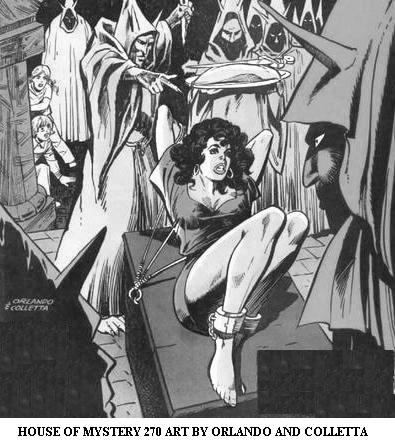
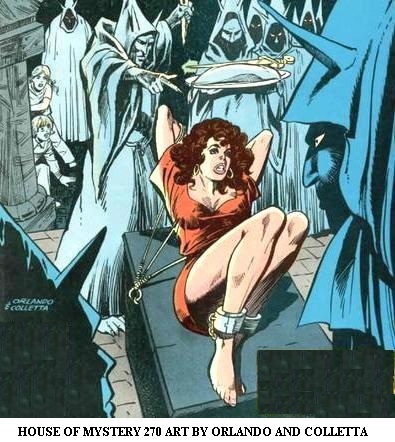
HOUSE OF MYSTERY 270 ART BY ORLANDO AND COLLETTA
HOUSE OF MYSTERY 270 ART BY ORLANDO AND COLLETTA
The colorist Tatjana Wood helped to bring out the darkness of both the scene and the girl’s horrific situation with her vivid coloring of the damsel in distress. Joe Orlando was a terrific penciler for laying out macabre stories. Vinnie’s inks on the captive woman are incredible showing her virtually bursting out of her dress in an effort to escape.The druid in the foreground is ominously inked with a bold brush and pen; the others rendered more delicately as are the shocked children who look on from the background. Vinnie and Joe were very close friends throughout their forty-year professional careers.
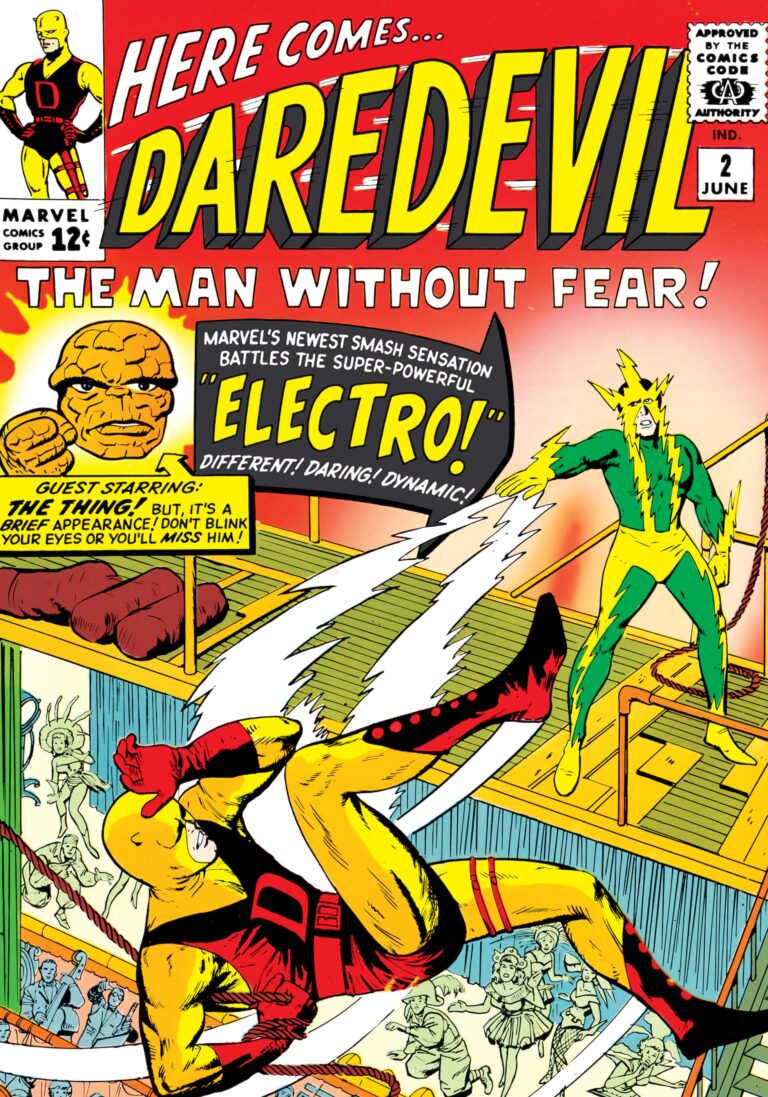
Fat Boy: When I first saw these Joe Orlando and Vinnie Colletta Daredevils it seemed like art art instead of just comic art. Hopefully you’ll post some scans of the interior pages. Sure wish I had saved these.
Comicsdad: Joe Orlando’s art is quite nice, and I can’t remember when I’ve seen Colletta’s inks reproduced so well
Joseph Graves: I thought it was strange Vinnie put as much into that over Orlando whose art is cartoonish. I liked it.
Nick Caputo: I agree for the most part, although those early DD’s by Orlando had a certain charm to them. I even liked the Colletta inks, go figure!
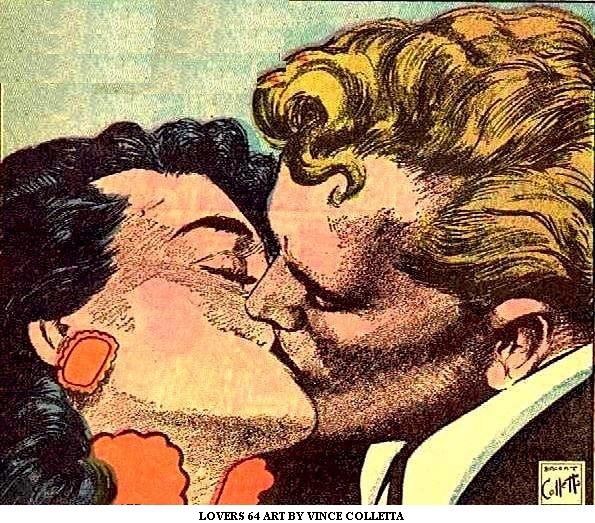
LOVERS 64 – NOVEMBER 1954
Despite the poor print quality of comic books in the 1950s, some artists, Colletta among them, strove to impart an illustrative, portrait-like quality to their art. This splash page represents the finest efforts of Vince Colletta to translate his love of oil painting onto a completely different, difficult medium. An artist can create lifelike people in a realistic world using oils. Museums are full of such masterpieces. The same techniques and the resultant works are literally impossible to duplicate with pencils and ink. I believe this example is as close as you will find in a comic book.
Mr. Peabody: Not much to say about the inking on the cover but the interior page you showed looks pretty good to me. It is just romance, after all, and I doubt if either of the men who created this artwork were trying for a museum piece. Anyway, there’s no way Colletta could have turned one of these rounded faced Kirby women into a something either realistic or beautiful. See the cover of Lovers #64 or most any other Vinnie girl from the 50s to illustrate my point.
Walt: I enjoy fine line work as done by the likes of Reed Crandall, Al Williamson, Vince Colletta etc and sorely miss this highly detail efforts of illustration as the today’s stock or printing processes do not allow this type of illustration.
alexarcadian: It’s apparent if you go back and look at Colletta’s romance work from the 50s he was aiming for an illustrative look something along the lines of Leonard Starr.
Russ M: The thing about Vince Colletta is what this book (The Thin Black Line) missed altogether and that’s his art. When given time, Colletta outshone every other inker on superheroes. Prior to that he drew hot romance stories that looked a lot more realistic than what other artists were doing. Just look at the cover of THOR #126 – could that finished product been equaled by anyone else. Even to this day, inkers use thick black lines that look almost measured as if by rulers and protractors. Colletta took pen in hand and illustrated, drawing shadows, depth and realism into his subjects.
Ger Apelde: But some artists, such as Colletta and Al Williamson (and most of his group of peers) liked to experiment. You see them try out new techniques in every panel. They use dry brush, full brush, pen, stencils, anything. Colletta’s early work is very similar to that, but he adds a twist of his own. He frequently uses patterns to distinguish one material from another. At times it’s almost as if he is a fashion illustrator. That, combined with his way with pretty women, made him very suitable for romance comics. He also developed a great way of drawing women’s hair, which is not something every artist masters.
Bring Back Zot: Nice article and an even nicer drawing of Vince Colletta, Michael. Love him or hate him, those 50’s covers prove Colletta had genuine artistic talent.
Michael Netzer (Former Marvel and DC Penciler): How true, BBZ. Vinnie’s romance work is not only indicative of talent, but stands along side some of the best in commercial illustration, like Stan Drake and other giants of his time.
Vince Colletta was undeniably a part of Marvel’s success, particularly during its formative years in the 1950s and 1960s. As the company’s premier romance artist, he helped establish Marvel’s dominance in the romance comic genre, producing a vast number of covers and stories that were a key part of the publisher’s output before the superhero boom. His delicate linework and ability to convey emotion made him a defining artist of that era.
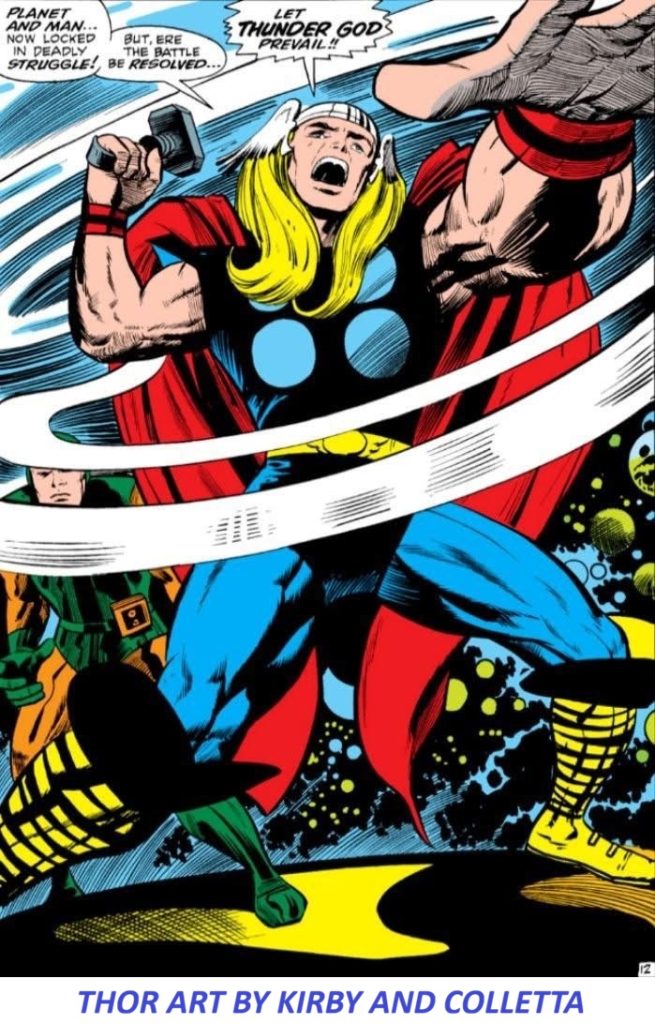
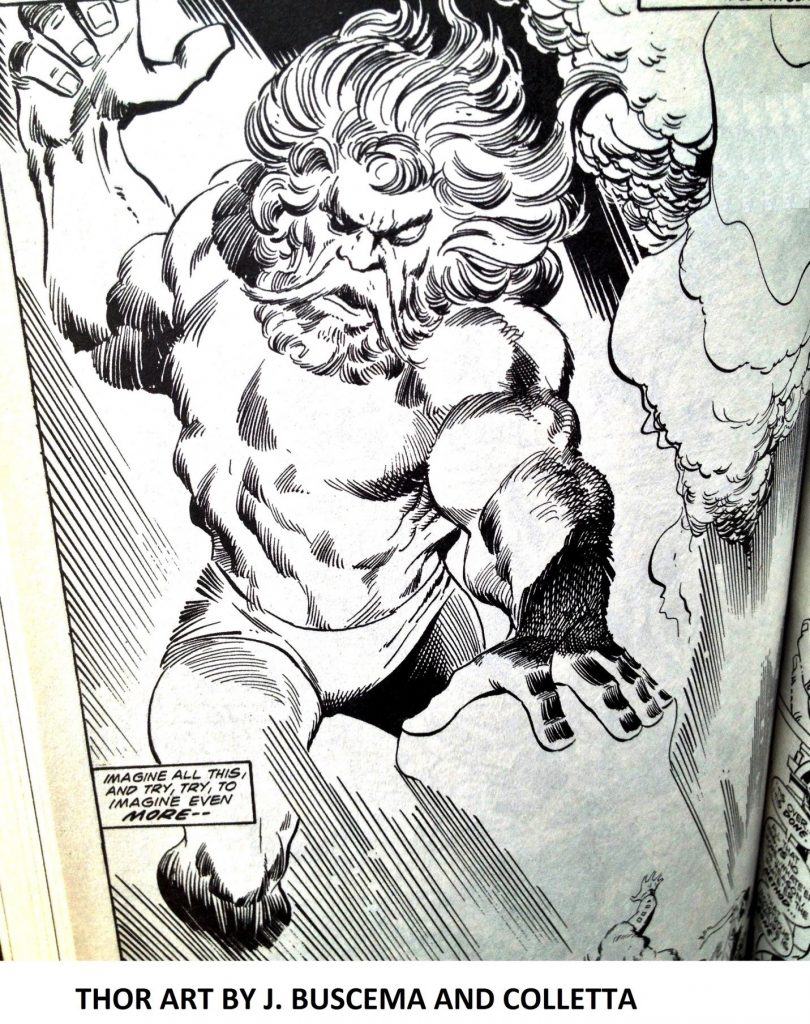
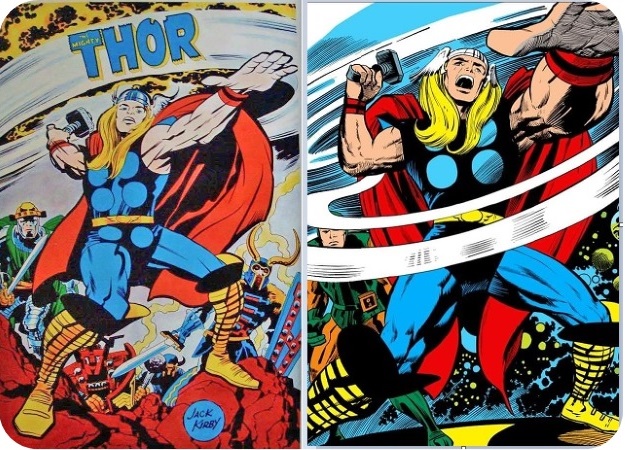
When Marvel transitioned to superheroes, Colletta played a crucial role in inking Thor and Tales of Asgard, some of the most visually striking stories of the Silver Age. His fine-line feathering and high-contrast inking gave Jack Kirby’s epic mythology a grand, romanticized look that became a signature style for the title. His ability to meet tight deadlines also ensured that Marvel’s books shipped on time, something that was critical to the company’s growth and reliability.
Though his tendency to simplify or omit details in the inking process has been debated, his contributions to Marvel’s visual identity and output were substantial. His sheer volume of work, adaptability across genres, and impact on major titles make him an important figure in Marvel’s history.
Vince Colletta’s artwork is best known for its fine linework, delicate feathering, and ability to create a soft, romantic atmosphere—qualities that made him Marvel’s most prolific inker, especially in the romance genre of the 1950s and 1960s. His inking style often added a textured, almost ethereal quality to the figures he worked on, which suited the lush, dramatic compositions of romance comics.
When working on superhero titles, Colletta’s inks sometimes smoothed out or simplified the details of the penciler’s work, making the figures more elegant but also sometimes reducing the depth or intensity of the original pencils. He was particularly associated with Jack Kirby’s Thor, where his fine line hatching gave Asgardian scenes a grand, almost mythic feel.
Though Colletta was sometimes criticized for erasing or simplifying details to meet tight deadlines, his adaptability and speed made him one of the most in-demand inkers of his era. His work remains a defining part of Marvel’s Silver and Bronze Age aesthetic.
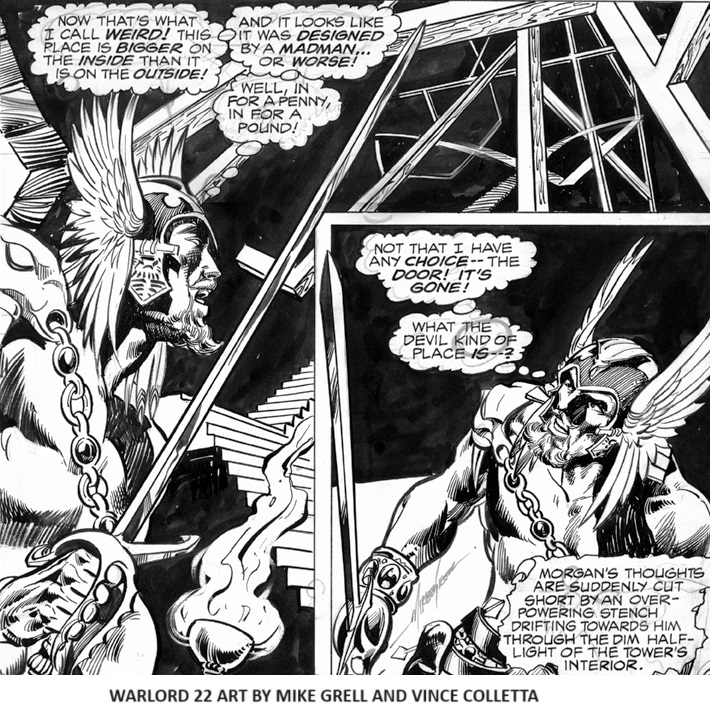
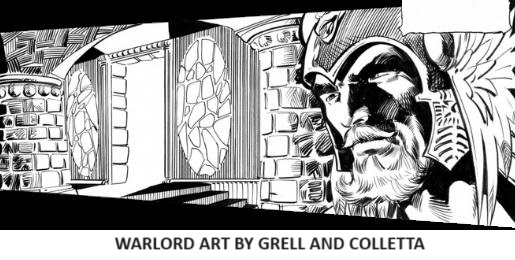
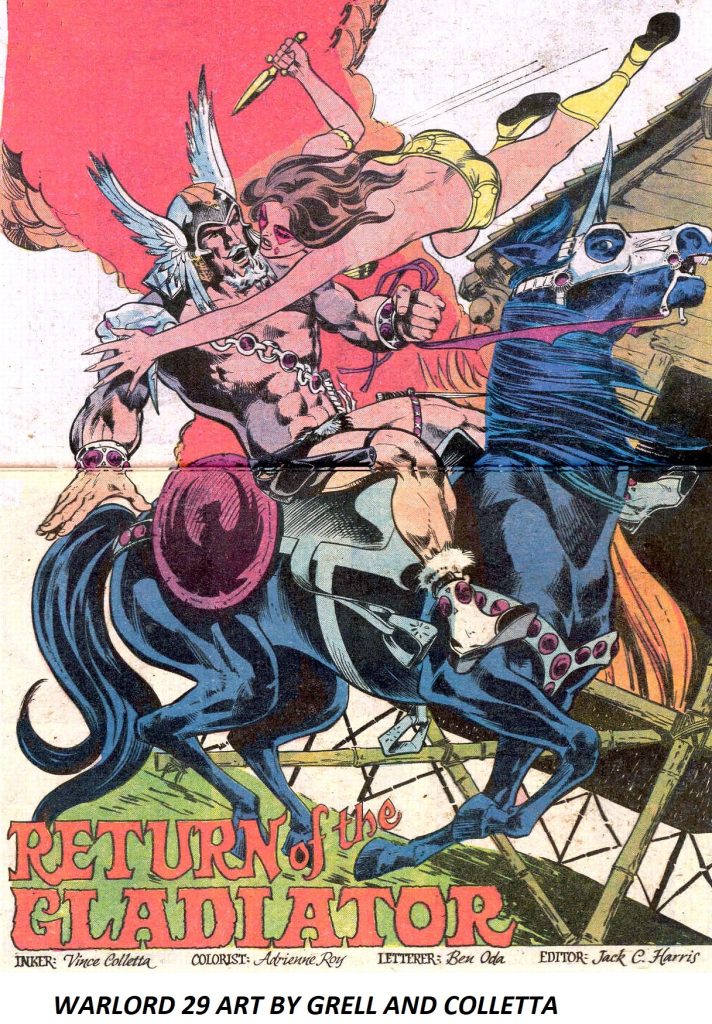
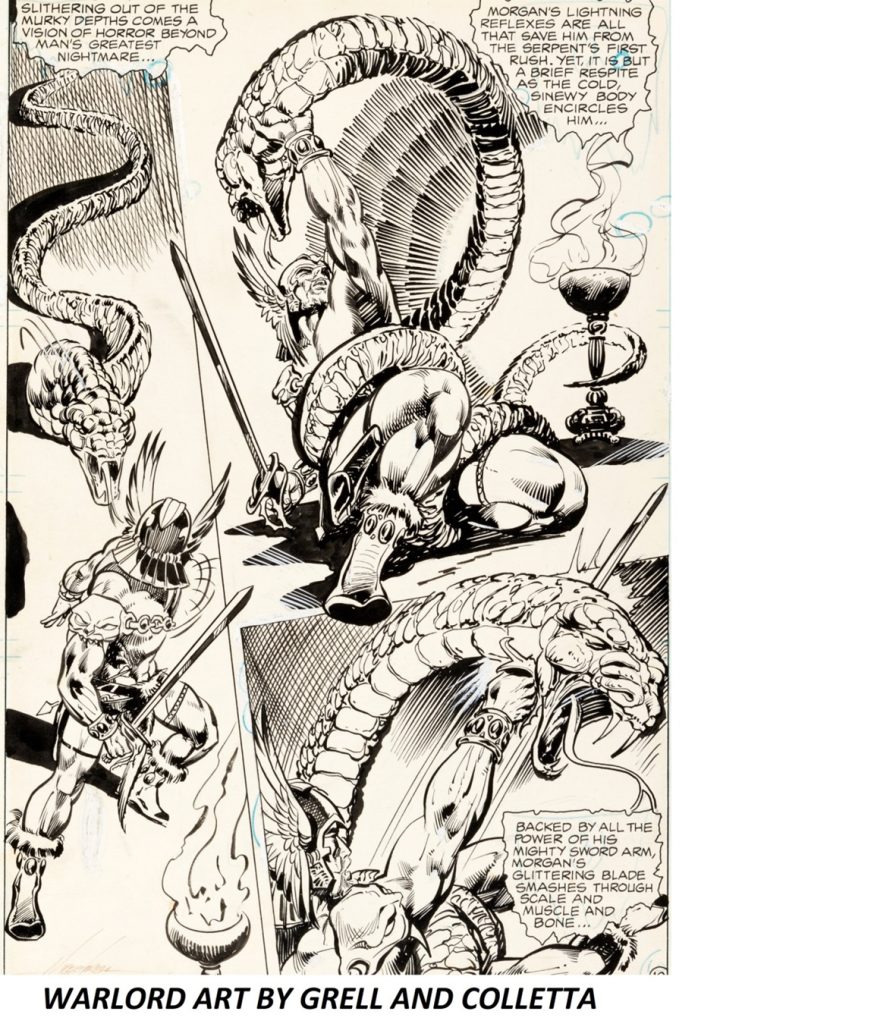
Vince Colletta’s inking on Warlord at DC Comics retained the same stylistic approach he used on Thor and Tales of Asgard. His fine feathering, delicate cross-hatching, and high-contrast linework gave Warlord a mythic, almost ethereal look that complemented Mike Grell’s dynamic, detailed pencils. Much like his Thor work, Colletta’s inking on Warlord helped establish a grand, fantasy-driven atmosphere, emphasizing the sword-and-sorcery elements of the series. His technique added a sense of motion and texture to Grell’s figures, often making them appear more refined or softer. Overall, his inking on Warlord fit well with the title’s epic fantasy aesthetic, much like it had in Thor’s Asgardian sagas.
Later in his career, Vince Colletta adapted his inking style to better suit the bold, dynamic nature of Jack Kirby’s Fourth World books at DC Comics. Unlike the soft, delicate feathering he used in romance comics and Thor, Colletta employed a more graphic, high-contrast approach in titles like Mister Miracle and New Gods. His inking in these books featured heavier blacks, stronger line weights, and a more angular, dramatic quality to match Kirby’s powerful, kinetic storytelling. While Colletta’s work on Thor gave Asgard an almost mythic elegance, his Fourth World inking often emphasized raw energy and motion.
Vince Colletta holds the record for the most art credits of any comic book artist by a significant margin. According to the Grand Comics Database, Colletta’s total pencil and inker credits amount to 13,940 pages, surpassing other prolific artists like Josef Rubinstein, whose credits total 9,704 pages.
Colletta’s immense output was due to his exceptional speed and work ethic. As Marvel’s primary romance artist in the 1950s and 1960s, he handled a vast number of covers and interior pages. Later, as an inker, he became known for his ability to complete pages quickly, making him a go-to choice for deadline-driven projects. His extensive work across multiple genres—including romance, superhero, war, fantasy, and horror—ensured his place as the most prolific artist in comic book history.
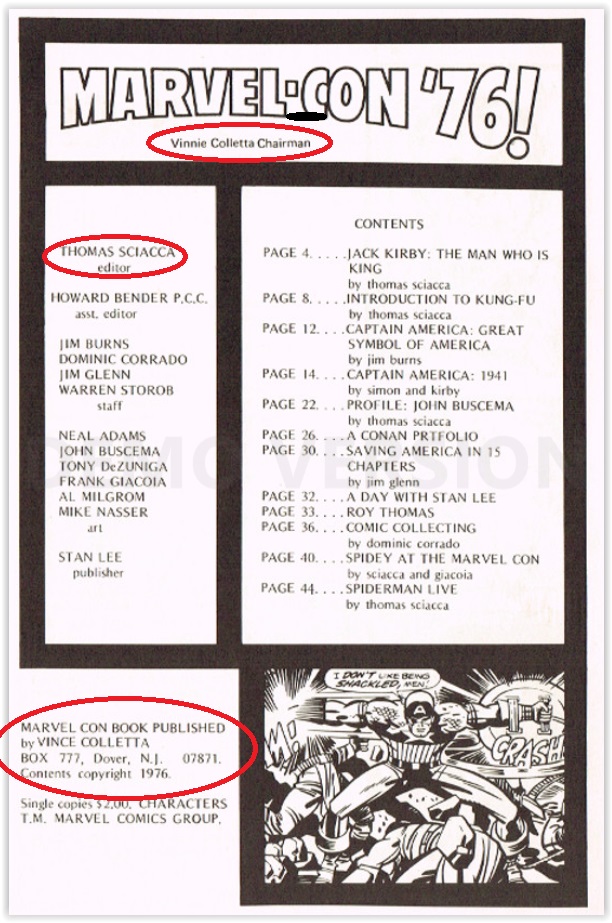
An email or social media message can often make your day. I saved this one, written by Tom Sciacca, about my father, Vince Colletta, in a Word document where it has been residing in my laptop. Every so often I come across it so this afternoon I decided to share this poignant and humorous letter with you.
T Paul Sciacca: Miss your dad..sometimes I do an impression of him…he was one of a kind…he gave me my career when he had Stan Lee hire me to help run Marvel con in 1976..then took me to DC Comics to be his assistant when he became art director..I will always be grateful..and Frank Miller and Trevor von Eeden should be grateful to him. I brought both of them to him when they were looking to break in..Frank has never mentioned Vinnie or me…and he still owes me money when he would borrow from me cause he had none for dinner..
Vince Colletta acted as the chairman for the Con. The book was edited by Thomas Sciacca, with assistance from Howard Bender.
Tom Sciacca previously wrote to me describing his interaction with actor Peter Falk which allayed his skepticism over a story Vinnie told him about his old friend.
Thomas Sciacca: I remember your dad talking about actors he was friends with.he mentioned Peter Falk..I thought he was bullshitting..until I ran into Falk by the arts students league on 57th St..I said ‘Hey Peter..Vinnie Colletta said to say hi..he immediately stopped and excitedly said how’s Vinnie doing..I guess your dad hung out with them. They used to play pool..and Falk was a good artist who took lessons at the students league..even after he was a big star..wonder if he did backgrounds for your dad in the 50s..lol
Thank you, Thomas Sciacca for correspondences that I will always remember.
Round about 2008 an upstart comic book blogger who went by the name of Dan McFan burst onto the scene. It seemed as if his very existence revolved around the rumors and myriad stories swirling throughout the comic book art community about Vince Colletta. Talk about infamous – McFan exposed more misconceptions and outright lies being told about that man than any ten of his peers. Without going into all of the posthumous stories swirling around the halls of fandom concerning Vinnie, it was accepted by one and all that Colletta was a well-liked gentleman. I am privileged to be in possession of all of Dan’s e-Mails, notes and articles. Many professionals who wrote to him attested to Vinnie’s professionalism and good-natured spirit.
So, it was with great concern when Dan read comments by a black artist named Denys Cowan hinting that Vince Colletta was a racist. Supposedly, Cowan came into DC (or was it Marvel?) to show his portfolio and was told by Vinnie “We already have a black artist here at DC (Trevor Von Eeden – who got his first big break, interestingly enough, from Vince Colletta). McFan immediately wrote to Denys. This very short exchange followed:
Dan McFan: You wrote that Vince Colletta rejected you saying that “DC already has a colored artist”. Is this true?
Denys Cowan: Hey Dan,
Why do you need to verify this info?
Vinnie’s been gone a long time….
That was, as they say, all he wrote.
Fast-forward to 2024. Denys Cowan is being interviewed by a knob named John Siuntres and appears in a You Tube by Michael Stradford (Comments turned off…) where he repeated the story, this time with a few embellishments. Supposedly it was Rich Buckler, a protégé of Vinnie’s, who arranged the meeting between fifteen year-old Artist Cowan and Art Director Colletta. Same story, we already have a colored artist working here, blah-blah, but in this version, after Denys tells Buckler, Rich runs into Vince’s office to criticize him. According to Cowan, Vince didn’t back down but try to imagine the incredulity of the scene. Vince was a mentor to Rich Buckler. Rich wrote a very moving piece for my book about his time working with my father. Rich Buckler has since passed and it occurred to me that Cowan could have simply answered Dan McFan’s question in 2008 and had a real-live Rich Buckler to corroborate it.
Another interesting comment was made by Denys that Vince kept puffing on a cigar between looking at the individual pages in his portfolio. I just happened to be speaking with my sister Rosie an hour ago and shared the story with her. I asked “Did you ever once see daddy smoke a cigar?” Oh, how she laughed at the notion before saying “No!”
Cowan concluded with a years-later tale of Editor-in-Chief Jim Shooter asking Vince to offer an apology to Denys. According to Cowan, it went something like “I don’t remember the incident but if what I said hurt you, I apologize.” Did Vinnie make a “we already have a colored artist” crack to Denys? Perhaps he did but, if so, it was most assuredly said in jest with no disrespect intended. I must say that I am skeptical about this part but, since Jim Shooter is still alive and well, perhaps he would like to weigh in.
I knew Vince Colletta like only a son can know his father and if there were even one racist bone in his body, I’d recognize it and freely admit it. I should simply stay silent and let Cowan’s story die its richly-deserved death except that dirt bag will come out of his rat-hole ten years from now to repeat it once again. Maybe its your only claim to fame, Denys; you sad, whimpering clown.


 A TIMELY AWAKENING FOR ROMANCE ART IN COMIC BOOKS
 LOVE VINNIE COLLETTA? NO APOLOGY NECESSARY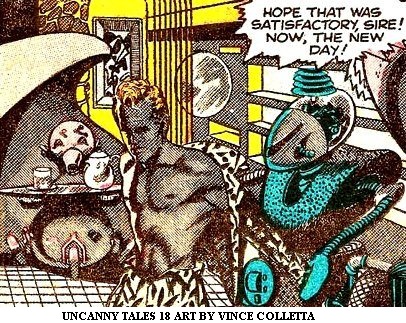
 A PHOTOGRAPHER’S JOURNEY – VINCE COLLETTA IN NEW YORK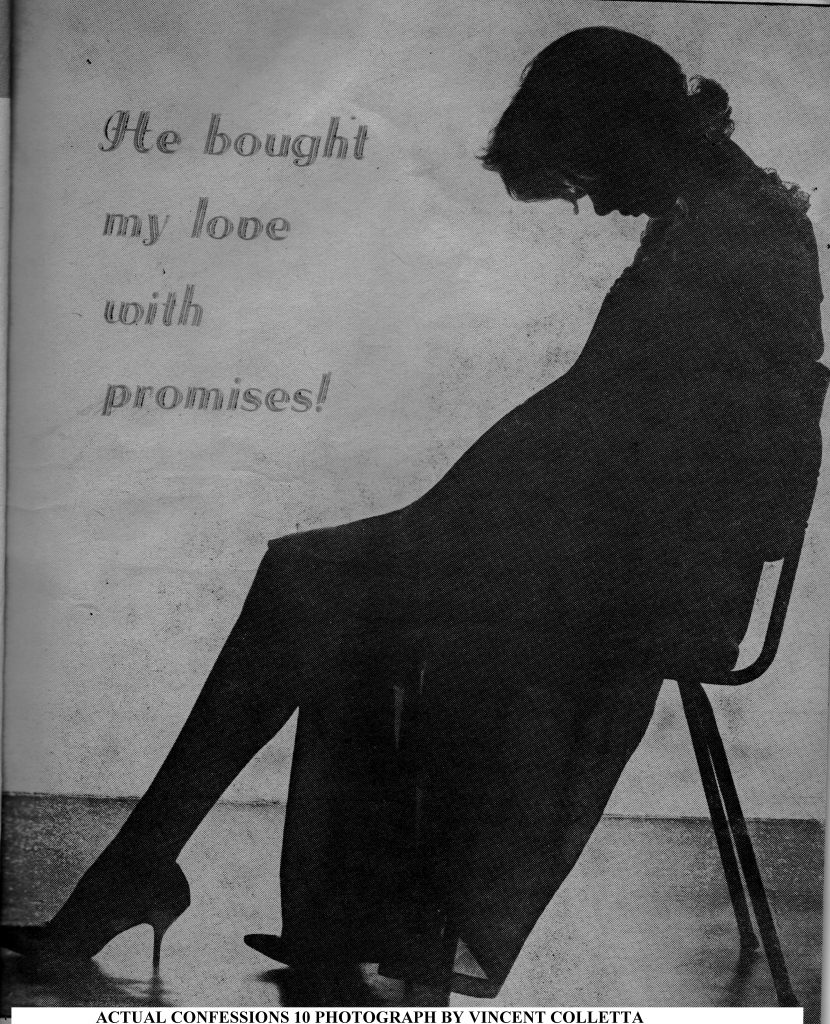
 THERE’S SOMETHING FISHY ABOUT THIS ARTICLE.
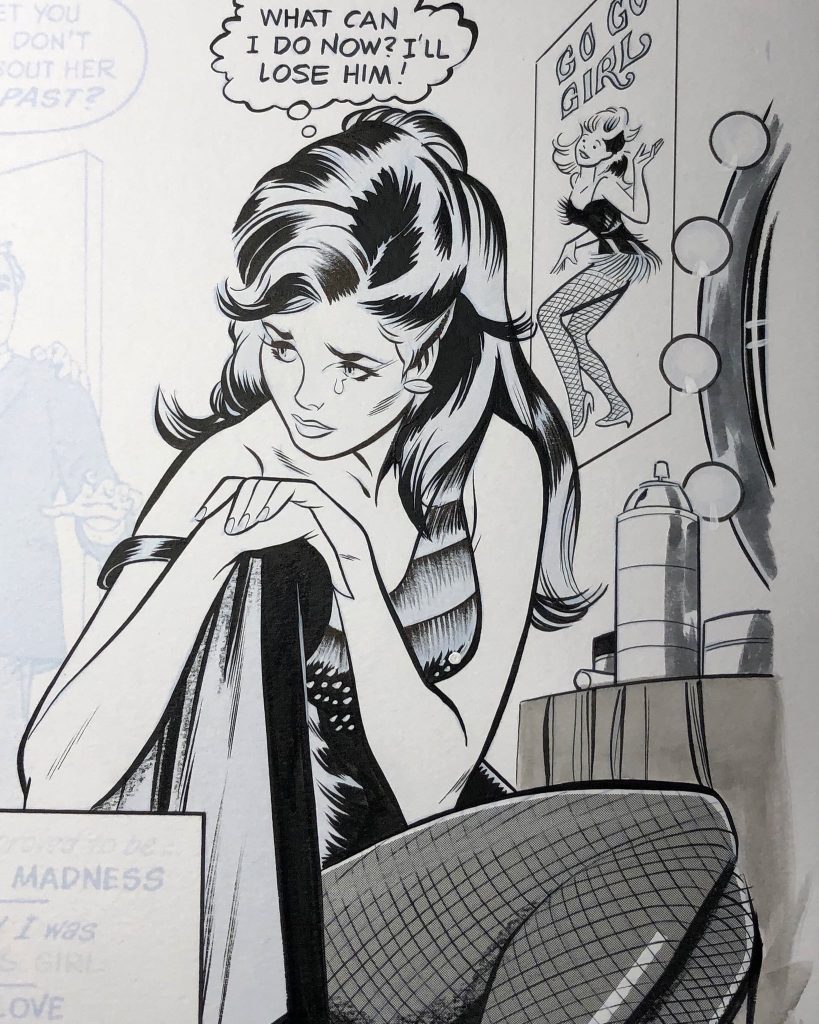
 CARE FOR SOME WITE’ OUT IN YOUR COMIC BOOK ART?
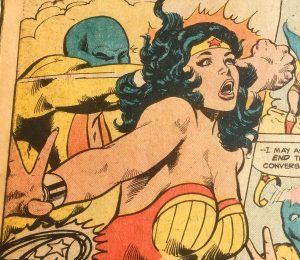
 UNEXPECTED? I NEVER SAW IT COMING.
 JACK KIRBY, VINCE COLLETTA, MIKE ROYER AND THE KULT
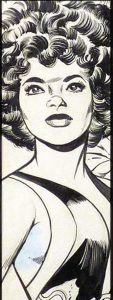 How to Draw Beautiful Women -The Perfect Swipe File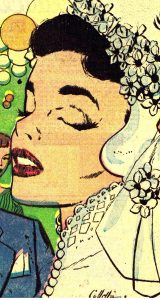
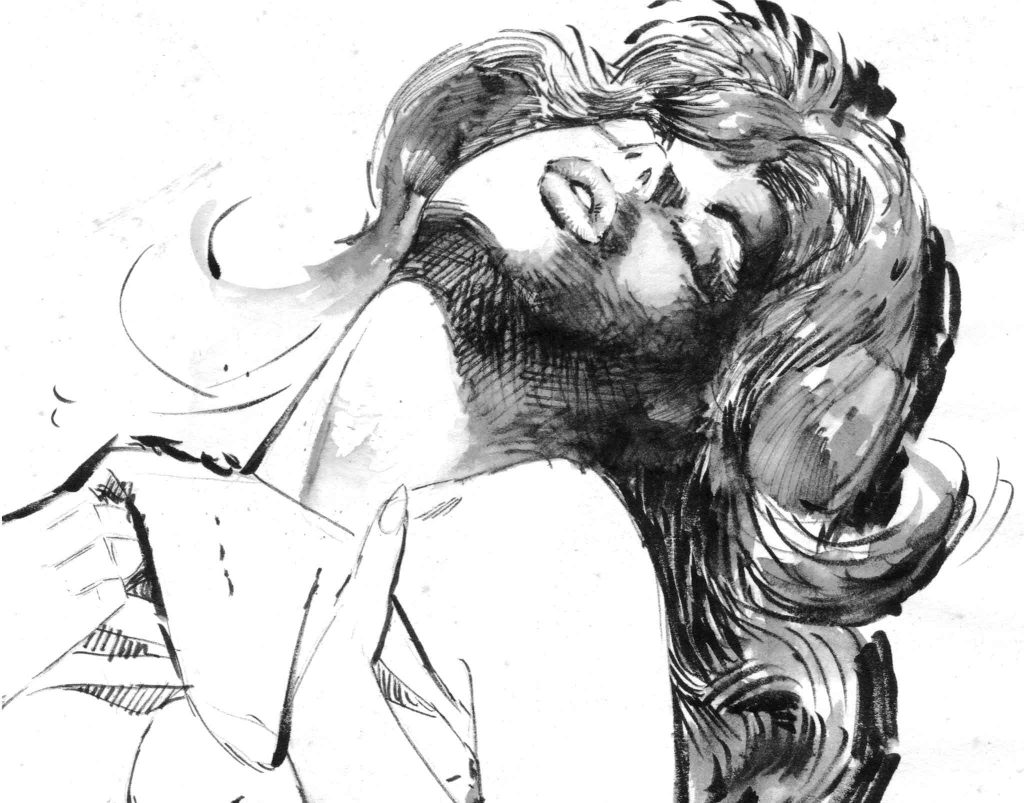 SHIFTING GEARS
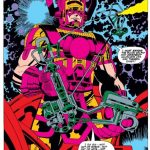
 Jack Kirby’s GALACTUS – As Portrayed by Vince Colletta and Joe Sinnott
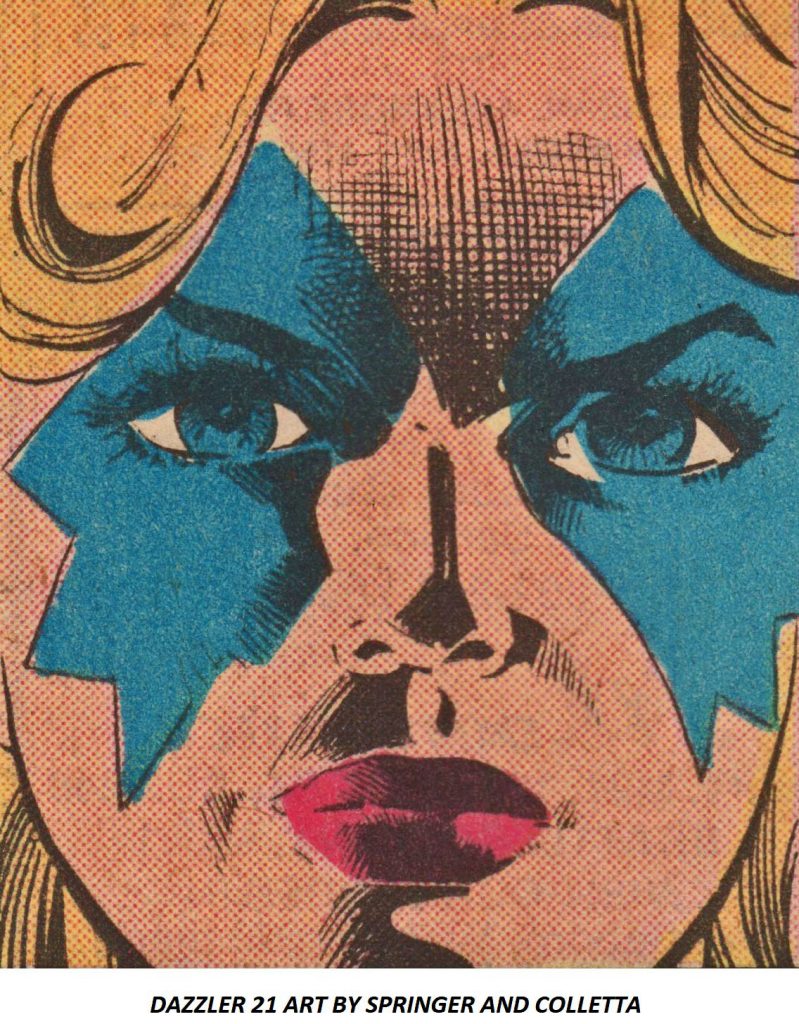
 Dazzler Art by Frank Springer and Vince Colletta
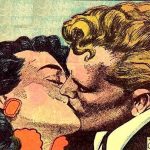
 Is it Art? Or, is it Comic Book Art?
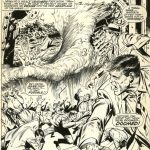
 A HELL OF A SPLASH PAGE
 TALKING TRASH ABOUT VINNIE
 THE ART DIRECTOR’S CHAIR AT DC COMICS

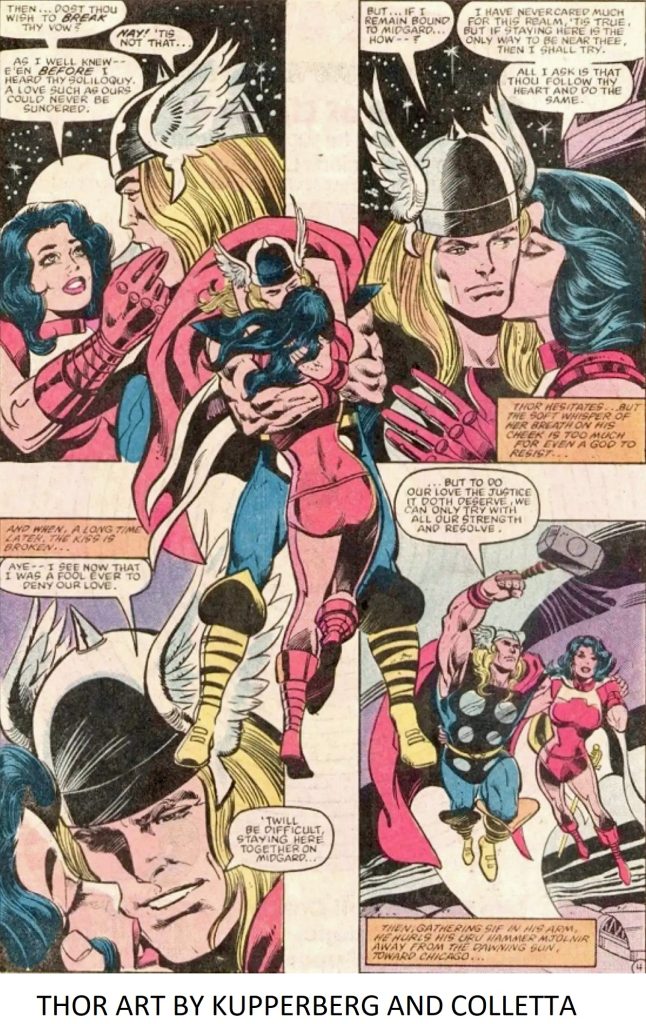
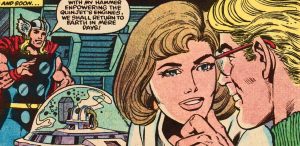 A VINCE COLLETTA REMEMBRANCE BY ALAN KUPPERBERG
 JACK AND VINNIE – FROM START TO FINISH