SHIFTING GEARS

Vince Colletta Romance Covers

Most artists possess a distinctive style by which art aficionados can easily recognize their work. In  comic books it is typically simple to identify the creator(s) involved in sketching and inking the stories. One invariable is literally the fact that comic book artists are consistent enough to distinguish their styles throughout what can be lengthy careers.

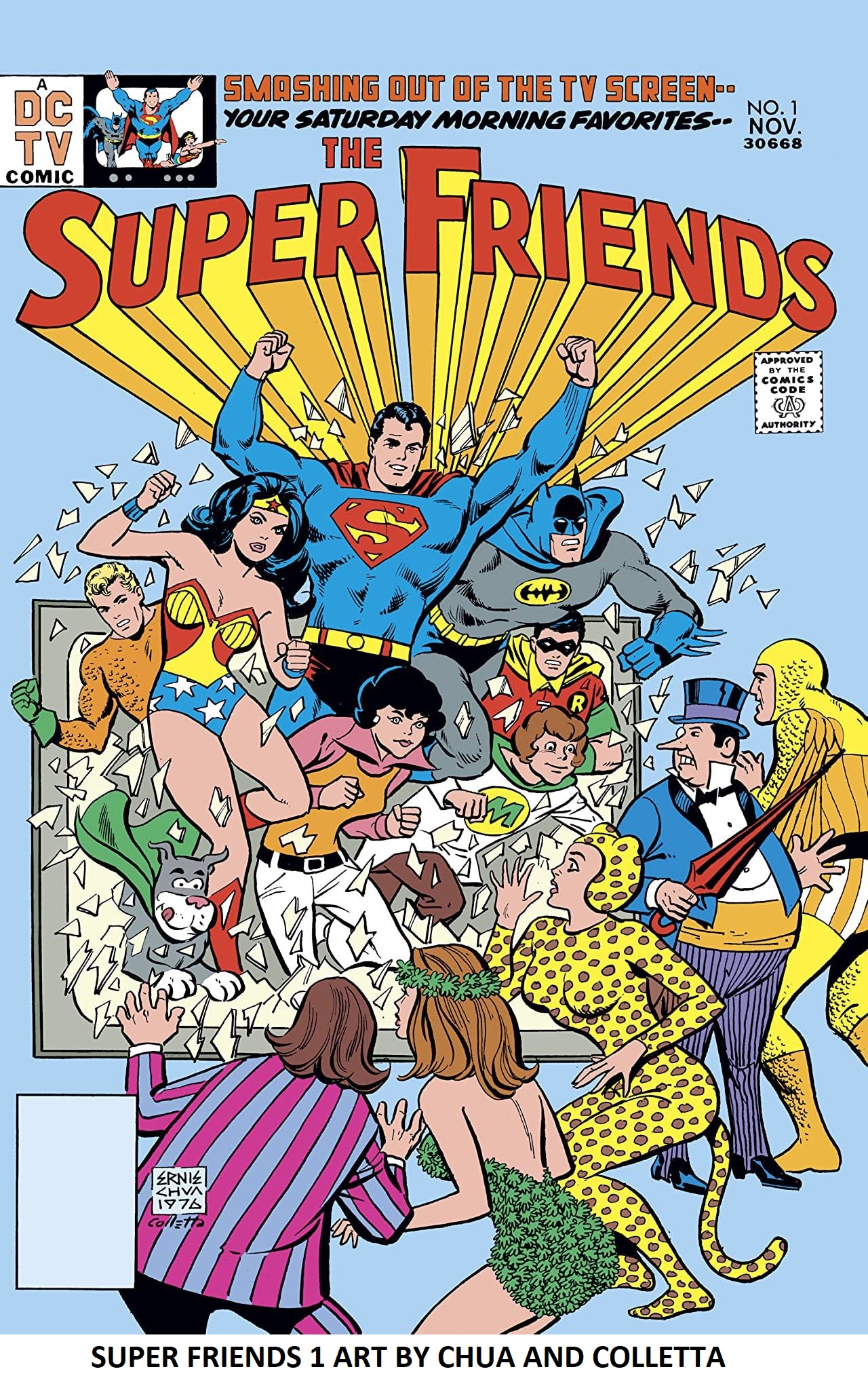
Pictured below is the light-hearted cover of Superfriends #1, illustrated by Ernie Chua and Vince Colletta. The art depicts the characters in the Hanna-Barbera/National Periodical  television show of the same name. Super Friends first aired on ABC on September 8, 1973, featuring the well known DC characters Superman, Batman and Robin, Wonder Woman and Aquaman. Aimed toward a younger audience, the portrayal of the Super-Heroes needed a clean and colorful look. The art is somewhat cartoonish but it neatly accomplishes it’s objective.

SUPER FRIENDS #1 ART BY ERNIE CHUA AND VINCE COLLETTAMost people queried would guess that other examples of art created by Ernie Chua and Vince Colletta would probably appear similar to the above cover. As I mentioned, most artists have a style by which they come to be known. A few were capable of venturing outside their comfort zones, however, and could be called upon to conceive almost any style of art that was needed for the project.

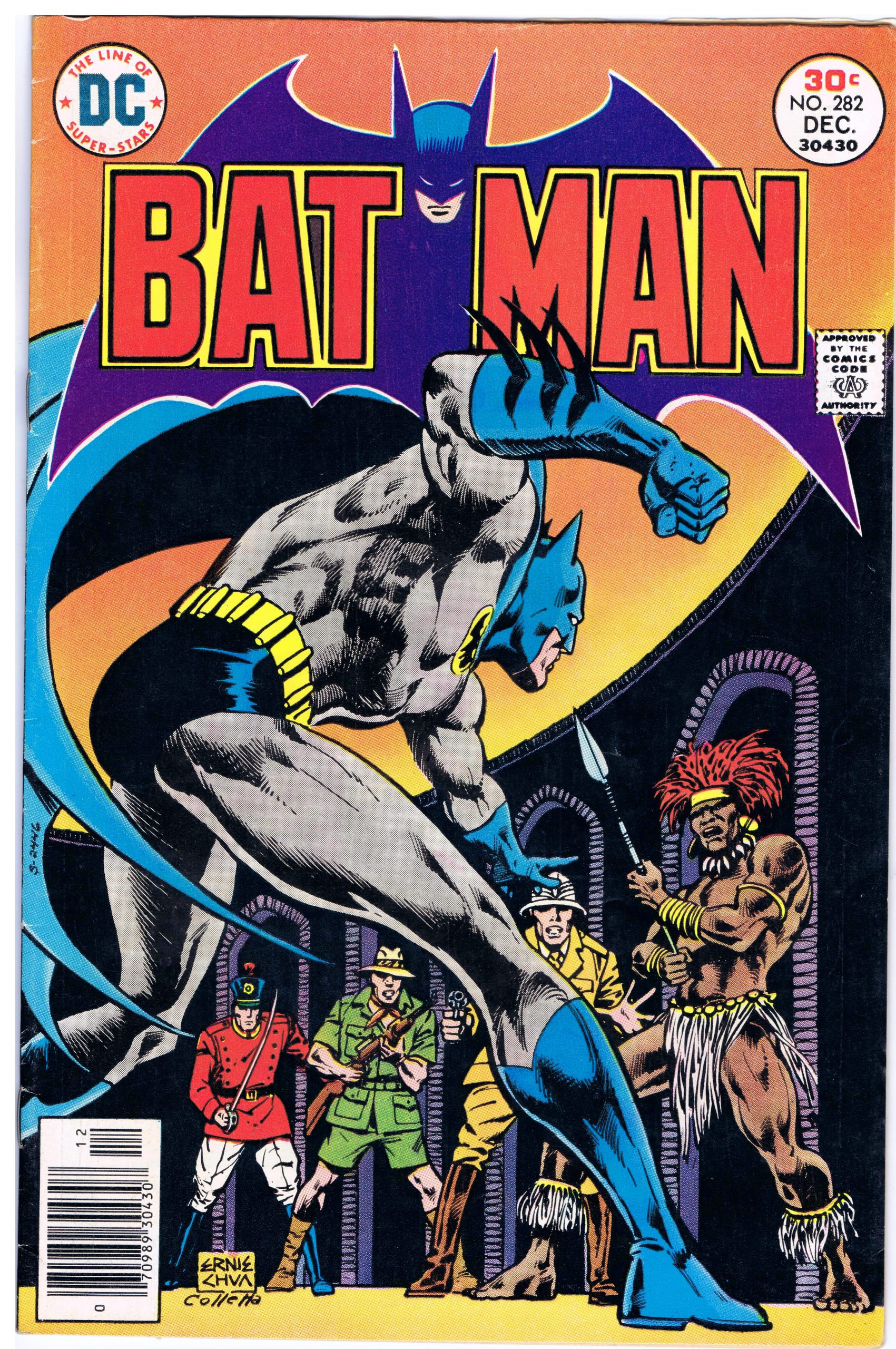
Two years later, Ernie Chua and Vince Colletta also created the cover of Batman #282. It is an artistic departure from the Super Friends cover because it needed to be. Chua’s layout is magnificent and Colletta’s combined use of graphic and illustrative inking brings the chilling scene to life.

BATMAN #282 COVER ART BY ERNIE CHUA AND VINCE COLLETTA Versatility, consistency and an adherence to the demands of production art kept these gentlemen working in the industry for many years. These qualities plus the one talent not often found in the field of comic book art – the ability to shift gears.

Index of articles www.vincecolletta.com

PRETTY WOMAN – NO ONE COULD LOOK AS GOOD AS YOU, MERCY!

Vince Colletta Romance Covers

The late, great Roy Orbison could sure write and sing about pretty women. And the late, great Vince Colletta could sure create them – with pencils and ink, that is. There will always be debates about what constitutes beauty in women. Each drawing represents the personal and cultural beauty standards of the artist.

Vince Colletta Pretty Woman

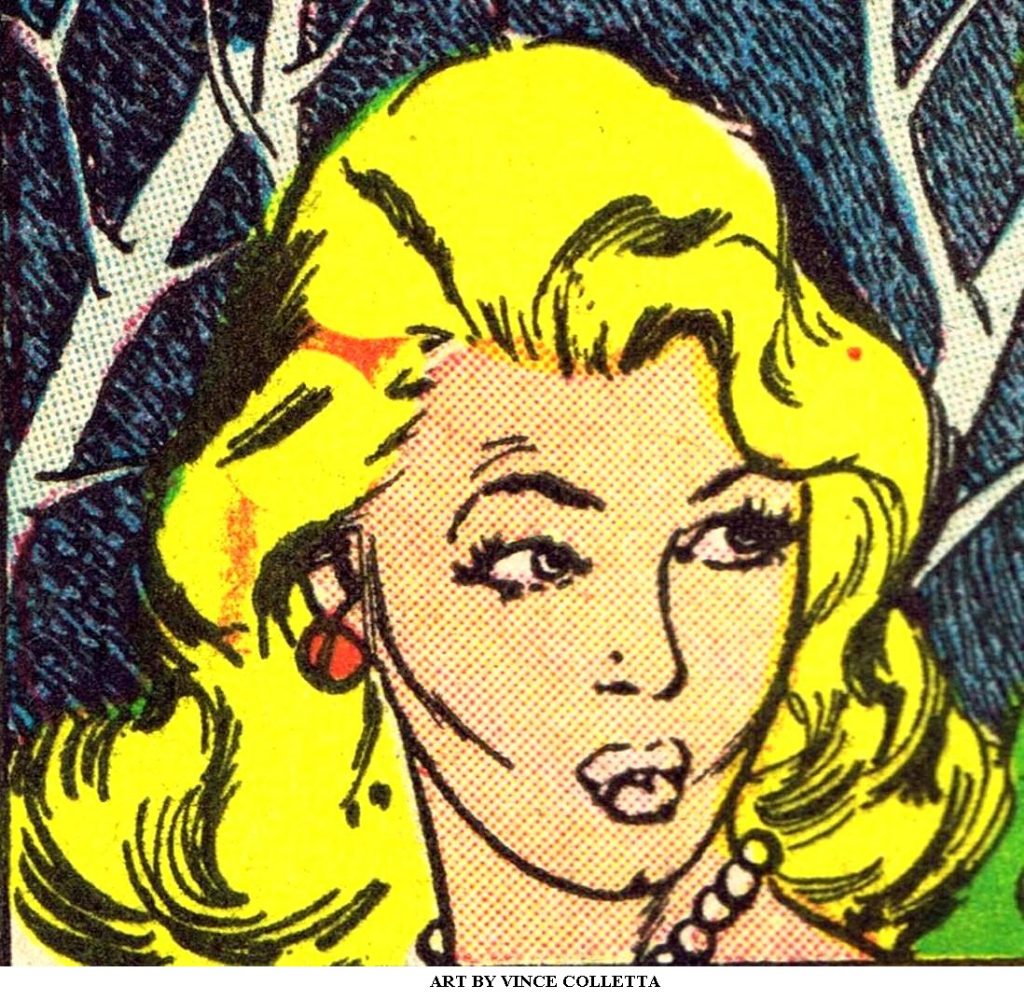
Portraits are meant to flatter the subject. Colletta’s work as a portrait painter and muralist prior to comic books  translated effortlessly when it came to creating irresistible women. The faces of Vinnie’s girls are idealized with alluring eyes and enchanting expressions.

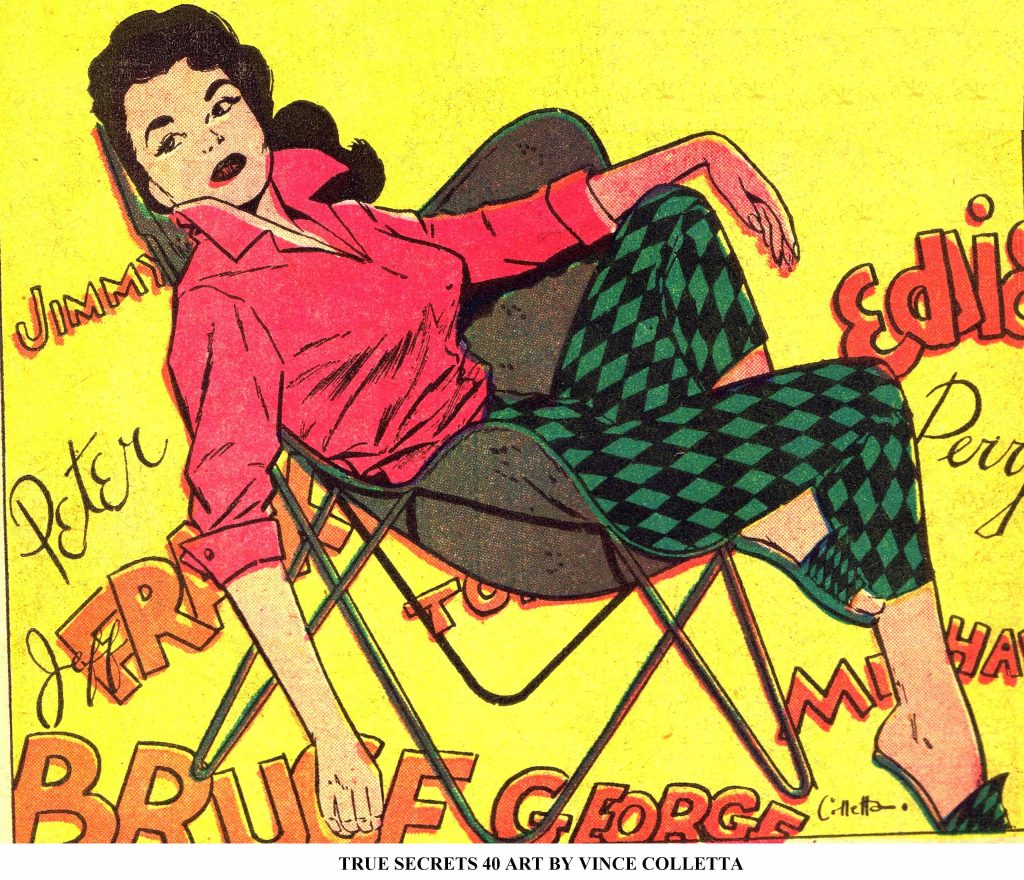
Beautiful Woman in Lounge Chair

Shapes of women’s faces are unique. Diamond-faced women have pointed chins and high cheekbones. The jawline of a square-faced woman has very little curve. Women with heart-shaped faces tend to have wide foreheads. As I look through the endless examples of Vince Colletta romance art, evidence of his finely-tuned vision when portraying females is an enduring theme.

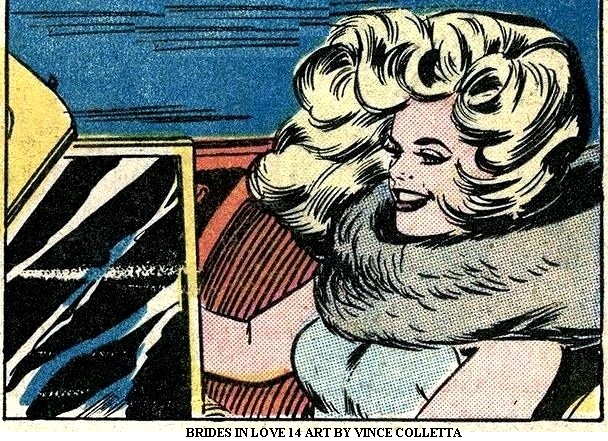
Blonde Girl

Even the simplest of Colletta’s drawings convey the artist’s intentions which are to portray beauty and expression. Subtleties in facial features should disclose what the girl is saying or thinking without word balloons.

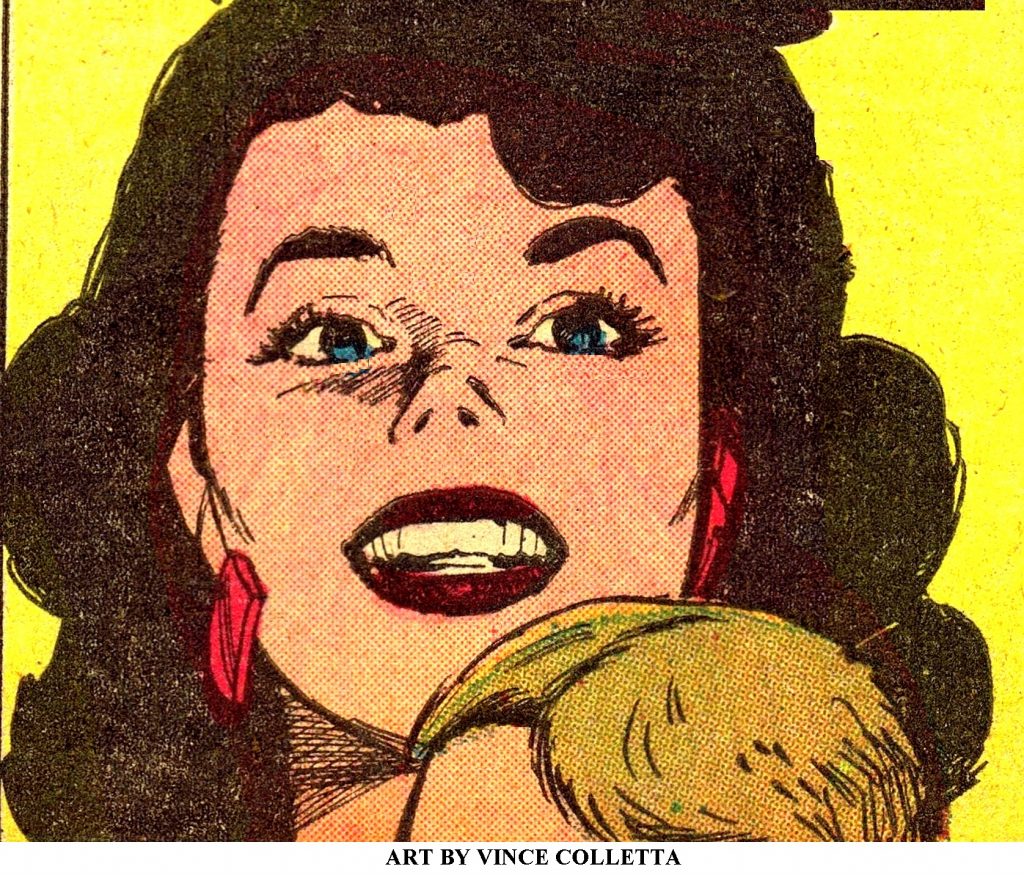
Brunette Girl Smiling

Happiness. Explicitly creating a happy expression involves processing facial identity and expanding and embellishing it.

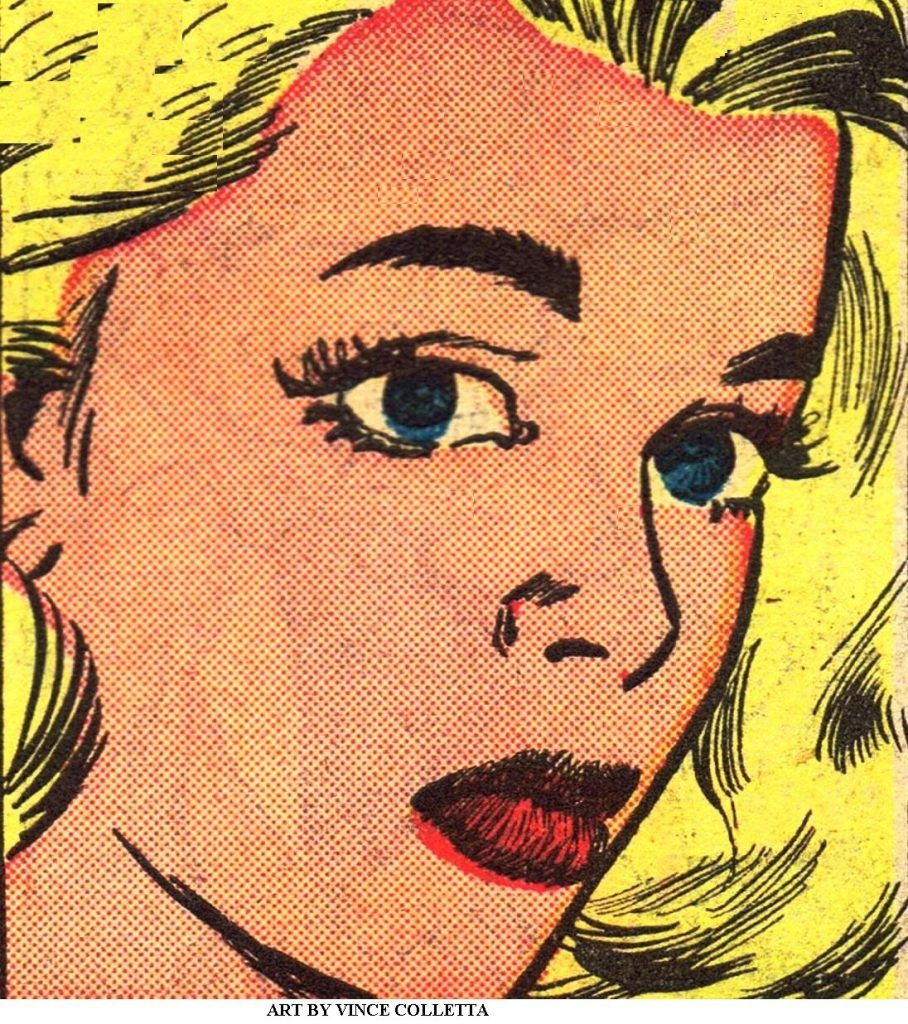
Pretty Blonde Girl Art By Vince CollettaThe blank stare isn’t something most artists can convey in their subjects.

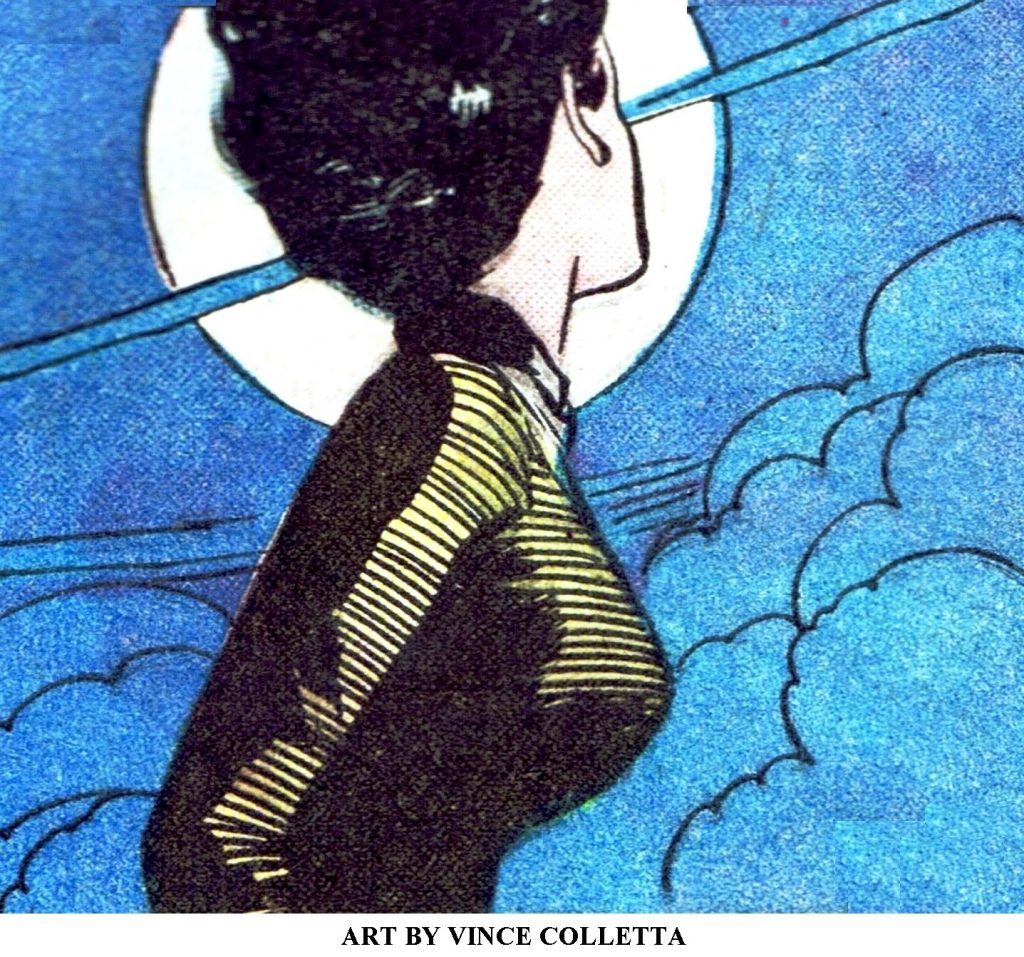
Girl Looking at the MoonAnd finally, a good artist can reveal sadness without actually showing the woman’s face.

Index of articles www.vincecolletta.com

JACK KIRBY, VINCE COLLETTA, MIKE ROYER AND THE KULT

Vince Colletta Romance Covers

Thank you two times, John Morrow. Initially, for having the courage to publish the first book to feature the notorious Vince Colletta. The Thin Black Line, while not nearly as comprehensive as DRAWN TO BEAUTY and not even close on the number and quality of images, presented a balanced view of the oft-maligned artist. Readers expressed surprise at how many positive comments from both professionals and fans were contained in the book. The author, Robert Bryant, went to great lengths to uncover rare admirers of Vinnie the artist and the man. Undoubtedly, Kirby purists had a bad taste in their mouths as the majority of these people have “learned” to hate Colletta. Morrow could have pandered to the Kirby crowd by exercising editorial control over Bryant’s manuscript but didn’t do so.

Dingbat Love art by Kirby, Colletta and Royer https://vincecolletta.com

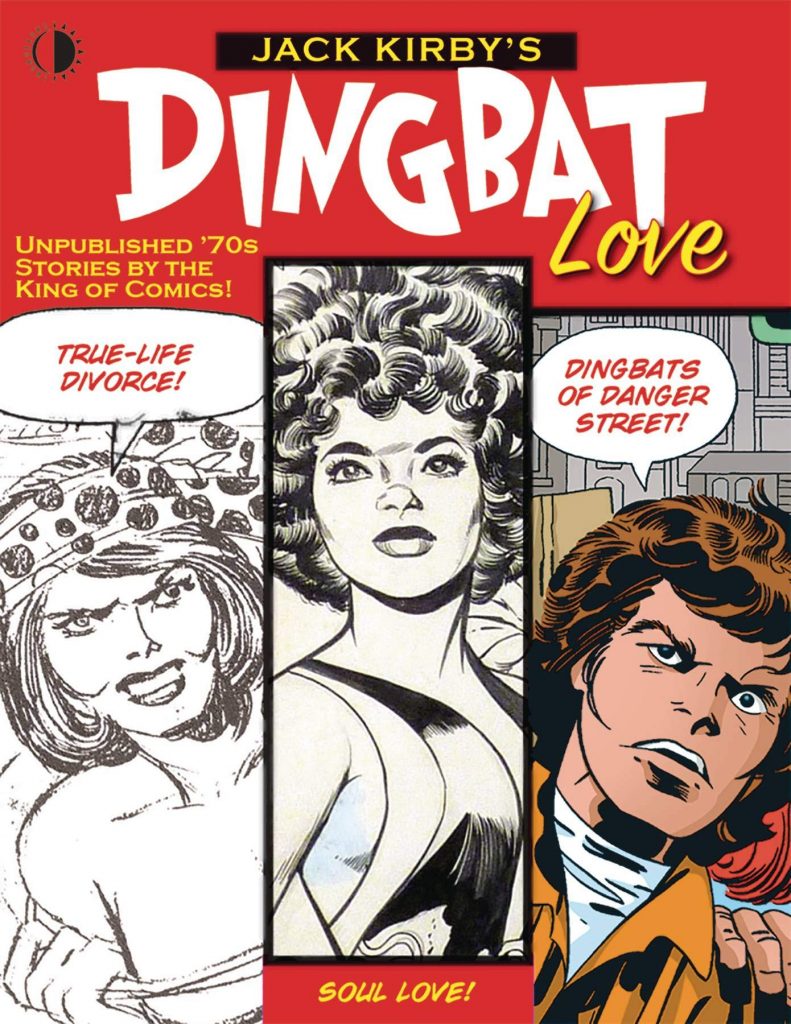
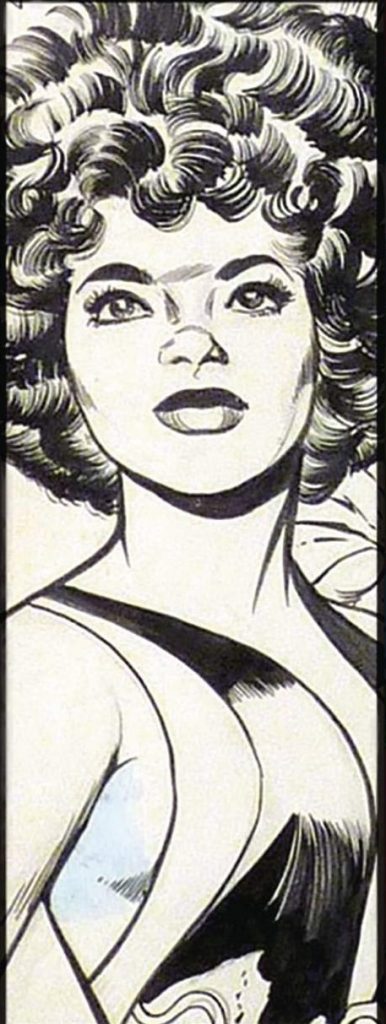
The cover of Morrow Publishing’s new book, Dingbat Love, contains Jack Kirby pencils that were inked by Vince Colletta and Kirby Klub fan favorite Mike Royer. The cover of this publication is responsible for the second THANK YOU, JOHN! The three-panel wrap shows an example of Jack’s pencils on the left, a Vinnie-inked image in the center and Royer’s inks on the right. The chief reason that Mike’s work is preferred by aficionados of all things Kirby is that he faithfully inked every line that Jack laid onto paper. Colletta, on the other hand, both added to and subtracted from Kirby’s pencils according to his own artistic sensibilities and time constraints. While any hard core Kirby fan considers this heresy, thanks to the cover of Dingbat Love, it is likely obvious to anyone how much more accomplished and nuanced is the center panel inked by Vince Colletta. The Kirby pencils on the left are primal. The woman is more scary than she is attractive. Colletta’s delineation is exquisite in its attention to detail. The woman, as are all of Vinnie’s girls, is stunning. Royer’s example basically consists of thick lines and blobs of India ink. Enjoy Vinnie’s art and, by all means, pick up a copy of Dingbat Love if, for nothing else, to view Colletta’s elegant inking of the story Soul Love.

Soul Love Art by Kirby and Colletta

Index of articles www.vincecolletta.com

THE ART DIRECTOR’S CHAIR AT DC COMICS

Vince Colletta Romance Covers

Todd Klein (Former DC Letterer): I was hired by DC in the summer of 1977. I had come in with a portfolio looking for comics art work, and it wasn’t deemed good enough by then art director Vince Colletta (he was right), but he brought me in to see Jack Adler…..

Thomas Sciacca: Vince got me a job as Stan Lee’s assistant..then brought me to DC as his assistant when he was art director..I am eternally grateful to him…

Proudfoot: I mean you can’t say he did almost nothing as art director then a second later he discovered THE Frank Miller. Come on guys.

Michael Netzer (Former DC Artist): From my experience with him, Vince Colletta was a talented and kind art director, which I saw as a rare combination in comics. He gets a bad rap because he rushed his work. But he was instrumental in keeping the comics train running on time. He was given assignments that no other artist could finish by the deadline. His run on Thor, that some pros don’t like because he hacked Kirby’s pencils, gave the character an ancient mythical feel that no other books had. He inked several of my books and I’ve never regretted it.

Bob (The Kid) Downs (Former DC Inker): So, that’s how I came to work for Vinnie and I assisted him for 4 years, and I learned a lot and developed a very fast approach, after all I was working with Vince Colletta – it was either learn how to work quickly or lose my opportunity to work with the Art Director of D.C. Comics, and my favorite inker.

Rich Buckler (Former DC Artist): My time at D.C. comics when Vince Colletta was the Art Director was a very positive experience. He sort of looked out for me, even loaned me money when things were tight, and he gave me a lot of guidance that helped my career.

Mike Vosburg (Former DC Artist): When I first started working in comics Vinnie was the art director at DC comics. I thought Vinnie had the ability to ink the rankest amateur and lift them up to the level of solid professionalism. If I was running a comic book company, Vinnie would have been the first guy I would have hired, because he met deadlines and his work was always that of a seasoned pro.
vincecolletta.com/the-art-directors-chair-at-dc-comics

Chester Brown (Former DC Artist): I graduated, and I figured, “The only thing I want to do is draw comics, so I’d better go down to New York and try and break in.”

Scott Grammel (The Comics Journal): What was their reaction? Did you talk to anyone?

Brown: Not at Marvel. At Marvel you left the portfolio overnight and they looked at it — or maybe they didn’t look at it. You came in the next day and they said, “No.” But at DC I got to talk to Vince Colletta, and he was quite encouraging.

Grammel: Was he the art director at that time?

Brown: At DC, yeah.

Grammel: What kind of advice did he give?

Brown: Well, he didn’t look at the stuff that I wanted him to look at. He didn’t look at my portfolio of all these well-drawn devils and stuff. He picked up my sketchbook and flipped through it instead. I don’t know why I had my sketchbook with me, but I didn’t want him to look through it, but he did anyway. There actually were some pictures of superheroes in there. Captain America, probably Batman and Superman, and stuff like that. So, he went over those, and took out some tracing paper and drew over the figures, and showed me the way that they should have been drawn. Actually, took quite a bit of time with me, explaining the mistakes I was making, and what I should do to improve, and told me to keep with it and come back in a year or so.

Grammel: Sounds very encouraging. Sounds like he was a nice man.

Brown: He was very encouraging and very nice. It made me feel kind of funny because I’d hated his work for so long, but in person he was very nice.

Tony Isabella (Former DC Comics Writer): I always got along well with Vinnie on a personal level, though I didn’t much like the way the art director position he held at DC was set up. I wanted to deal with artists directly and not have to discuss scripts through Vinnie. It’s one of the major reasons I left staff after six months. I do know he saved Marvel a lot of late fees by taking on late books and getting them in on time. Yes, the art suffered, but it wasn’t Vinnie who turned in late scripts. In fact, it always bugged me that some of the writers who were furthest behind on their deadlines were some of the most vocal complainers.

Jim Shooter (Former Marvel Editor-In-Chief): Frank (Miller) was a kid from Vermont who wanted to be a comics artist. He came to New York in 1977, I think, showed samples to his idol, Neal Adams, and got a world-record savage critique. He quit drawing for a while, sucked it up and tried again. Neal savaged him again, but this time he sought a second opinion and actually ended up getting a small job from Western Publishing, I think. Thus emboldened, he went to DC, and after getting savaged by Joe Orlando, got in to see art director Vinnie Colletta, who recognized talent and arranged for him to get a one-page war comic job.

Wikipedia: It was DC Comics art director and inker Vince Colletta who brought George Tuska on board as the penciler for this series (World’s Greatest Superheroes). The two men had collaborated many times in the past. Colletta valued Tuska’s clean lines and felt that his style would enhance the look of the newspaper strip.

Terry Austin (Former DC Inker): Vinnie Colletta was the art director and fairly supportive but we always ended up getting sent in to Joe Orlando who didn’t like the stuff. Joe was one of the overseers at DC editorial. Vinnie was the art director and, as I recall, in these scrapes-and we had them regularly-Vinnie was always on our side. “Give these kids a chance.”

Rich Buckler: Those days at D.C. were auspicious times and very exciting for me. As D.C.’s art director Vince was always one of my main boosters and he practically adopted me. He was dynamic, straight-talking, a good teacher, a tremendously prolific and vibrant talent and a good friend. He was a rarity in the “business-first” world–a straight-shooter who always–always! –championed other artists.

Jim Shooter: At DC, he served as art director for a time, but mostly what he did was ink. On his way out of the office many an evening, then-traffic manager Paul Levitz would slide a stack of pages under Vince’s door with a note on them saying “need by tomorrow,” and Vince would stay all night and finish them.

Rich Buckler: It was around 1976 that I came under the wing of D.C.’s art director Vince Colletta. By way of a footnote, let me mention that I never have understood fully the controversy over Vince’s inking on Jack Kirby at D.C. I loved that stuff. Maybe I just wasn’t privy to the background details, or the politics involved, or whatever. It was my understanding then that Vince was one of Jack Kirby’s favorite inkers.

The Nostalgia League: It seems that for many years, Colletta had been the inker who Marvel or DC would go to if they had a very short deadline. The pages I, and others, had so reviled over the years were the result of deadline crunches. Colletta was known to turn out completed books virtually overnight, so the deadlines on the comics could be met. The lack of detail, in many instances, was simply a way to get the finished product to the printer on time. DC understood this and, by appointing him art director, made sure that he would be available to handle all the deadline crunches they could throw at him. As proof of this, my source related that it was a regular thing at the DC offices to arrive at work in the morning to find Colletta asleep on the couch in his office and a stack of finished pages sitting on his drawing board; another all-nighter behind him.

Michael Netzer: Vinnie was a very helpful art director at DC. He always took time to engage artists about their work and help them approach it more professionally. For all that’s said about him, he was very suitable for that position and elevated the art craftsmanship at DC during his tenure. He was also a very nice guy who helped artists move ahead in their career. It was Vinnie who once suggested to me that I come up with a new female character because DC was looking for one – and that’s how the idea for Ms. Mystic was born. On the one hand, it’s unfortunate that an unflattering reputation stuck to him. On the other, this has spawned a new look at his work since his passing away, and has raised a strong voice of admiration and support for him in fandom. That’s certainly better than if no one cared about it one way or the other.

Kid Colt: I read two recent interviews of talented men named Marshall Rogers and Terry Austin, who said how great an art director Vinnie was because he spotted their talent, worked with them, and helped them get work from some of the old school editors who didn’t want the new kids around. This revised my whole thinking on Colletta. I’ll be the first to say he wasn’t my favorite inker, but it sounds like as an art director he had a hand in dragging DC back into competition again, and mentoring some young talent.

Nick Caputo: I believe George Tuska had a few nice things to say about Vinnie, and Marshall Rogers spoke well of him in a recent interview. Rogers got his first job at DC because of Vinnie, who was art director at the time.

Joe Staton (Former DC Artist): And then-this is funny-Joe Orlando took me off to a conference room. Vinnie Colletta was supposed to be the Art Director at the time. As far as I could tell, all he did was sit up at DC and ink. But Joe yelled over at Vinnie and said, “Hey, Vinnie. You’re the Art Director. You come be a part of this. We’re designing something.” So Vinnie followed Joe and me in, and Vinnie stretched out on the couch and went sound asleep. [laughs] And then Joe and I had a really nice session, and he took my sketches and punched them up a little bit. I think Joe was the one who actually came up with The Huntress’ emblem. But it was pretty much what I started out with, with some improvements by Joe, and we had a very nice time. Then Joe went over and touched Vinnie and said, “Time to go, Vinnie. Meeting’s over.” [laughs] And Vinnie says, “Okay,” and he went back to work, inking in his room.

Index of articles www.vincecolletta.com

How to Draw Beautiful Women -The Perfect Swipe File

Vince Colletta Romance Covers

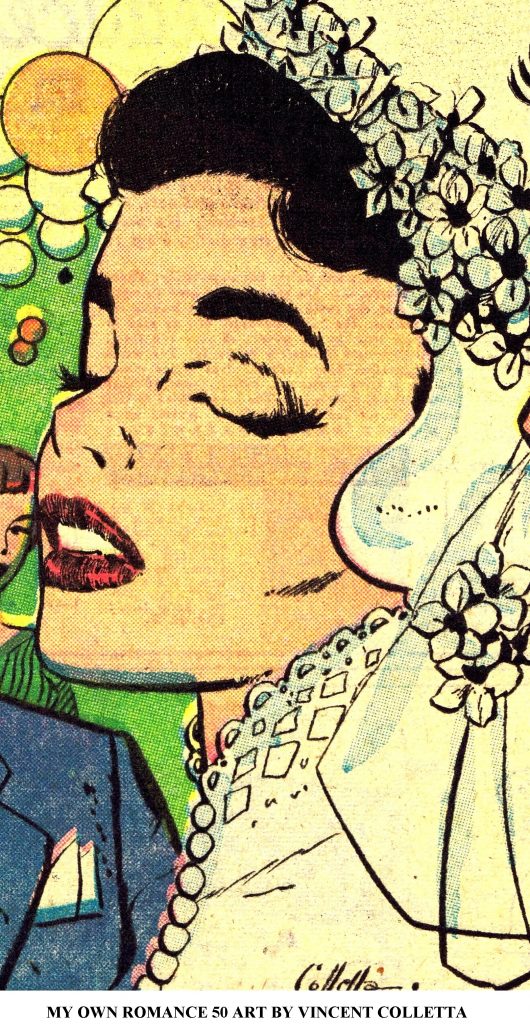
When an artist needed a visual reference, they relied on their “swipe files” … file folders cataloged and filled with images that were culled from any magazine they could get their hands on. Creating a swipe file is the learning method most professional comic book artists use to improve their work. Roy Lichstenstein famously pirated the art of Vince Colletta, Dick Giordano and others to create his signature pieces of pop art. I remember my father poring over the work of artist Hal Foster and his Prince Valiant books as an inspiration for how he wanted to ink THOR and Tales of Asgard. Artists study other people’s content and create a collection with proven examples. If you want to draw people with massive,bulging muscles, swipe from Jack Kirby or Frank Frazetta. If your goal is creating oddball art, Steve Ditko’s work qualifies. If your goal is learning how to illustrate beautiful women, look no further than the art of Vince Colletta.

BRIDE - MY OWN ROMANCE ART BY VINCENT COLLETTA

Index of articles www.vincecolletta.com

Is it Art? Or, is it Comic Book Art?

Vince Colletta Romance Covers

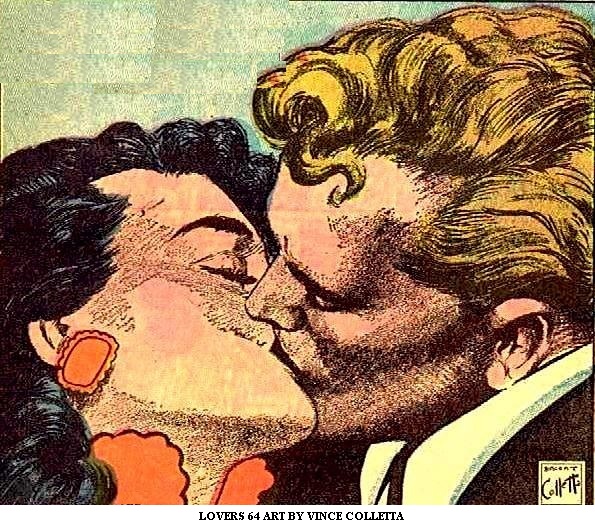
Have a look at the drawing that accompanies this article. At first glance, you would correctly conclude that the illustration came from a comic book. Upon closer inspection, however, the man and the woman resemble real people rather than cartoon characters. In the 1940s and 1950s, the Golden Age of Comics, the human form as illustrated by the comic book artists of the day hardly resembled actual people.

Lovers 64 Art by Vince Colletta

This particular example of romance art was published in 1954, long before most comic book aficionados were born. Prior to the Vincent Colletta-era of comic book illustration, the human form was depicted by employing thick, graphic lines to denote shadows and depth. These were augmented by evenly-spaced, carefully measured lines. Colletta created with pencil, pen and brush, what many artists working in oils were unable to match for realism. This creativity was on full display for many years to come as Vince came to illustrate hundreds of pages of romance covers and stories.

Romance comics fell out of favor when the superheroes began capturing the attention of teenage buyers. Art work such as this ceased to exist. This glimpse into the past offers us a chance to appreciate the evolutionary process as well as the passing of true illustrative art in comic books.

ALEX GRAND: “I’ve never met the guy, but I wish I had, and will look at his past work with some degree of appreciation, as part of the variety of 20th century comics.”

Index of articles www.vincecolletta.com

WHO’S YOUR DADDY, THOR?

Vince Colletta Romance Covers

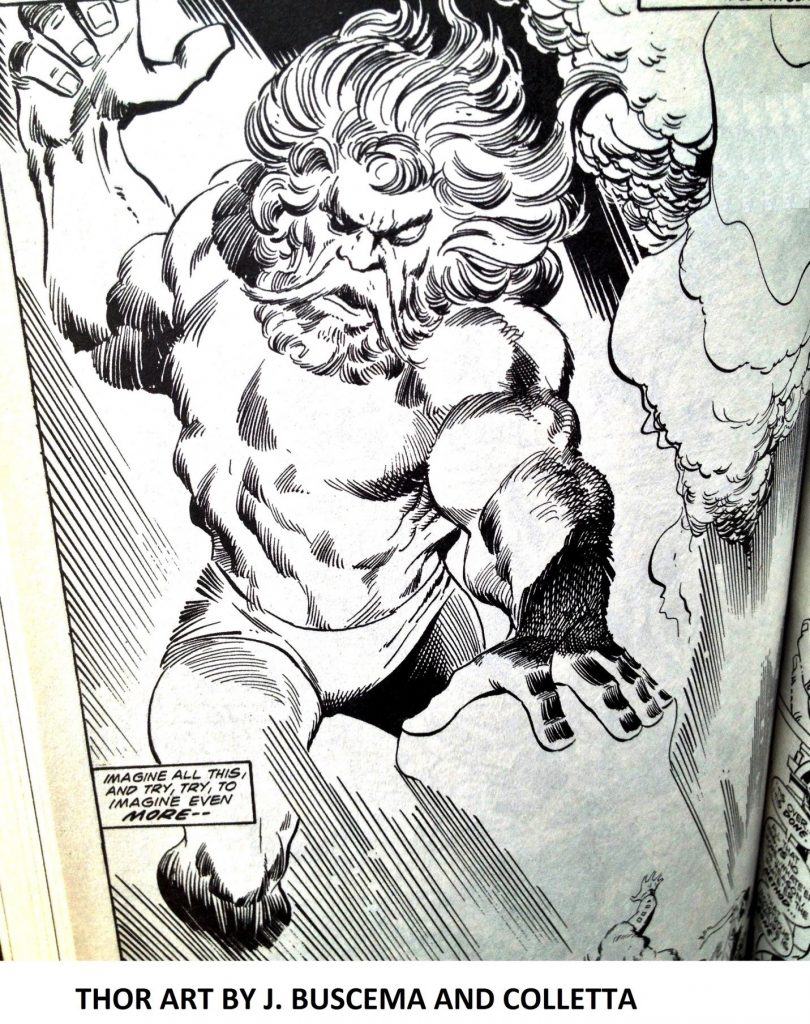
This is an impressive man, er…God would be a more appropriate nomenclature. A pinnacle of superhero art. In comic book lore, Odin is a Norse God widely-known as the father of Thor, the Thunder God. Henry Petersen’s doctoral dissertation in 1876, proposed that Thor was the indigenous god of Scandinavian farmers and Odin a later god proper to chieftains and poets. Odin appears in Marvel Comics and in the Marvel Cinematic Universe as the king of Asgard and as the father of Thor and the adoptive father of Loki. In the comics, he was not drawn without his missing right eye for years.

THOR ART BY JOHN BUSCEMA AND VINCE COLLETTA

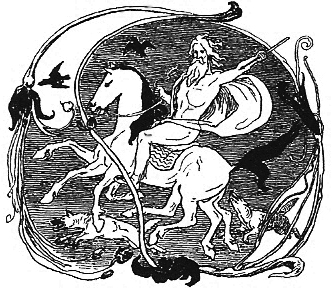
Odin has been a source of inspiration for artists working in fine art, literature, and music for centuries.

Odin

Odin sits atop his steed Sleipnir, his ravens Huginn and Muninn and wolves Geri and Freki nearby (1895) by Lorenz Frølich.

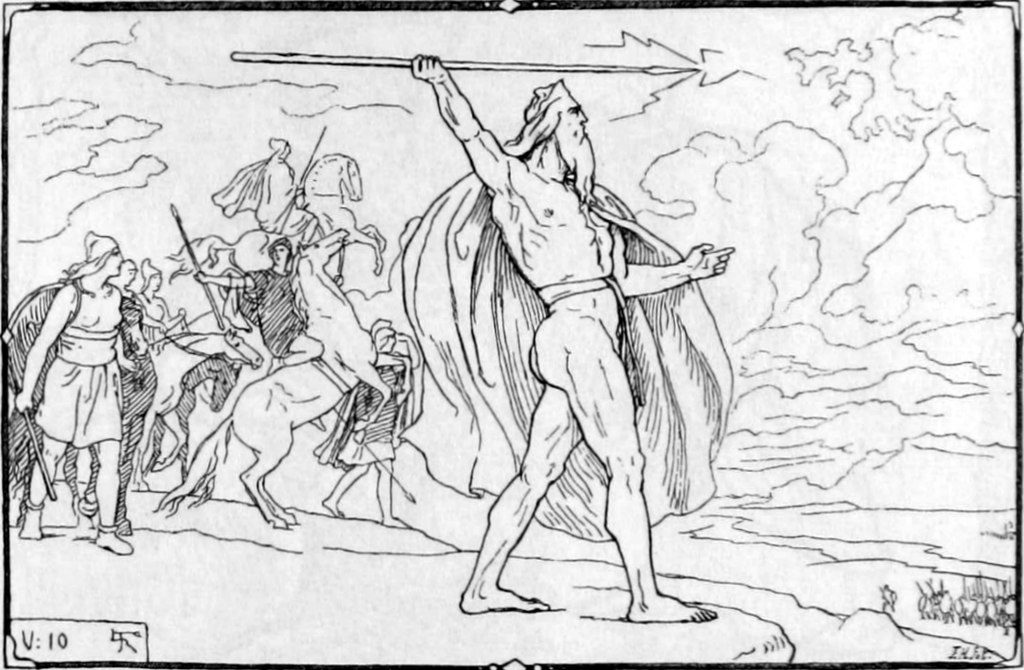
Odin Throwing a Spear

Odin throws his spear at the Vanir host in an illustration by Lorenz Frølich (1895)

Index of articles www.vincecolletta.com

Dazzler Art by Frank Springer and Vince Colletta

Vince Colletta Romance Covers

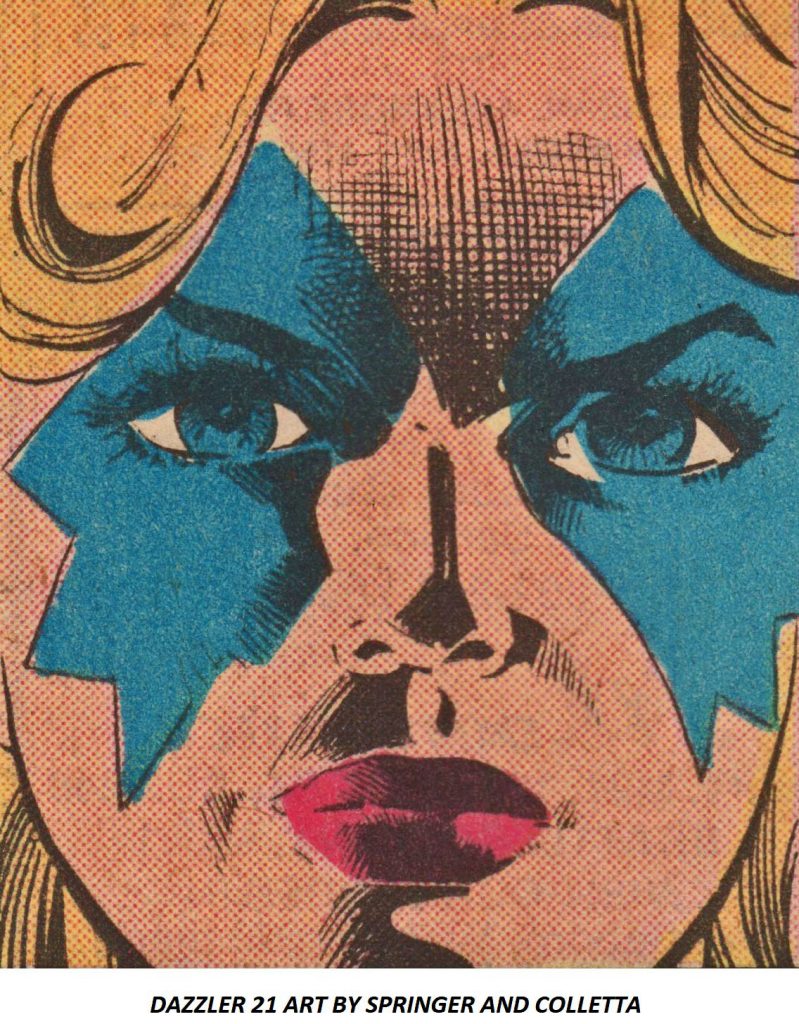
A tour de force of inking by Vinnie. Look closely at how the spotted blacks are graduated into Dazzler’s mask by thin accent lines.Trademark gloppy mascara and detailed eyes. The same thin accent lines appear at the edges of the shadows on Dazzler’s lips. A small white strip at the bridge of the nose, a swoop of black inks in her chin and thick, simple hair lines above and below serve to further highlight her face.

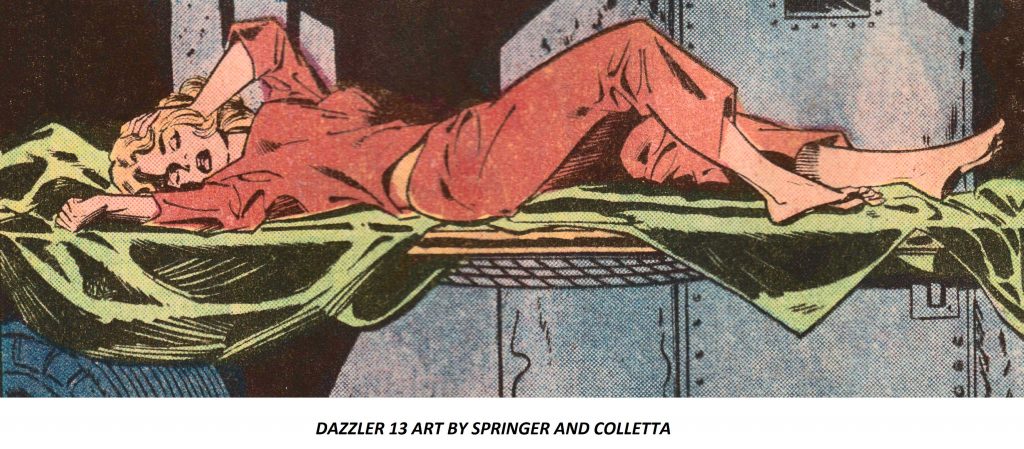
DAZZLER 21 ART BY FRANK SPRINGER AND VINCE COLLETTAA sexy repose showing a sleeping Dazzler on realistically-inked fabric against the shadowed steel wall in the background.

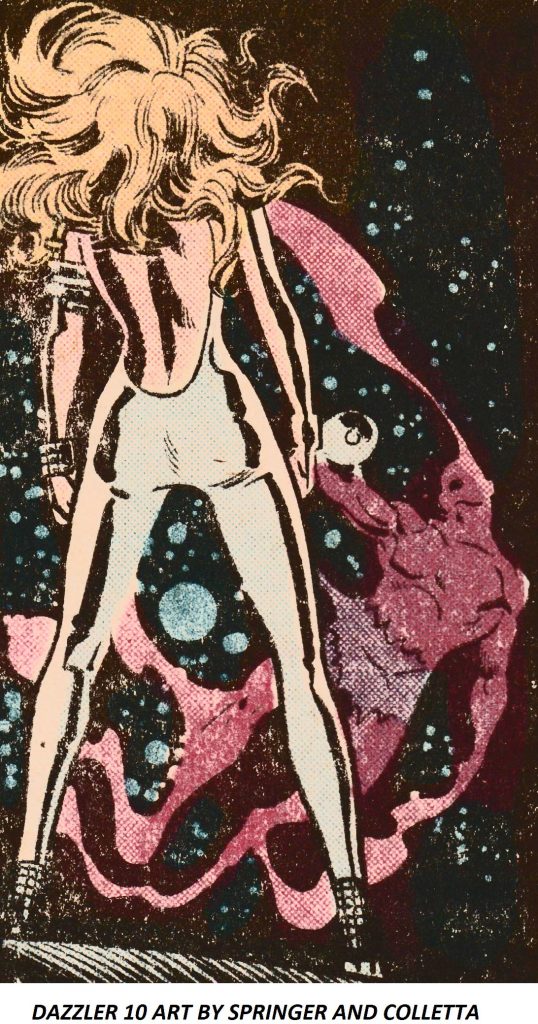
Dazzler artVery trippy inks over Frank Springer pencils. The only being deemed capable of entering the black hole and moving into its darkness is Dazzler, thanks to her ability to radiate unlimited luminescent energy. Galactus enhances Dazzler’s powers and hurls her towards the hole. Inside the hole, Ali confronts Terrax, who is well aware of her mission to bring him back to his former master.

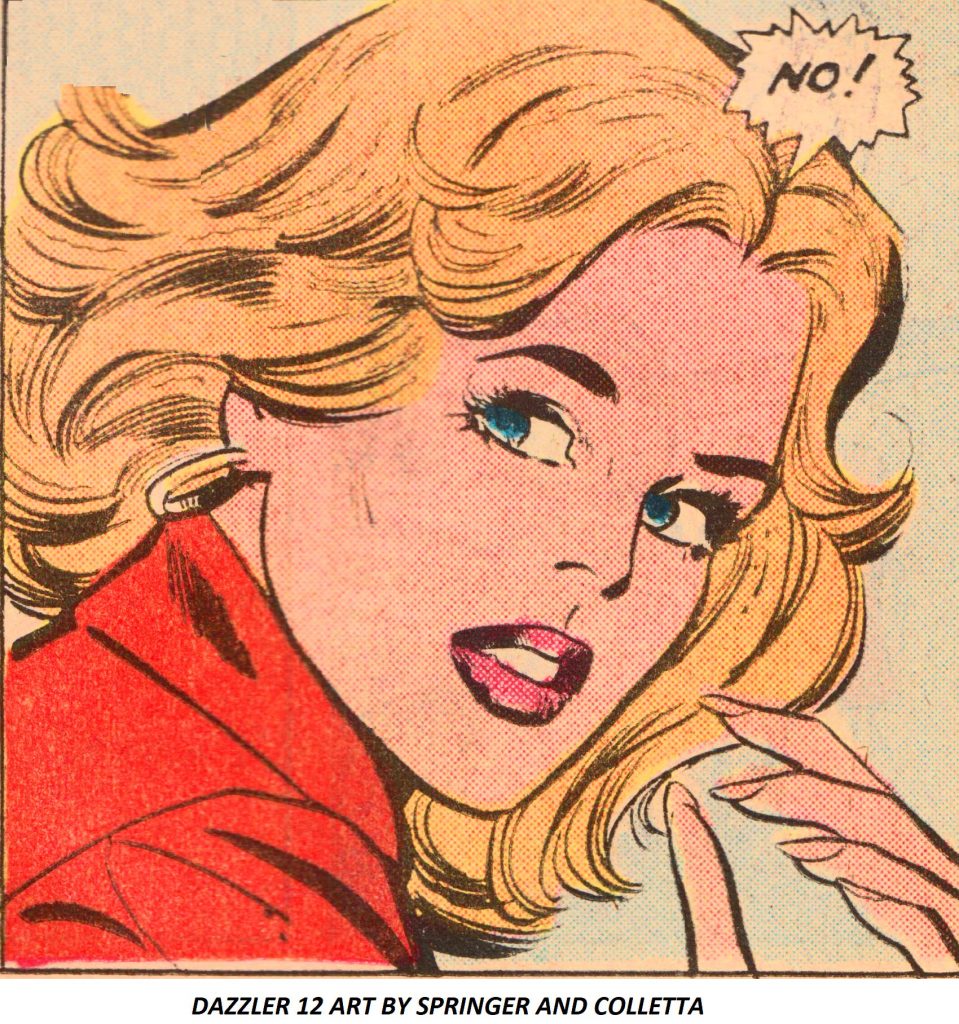
Dazzler in space Frank Springer and Vince CollettaRomance-style art by Springer and Colletta. Simply inked to express the beauty of the subject.

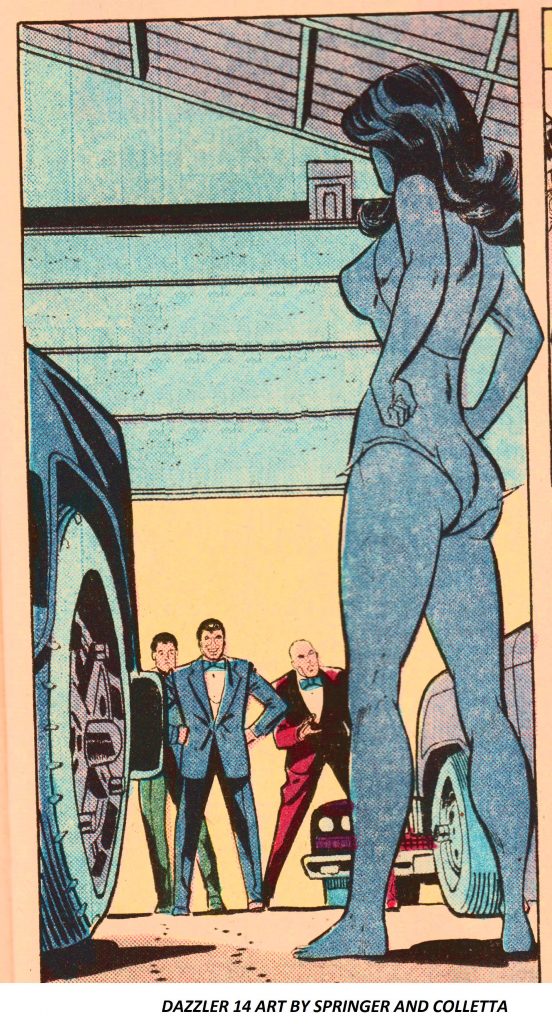
DazzlerProps to the colorist who neutralized the main figure, preferring to place the reader’s focus on the three smaller figures in the background.

Dazzler bathing suit

Index of articles www.vincecolletta.com

JACK AND VINNIE – FROM START TO FINISH

Vince Colletta Romance Covers

Jack Kirby and Vince Colletta – together forever in both fame and infamy. The Kirby legacy is the architect of numerous memorable comic book characters, penciler of dramatic scenes and contributor to the stories we read throughout his career. The Colletta heritage includes being acknowledged as the illustrator of the most beautiful women in comics, go-to guy when deadlines loomed as well as the most prolific creator of any artist in the industry.

Jack and Vinnie worked tirelessly for decades, forgoing vacations and family time in order to earn the incomes necessary to support their respective lifestyles. Both artists made life-changing decisions to escape city life in order to provide their wives and children with upscale environs where they could thrive. These choices meant they would have to spend countless hours each day at their drawing boards. Kirby was a relentless creator while Colletta became the tireless icon of the industry’s need to meet critical cut-off dates. Jack can be credited with originating the stories. Vince can be credited with saving the books.

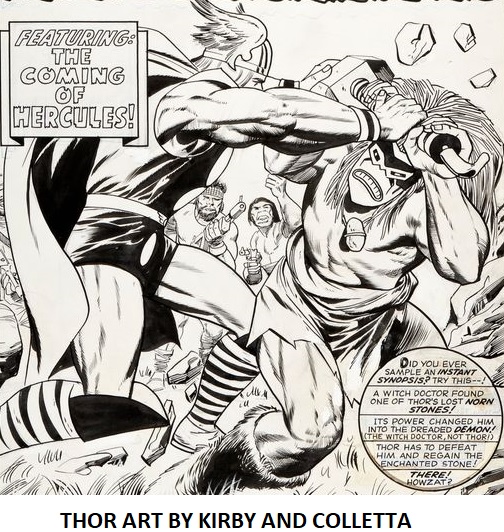
THOR ART BY JACK KIRBY AND VINCE COLLETTA

Pencilers and inkers are typically a different breed from one another. Both require specialized skills. Kirby and Colletta began their careers doing both. Jack drew cowboys, monsters, superheroes and other genres while Vince mainly drew romance books in addition to the occasional fantasy, crime and jungle stories. Each man became preeminent on his respective path. Eventually, however, an artist will come to rely on his or her strong suit in order to succeed. Kirby was not a production inker while Vinnie was. Vinnie did not have the capability of creating insanely-complex machinery and outlandishly rough-and-tumble panels while Jack did. Comic book historians have come to regard Kirby as primarily a penciler and Colletta as principally an inker. Perhaps it was inevitable that they became one of the most enduring art teams in history.

In the early 1960’s, Kirby was penciling stories featuring the character THOR for Marvel Comics. Colletta had a considerably different vision of what the THOR stories should look like. Based on the Hal Foster Prince Valiant books, Vinnie created samples displaying his vision of the Asgardian word of THOR. He took these drawings to editor Stan Lee who instantly fell in love with the illustrative look. Thus, after discussing the proposition of a separate feature with Kirby, Tales of Asgard was born in Journey into Mystery 107 in August, 1964. Shortly thereafter, beginning with Journey into Mystery 116, THOR began it’s lengthy run with Kirby and Colletta as the principal artists.

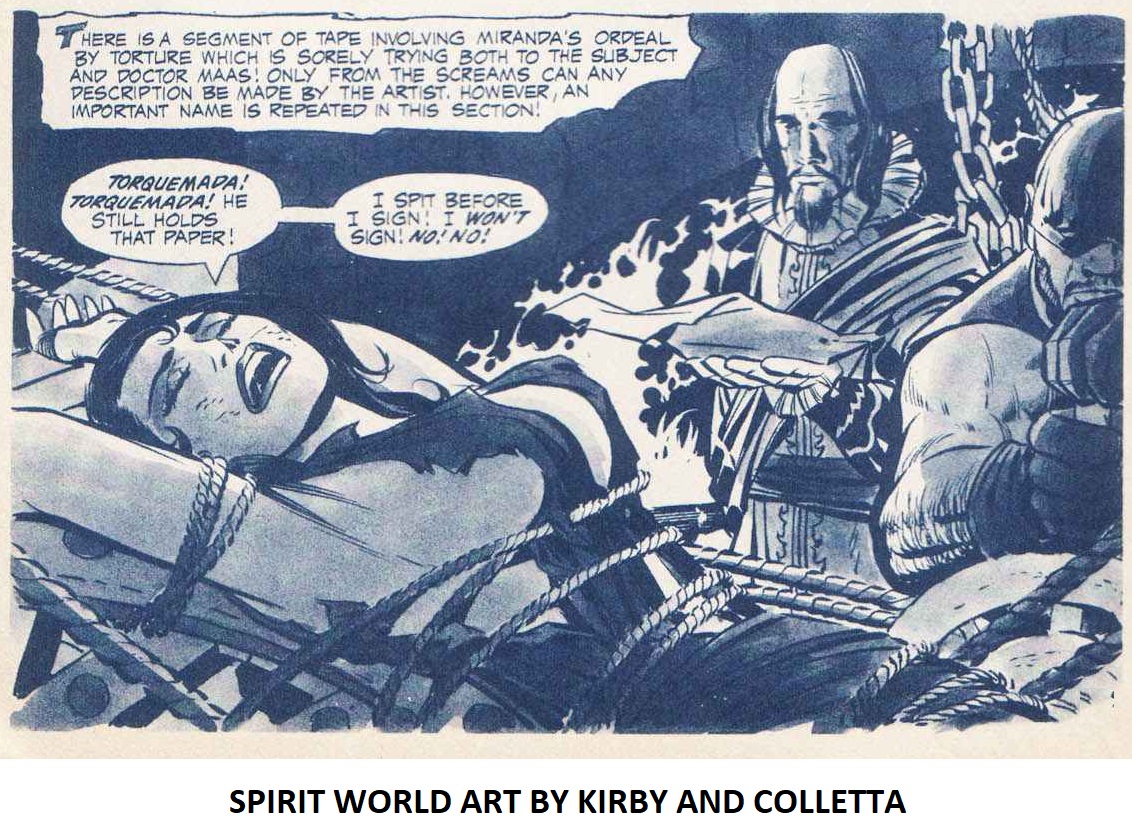
SPIRIT WORLD ART BY JACK KIRBY AND VINCE COLLETTA
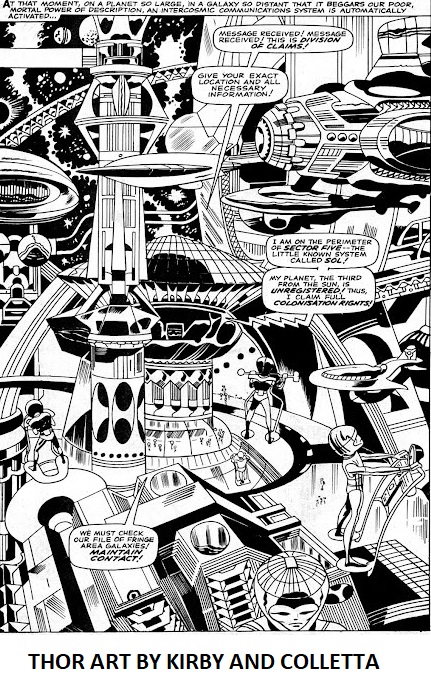
The Kirby and Colletta team created countless memorable books together but the unquestionable highlight was THOR. In March 1966, the character was given his own book, THOR 126. By this time, Vince was the primary inker over Jack’s exquisite pencils. Dissimilar to all other comic book drawings, the finished product resembled fine art from an earlier time. While all of Kirby’s grandeur was retained, gone were the graphic swipes of India ink used by all other inkers to depict both the characters and their surroundings. The departure drew raucous praise from readers and art aficionados alike. While this elegant look was not suitable for most comic books, in THOR it found a home.

While both men prospered beyond any of their peers, success was not without the attendant criticisms. Kirby had adversarial relationships with management at both Marvel and DC while Colletta developed a reputation for taking short-cuts in order to make his job easier. They have been the subject of many tales and rumors throughout the years. Anyone who succeeds in reaching the top inevitably has to deal with the arrows and slings that are hurled their way in the form of gossip. Since there are so many rumors involved, it is difficult for people to determine whether the claims are factual. What is evident is that without Jack Kirby, Marvel Comics would have very few of the popular superheroes that they own and exploit in books and movies. What is also evident is that without Vince Colletta, hundreds of Marvel and DC monthly releases would have been a regurgitation of seemingly-endless reprints that could have significantly altered company destinies.

The lawsuits involving Kirby and DC editor Jack Schiff surrounding the Skymasters newspaper strip resulted in Jack’s banishment from DC Comics. His issues with Marvel over ownership of characters are also well-documented. While the publishers were less than happy with him, comic book fans mostly sided with Kirby. With Colletta, the main controversy was that he erased and otherwise simplified the penciled art. Most people do not understand the role of what is essentially a publisher’s mercenary. Marvel and DC knew that Vinnie was both willing and capable of making up for the shortfalls of others in order to meet printing deadlines so they exploited him. While the publishers loved him, many pencilers and comic book fans alike voiced their displeasure.

THOR ART BY JACK KIRBY AND VINCE COLLETTA
In 1971, tired of quarreling with Marvel, Jack was welcomed back to DC Comics. The publisher created banner advertisements heralding the coming of Kirby who was now more well-known by readers. He brought with him a vision that he named The Fourth World. While never achieving the successes at DC that he did with Marvel, the concepts were innovative. Colletta had been working with DC Comics at the time leading to management’s decision to put Vinnie on Jack’s Fourth World books, including The New Gods.

Kirby had worked with Colletta for years and understood that, in addition to his own stories, the editors were also giving Vinnie an armload of other books each week. Almost all of these were late jobs due to pencilers or editors foul-ups but they needed to be completed quickly so Vinnie hacked them out. The finished art lacked most of the abundant illustrative flourishes he was known for but they were always accurately-inked and the work got done. In the past, Kirby was fine with whatever alterations Vinnie made. Some say they made the pages more readable while others abhorred them. Jack was eventually convinced by those around him to confront Vinnie about some of the liberties he was taking. Their meeting resulted in the end of an acclaimed art team. Colletta always lavished great detail on the main characters and assured Kirby that it would continue. But the inker simply could not promise to ink every line, every doodle, every background building, every tree, etc. without sacrificing his other assignments. A Jack Kirby splash page showing intricate machinery would take most inkers a week to finish. Jack was fortunate to find another competent inker who had no other assignments and could focus on just inking Kirby. And so, a handshake sealed the deal. Both Jack and Vinnie continued on their respective paths without a harsh word between them. It is one of the most important things they had in common. Both men were gentlemen.

Index of articles www.vincecolletta.com

THE LOVELY WONDER WOMAN

Vince Colletta Romance Covers

At last, in a world torn by the hatred and wars of men, appears a woman to whom the problems and feats of men are mere child’s play. A woman whose identity is known to none, but whose sensational feats are outstanding in a fast-moving world. She serves as a symbol of integrity and humanity, so that the world of men would know what it means to be an Amazon. With a hundred times the agility and strength of our best male athletes and strongest wrestlers, she appears as though from nowhere to avenge an injustice or right a wrong! As lovely as Aphrodite- as wise as Athena- with the speed of Mercury and the strength of Hercules – She is known only as Wonder Woman! – Written by William Moulton Marston

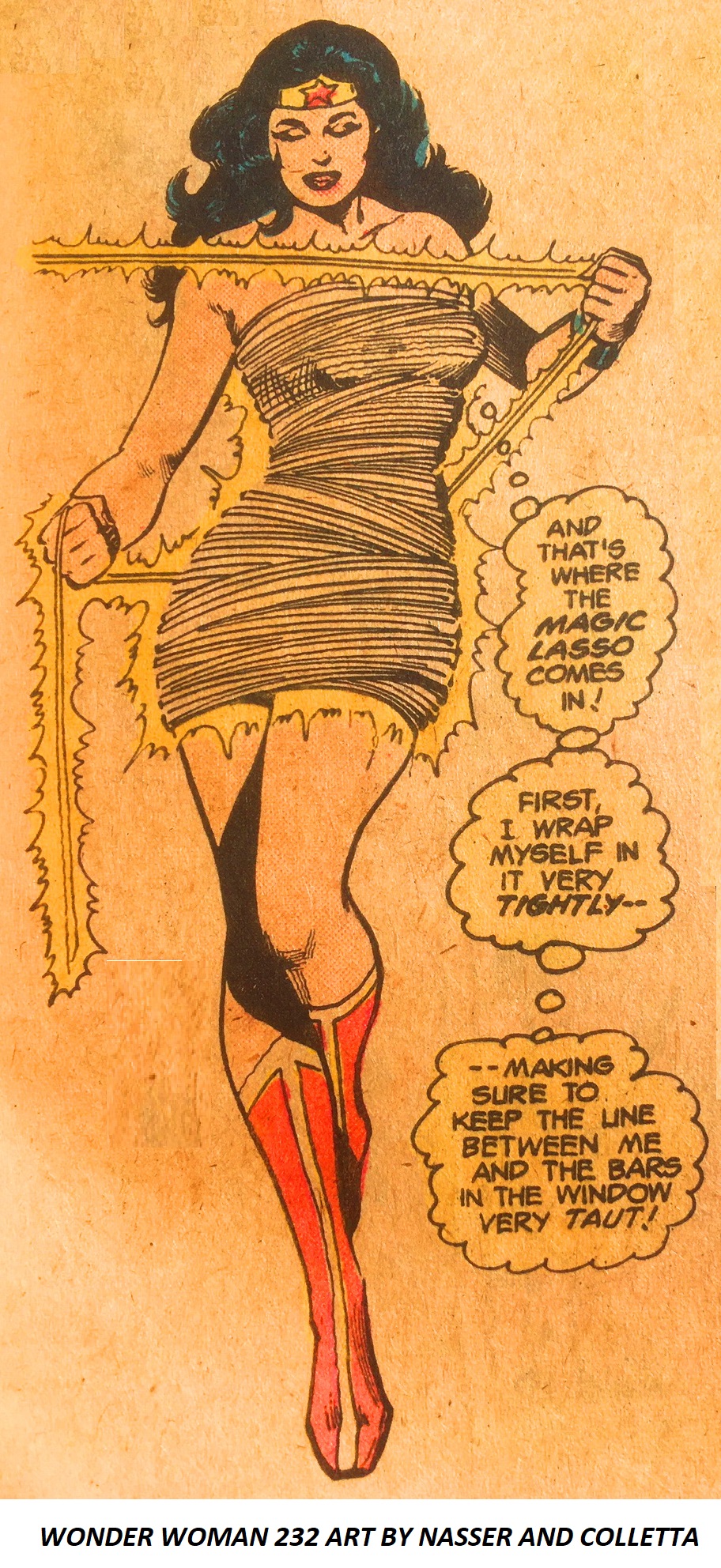
Wonder Woman 232 Art by Mike Nasser and Vince Colletta

Michael Netzer: Vinnie did me good on the inks every time. The Wonder Woman story he inked was sweet and delicate. I was never disappointed with him.

Dan Forman: Just got in a really cool Wonder Woman story from the early 70’s. I love the way Colletta inked women… hubba!

Droid714: I recently picked up a run of Wonder Woman comics from the late 70’s. As I was reading through them, I was struck by the quality of the artwork and by how strong, yet feminine Wonder Woman looked. It wasn’t until I had read a number of these books that I discovered, to my great surprise, that the inker was none other than Vinnie Colletta!

Wonder Woman #232 Art by Nasser and Colletta

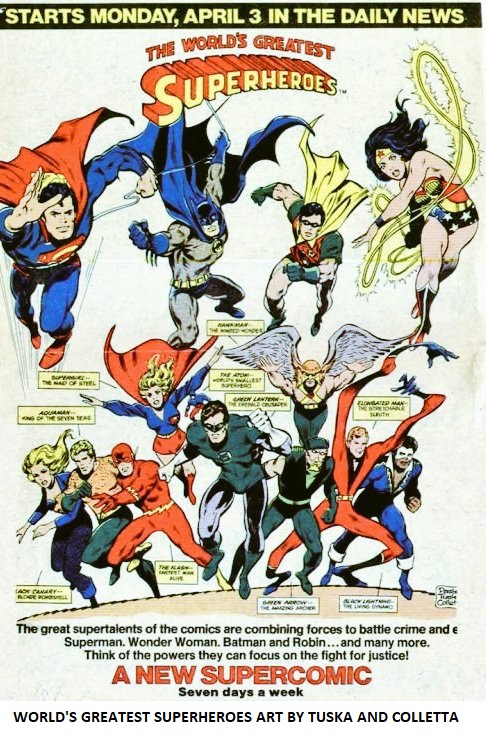
In comic book fandom, the most beautiful of the female superheroes was undoubtedly Wonder Woman. Here, she appears in the long-running newspaper strip, The World’s Greatest Superheroes. The original creators of this feature were Martin Pasko, George Tuska and Vince Colletta.

WORLD'S GREATEST SUPERHEROES ART BY TUSKA AND COLLETTA

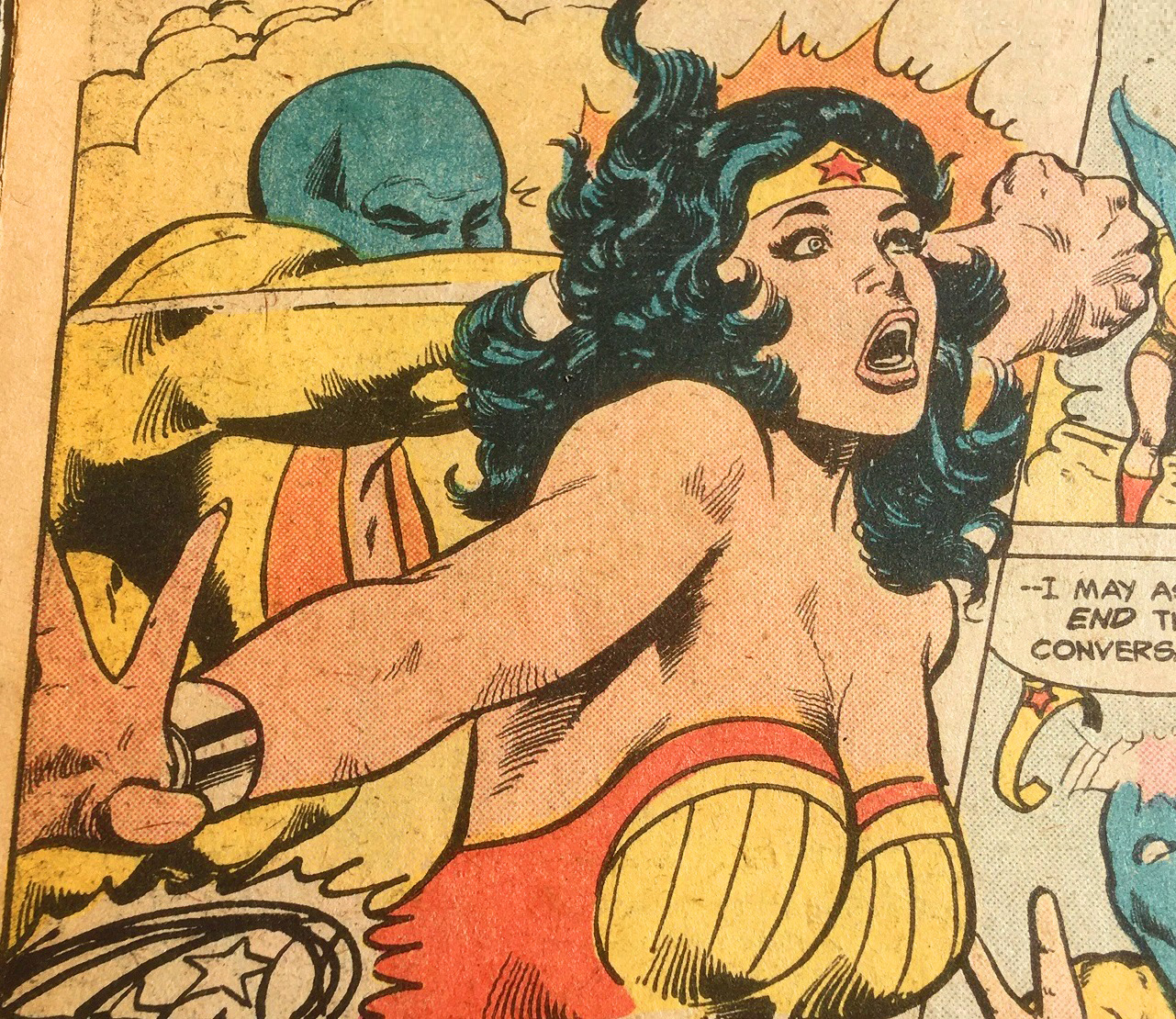
Vince Colletta became an instant legend in the genre of romance comics for the reason that his portrayal of females was equally realistic and idealized – a tricky recipe for an illustrator to master. His art work put both the beauty and the individual uniqueness of women on full display. Wonder Woman was the perfect subject. In the artist’s deft hands, Diana blossomed into a super heroine every bit as beautiful as she was unconquerable. DC Comics deserves much of the credit both for naming Vinnie art director and pairing him with inventive pencilers such as Mike Netzer (Nasser), Jose Delbo and Jose Luis-Garcia to create a celebrated strip that revealed the most stunning interpretations of the character.

Index of articles www.vincecolletta.com